主题

写实摄影风格图

围绕该长尾主题整理了 4 条 GPT 图像提示词。

subject

写实摄影风格图

原文2,110 个字符
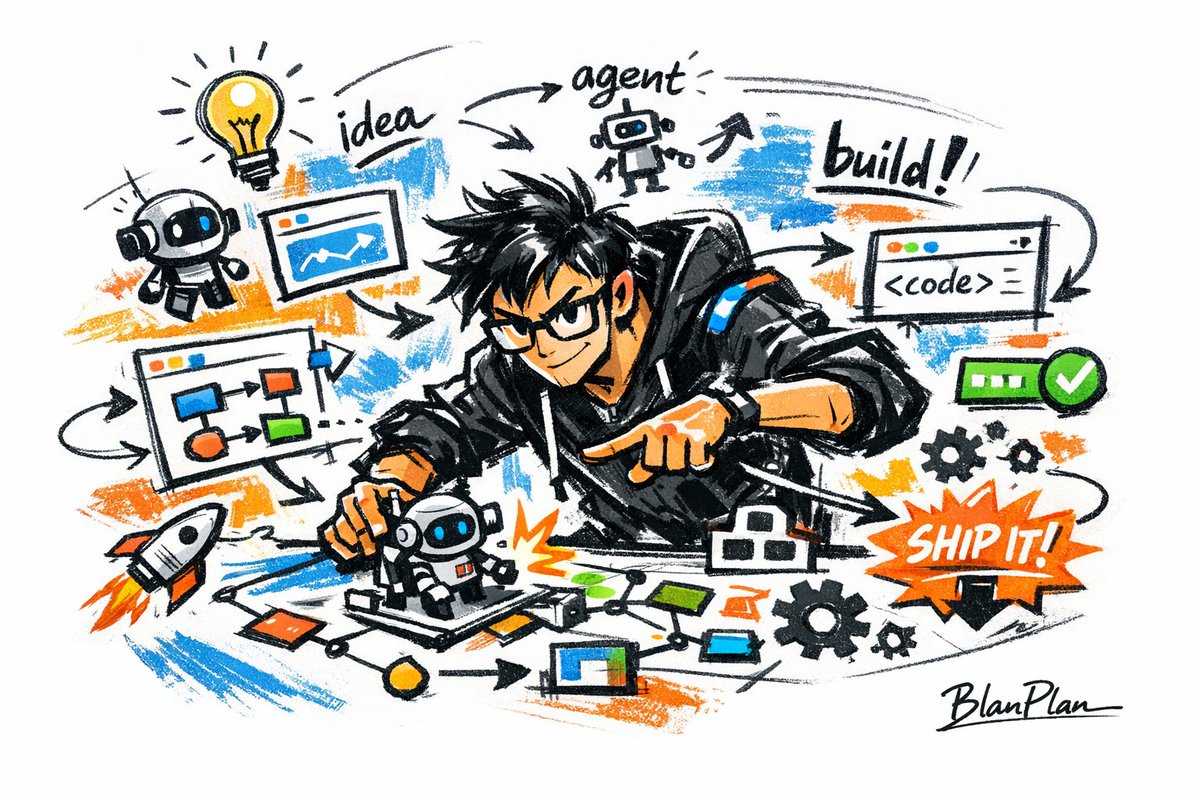
Express {argument name="subject" default="a powerful AI builder"} in a graffiti sketch style, presenting an overall visual effect of quick outlines, free deformation, improvised hand-drawing, and draft-like sketches. The lines are casual, exaggerated, varying in thickness, and slightly messy but rhythmic and expressive, emphasizing generalization, exaggeration, fun, and spontaneity rather than rigorous realism or fine detail. The colors are expressed in rough blocks with a distinct dry-brush feel, retaining uneven smears, brush marks, fly-white, and layering. Colors automatically adapt to the {argument name="theme" default="powerful AI builder"}, but the overall expression remains graffiti-like, sketch-like, and generalized. No transparent watercolor smudging effects, no delicate watercolor transitions, no paper textures, no soft atomization, and no dreamy textures. The background is mainly white space, maintaining a sense of simplicity, ease, unfinishedness, and design. Small amounts of auxiliary symbols, arrows, marks, circles, repeated lines, handwritten text, or other graffiti elements can be added to enhance the sketchbook or essay-like visual language, but they should not be too crowded or destroy the subject and the white space atmosphere. The content of the picture does not need to be written in advance; {argument name="character image" default="a powerful AI builder"} will automatically deduce and generate the most suitable main image, actions, related elements, symbols, or simplified scenes. The overall style remains a unified graffiti sketch style and an exaggerated, generalized expression, avoiding complex realistic backgrounds and excessive detail. A special signature 'BlanPlan' should be naturally added as part of the picture, in a low-key but clear position such as the bottom left, bottom right, or near the title. The style should be unified with the overall layout, like an artist's signature or a design mark; the signature font should be exquisite, restrained, and high-end, not too large, and should not destroy the main composition or appear abrupt or cheap.
marker color

写实摄影风格图

原文863 个字符
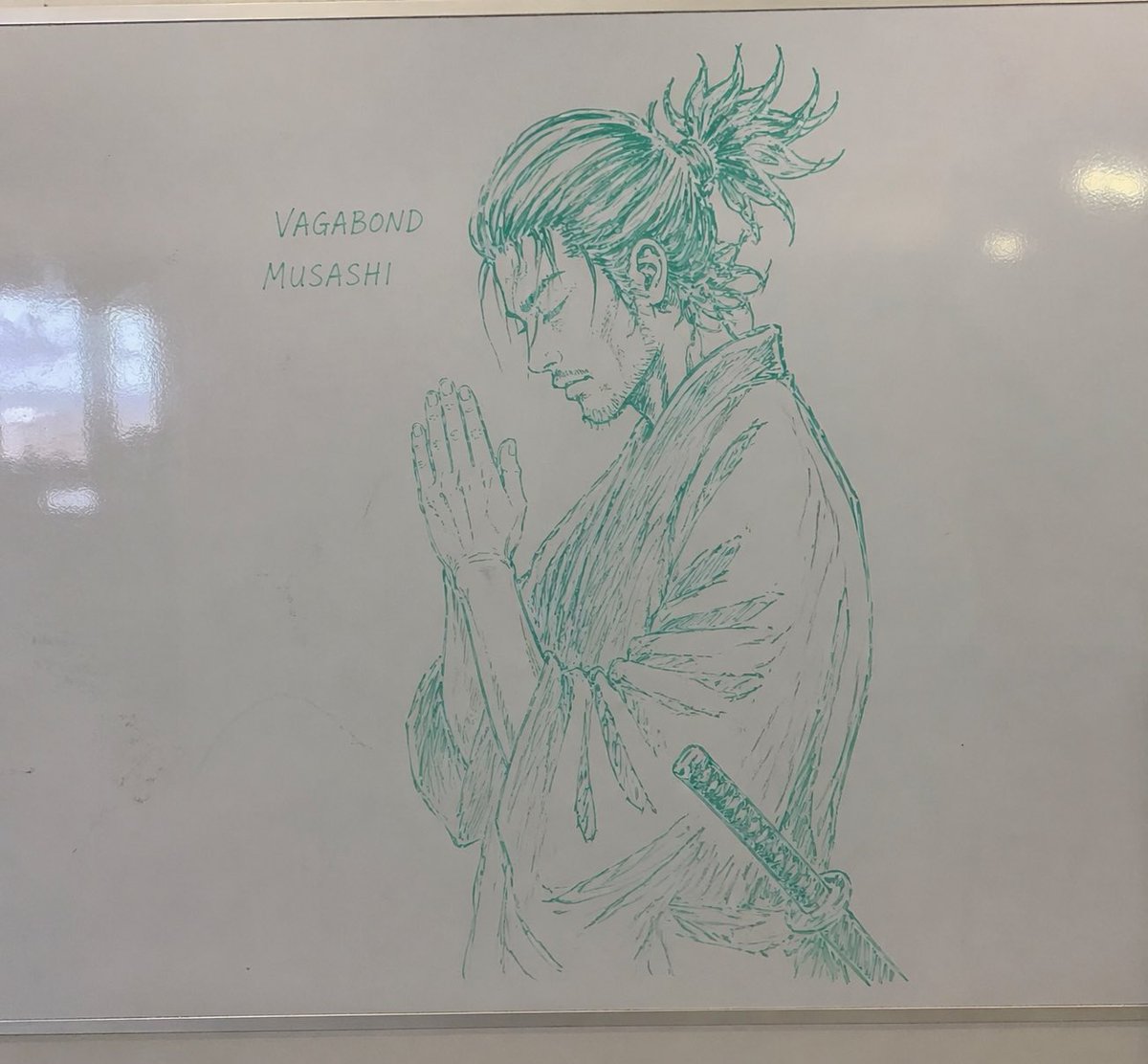
A realistic photograph of a whiteboard with a highly detailed {argument name="marker color" default="green"} dry-erase marker drawing of {argument name="subject" default="a samurai with a messy topknot and facial hair, hands clasped in prayer"}. The character is drawn in a {argument name="art style" default="detailed manga sketch"} style, shown in profile with eyes closed, wearing a traditional kimono with a katana tucked into his belt. To the left of the character, handwritten text in all-caps reads "{argument name="text line 1" default="VAGABOND"}" with "{argument name="text line 2" default="MUSASHI"}" written directly below it. The whiteboard has a glossy surface with realistic light reflections and glare on the left side, and a thin metallic frame is visible at the bottom edge, giving the impression of an authentic classroom or office environment.
subject

写实摄影风格图

原文2,045 个字符
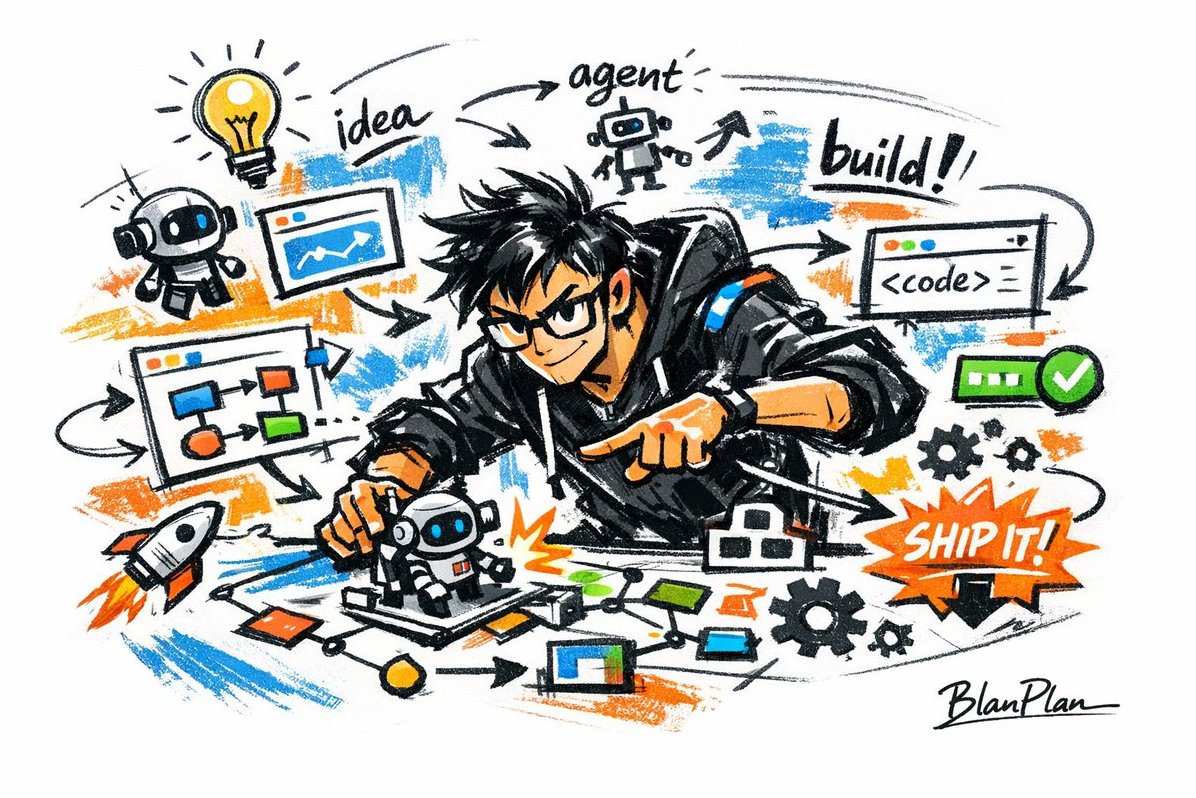
Express [{argument name="subject" default="a powerful AI builder"}] in a graffiti sketch style, presenting an overall visual effect of rapid sketching, free transformation, improvised hand-drawing, and draft-like qualities. Lines are casual, exaggerated, varied in thickness, slightly messy but rhythmic and expressive, emphasizing generalization, exaggeration, fun, and spontaneity rather than rigorous realism or fine detail. Colors use rough, dry-brush block expressions, retaining uneven smears, brush marks, flying whites, and overlapping feelings. Colors automatically adapt to the [theme/subject], but the overall expression remains graffiti-like, sketch-like, and generalized. No transparent watercolor smudging, no delicate watercolor transitions, no paper textures, no soft atomization, and no dreamlike quality. The background is mainly white space, remaining simple, relaxed, unfinished, and design-oriented. A small amount of auxiliary symbols, arrows, marks, circles, repeated lines, handwritten text, or other graffiti elements can be added to enhance the sketchbook or essay-like visual language, but should not be too crowded or destroy the subject and atmosphere of the white space. The image content does not need to be written in advance; the [{argument name="subject" default="a powerful AI builder"}] will automatically deduce and generate the most suitable main image, actions, related elements, symbols, or simplified scenes. The whole maintains a unified graffiti sketch style and exaggerated generalized expression, avoiding complex realistic backgrounds and over-elaboration. Naturally add a unique signature "{argument name="signature" default="BlanPlan"}" as part of the image, placed discreetly but clearly in the lower-left, lower-right, or near the title. The style should be unified with the overall layout, like an artist's signature or design inscription; the signature font should be refined, restrained, and high-end, not too large, not destructive to the main composition, and not appearing abrupt or cheap.
type

写实摄影风格图

原文2,107 个字符
{
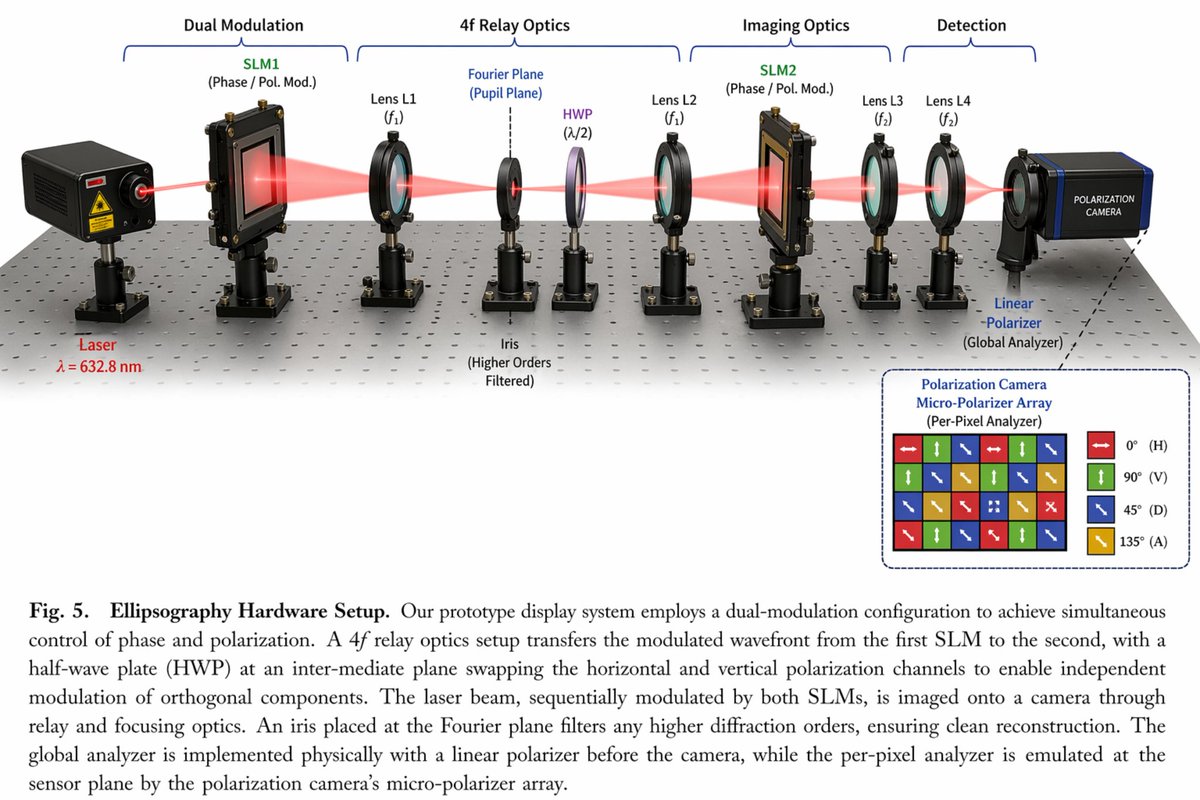
  "type": "scientific hardware diagram",
  "layout": {
    "main_scene": "3D render of an optical table with a red laser beam passing through 11 aligned optical components mounted on black posts.",
    "top_brackets": [
      {"label": "Dual Modulation", "span": "SLM1"},
      {"label": "4f Relay Optics", "span": "Lens L1 to Lens L2"},
      {"label": "Imaging Optics", "span": "SLM2 to Lens L4"},
      {"label": "Detection", "span": "Camera"}
    ],
    "optical_components_left_to_right": [
      {"name": "Laser", "labels": ["Laser", "λ = {argument name=\"laser wavelength\" default=\"632.8 nm\"}"]},
      {"name": "SLM1", "labels": ["SLM1", "(Phase / Pol. Mod.)"]},
      {"name": "Lens L1", "labels": ["Lens L1", "(f1)"]},
      {"name": "Iris", "labels": ["Fourier Plane", "(Pupil Plane)", "Iris", "(Higher Orders Filtered)"]},
      {"name": "HWP", "labels": ["HWP", "(λ/2)"]},
      {"name": "Lens L2", "labels": ["Lens L2", "(f1)"]},
      {"name": "SLM2", "labels": ["SLM2", "(Phase / Pol. Mod.)"]},
      {"name": "Lens L3", "labels": ["Lens L3", "(f2)"]},
      {"name": "Lens L4", "labels": ["Lens L4", "(f2)"]},
      {"name": "Linear Polarizer", "labels": ["Linear", "-Polarizer", "(Global Analyzer)"]},
      {"name": "Polarization Camera", "labels": ["POLARIZATION CAMERA"]}
    ],
    "inset_box": {
      "position": "bottom right",
      "title": "Polarization Camera Micro-Polarizer Array (Per-Pixel Analyzer)",
      "grid": "4x4 grid of colored squares with directional arrows",
      "legend_count": 4,
      "legend_items": [
        "Red square, horizontal arrow, 0° (H)",
        "Green square, vertical arrow, 90° (V)",
        "Blue square, diagonal arrow, 45° (D)",
        "Yellow square, diagonal arrow, 135° (A)"
      ]
    },
    "bottom_caption": {
      "figure_prefix": "{argument name=\"figure number\" default=\"Fig. 5.\"}",
      "title": "{argument name=\"system name\" default=\"Ellipsography Hardware Setup.\"}",
      "text": "Paragraph of scientific text explaining the dual-modulation configuration, 4f relay optics, and polarization camera."
    }
  }
}