分类

信息图与教育

该分类下有 28 条精选 GPT 图像提示词。

当前分类

信息图与教育

当前展示「信息图与教育」下的 28 条提示词,包含示例图和可复用原文。

信息图可视化设计信息图AI 眼镜爆炸拆解图AP Calculus 学习表信息图Field: categories.illustrated-city-food-map.zh-CN 城市美食插图地图一张中文健身信息图

信息图与教育

当前展示「信息图与教育」下的 28 条提示词,包含示例图和可复用原文。

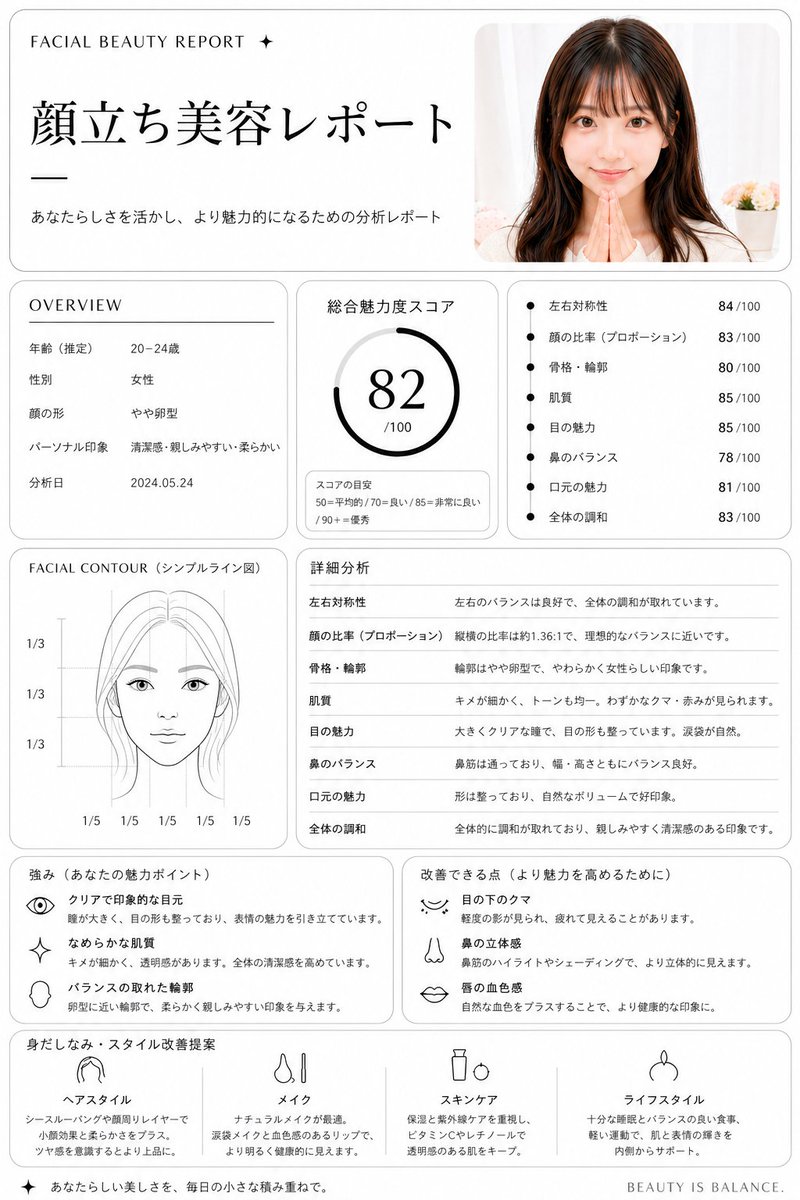
Infographic / Edu Visual - Minimalist facial beauty report - Image 1

信息图 / 教育视觉图 - Minimalist facial beauty report

原文568 个字符
Based on this photo, create a clean, minimal, and luxurious facial beauty report. Use a design based on {argument name="color scheme" default="black on white"}, incorporating thin lines, rounded-corner cards, and luxury aesthetics. Include simple facial outline illustrations, candid attractiveness analysis (symmetry, proportions, bone structure, skin quality, etc.), clear scores, strengths, areas for improvement, and easy-to-implement grooming and style improvement suggestions. The content should be data-driven, visually sophisticated, and not overly flattering.
Infographic / Edu Visual - LEGO Parts List Inventory Page - Image 1

信息图 / 教育视觉图 - LEGO Parts List Inventory Page

原文1,928 个字符
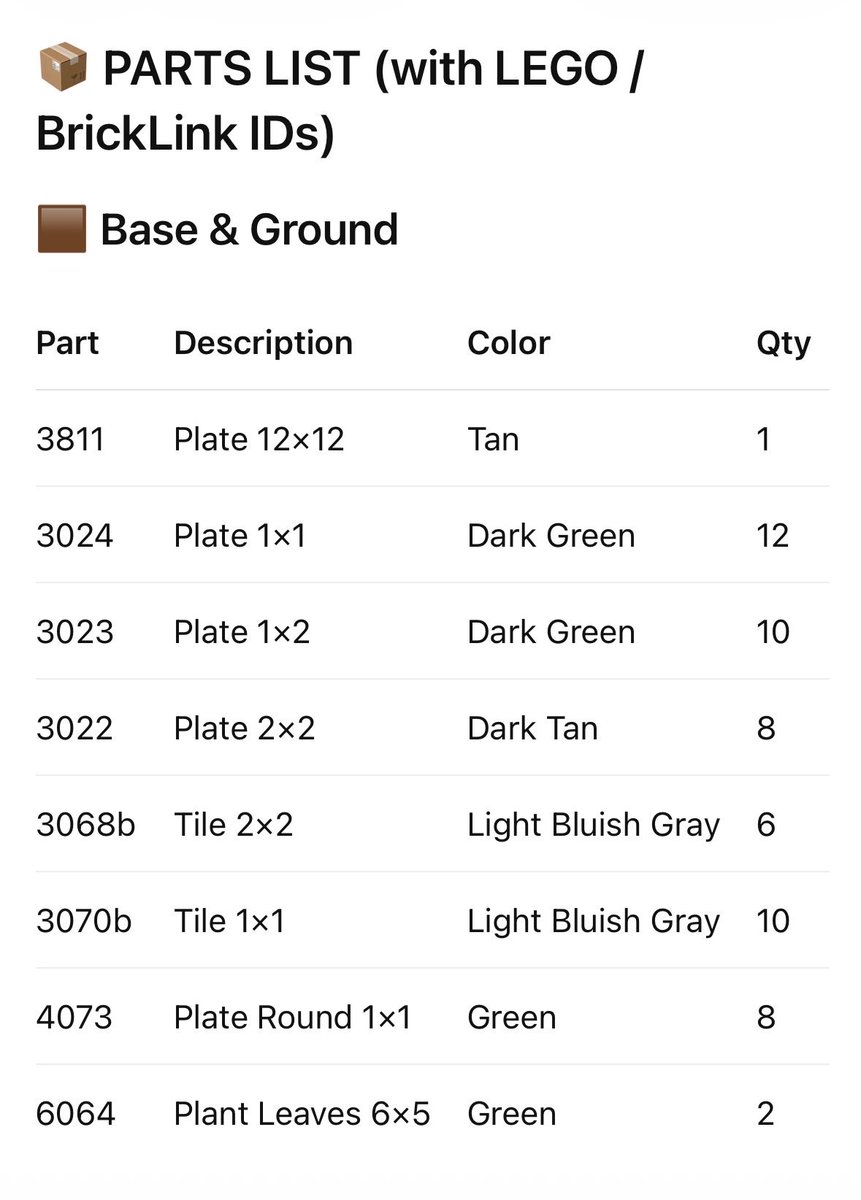
{"type":"LEGO parts list infographic page","subject":"clean printed inventory sheet for a custom LEGO build","style":"minimalist instruction-manual graphic, flat white background, crisp black sans-serif typography, subtle light gray row dividers, editorial layout","page":{"orientation":"portrait","background":"white","margin":"generous"},"header":{"icon_count":2,"icons":["small cardboard package emoji/icon at top left","small brown square color swatch icon before section title"],"title":"PARTS LIST (with LEGO / BrickLink IDs)","section_title":"{argument name=\"section title\" default=\"Base & Ground\"}"},"table":{"columns":["Part","Description","Color","Qty"],"row_count":8,"rows":[{"Part":"3811","Description":"Plate 12×12","Color":"Tan","Qty":"1"},{"Part":"3024","Description":"Plate 1×1","Color":"Dark Green","Qty":"12"},{"Part":"3023","Description":"Plate 1×2","Color":"Dark Green","Qty":"10"},{"Part":"3022","Description":"Plate 2×2","Color":"Dark Tan","Qty":"8"},{"Part":"3068b","Description":"Tile 2×2","Color":"Light Bluish Gray","Qty":"6"},{"Part":"3070b","Description":"Tile 1×1","Color":"Light Bluish Gray","Qty":"10"},{"Part":"4073","Description":"Plate Round 1×1","Color":"Green","Qty":"8"},{"Part":"6064","Description":"Plant Leaves 6×5","Color":"Green","Qty":"2"}]},"customization":{"title":"{argument name=\"headline text\" default=\"PARTS LIST (with LEGO / BrickLink IDs)\"}","section":"{argument name=\"section title\" default=\"Base & Ground\"}","accent_color":"{argument name=\"accent color\" default=\"brown\"}","page_style":"{argument name=\"document style\" default=\"LEGO instruction manual inventory sheet\"}"},"composition":"title aligned upper left, section label directly below, large 4-column table centered below with evenly spaced rows, all text left-aligned except quantity column visually narrow at right","quality":"high-resolution print-ready mockup, sharp vector-like text rendering"}
type

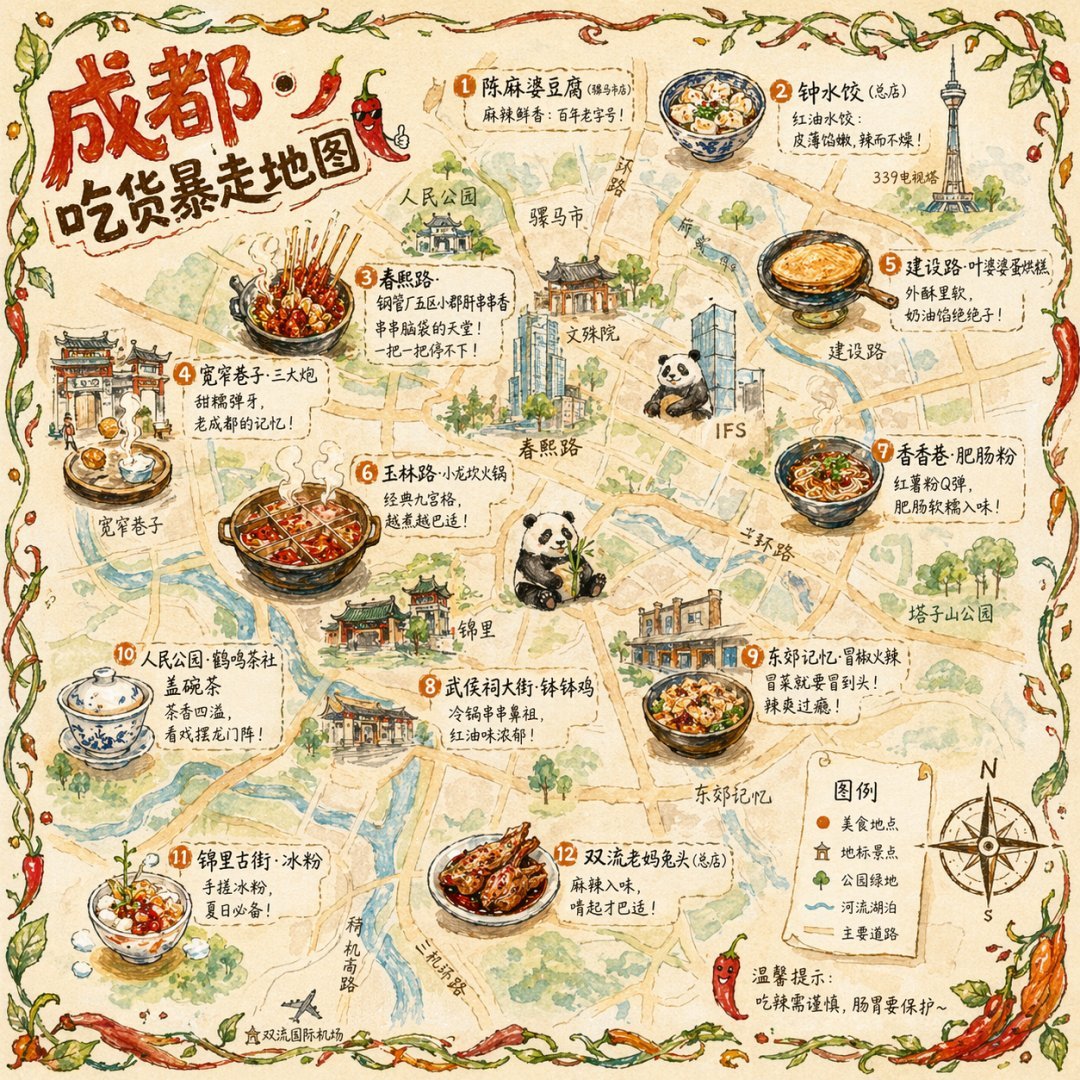
手绘城市美食地图

原文2,304 个字符
{
  "type": "illustrated map infographic",
  "style": "{argument name=\"art style\" default=\"watercolor and ink hand-drawn illustration on vintage parchment\"}",
  "title_section": {
    "text": "{argument name=\"city name\" default=\"Chengdu\"} {argument name=\"map title\" default=\"Foodie's Walking Map\"}",
    "mascot": "cartoon red chili pepper wearing sunglasses and giving a thumbs up"
  },
  "border": "{argument name=\"border decoration\" default=\"vine of green leaves and red chili peppers\"}",
  "layout": {
    "background": "textured beige parchment paper with yellow roads, blue rivers, and green park areas",
    "sections": [
      {
        "title": "landmarks",
        "count": 6,
        "illustrations": ["traditional pavilion", "traditional monastery", "modern skyscraper with climbing panda", "tall TV tower", "traditional gate", "industrial buildings"],
        "labels": ["People's Park", "Wenshu Monastery", "IFS", "339 TV Tower", "Kuanzhai Alley", "Eastern Suburb Memory"]
      },
      {
        "title": "food_spots",
        "count": 12,
        "illustrations": ["mapo tofu", "dumplings in chili oil", "skewers in pot", "sticky rice balls", "egg baking cake", "nine-grid hotpot", "sweet potato noodles", "cold skewers", "spicy mixed dish", "covered tea bowl", "ice jelly dessert", "spicy rabbit heads"],
        "labels": ["1 Chen Mapo Tofu", "2 Zhong Dumplings", "3 Chunxi Road", "4 Kuanzhai Alley·San Da Pao", "5 Jianshe Road·Ye Po Po Egg Cake", "6 Yulin Road·Xiaolongkan Hotpot", "7 Xiangxiang Alley·Intestine Noodles", "8 Wuhou Temple Street·Bobo Chicken", "9 Eastern Suburb Memory·Maojiao Huola", "10 People's Park·Heming Teahouse", "11 Jinli Ancient Street·Bingfen", "12 Shuangliu Rabbit Heads"]
      },
      {
        "title": "Legend",
        "position": "bottom-right",
        "count": 5,
        "items": ["red dot", "green house", "green tree", "blue line", "yellow double line"],
        "labels": ["Food Spots", "Landmarks", "Parks and Green Spaces", "Rivers and Lakes", "Main Roads"]
      }
    ],
    "centerpiece": "giant panda sitting and eating bamboo",
    "bottom_right_extras": ["vintage compass rose with N, S, E, W", "disclaimer text 'Friendly Reminder: Be careful with spicy food, protect your stomach~' with a red chili pepper icon"]
  }
}
type

信息图可视化设计

原文2,548 个字符
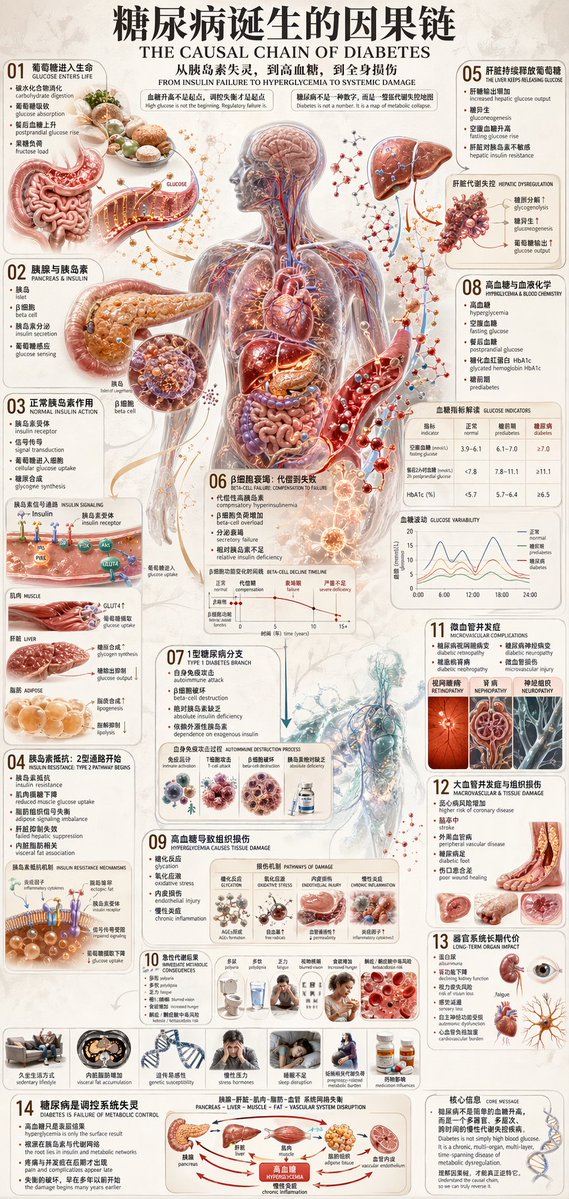
```json
{
  "type": "medical infographic poster",
  "style": "highly detailed anatomical illustrations, clean structured layout, scientific diagrammatic style",
  "color_palette": "{argument name=\"color palette\" default=\"medical red, blue, beige, and anatomical flesh tones\"}",
  "language": "{argument name=\"language\" default=\"bilingual Chinese and English\"}",
  "header": {
    "main_title": "{argument name=\"main title\" default=\"糖尿病诞生的因果链\"}",
    "english_title": "{argument name=\"english title\" default=\"THE CAUSAL CHAIN OF DIABETES\"}",
    "subtitle": "From insulin failure, to high blood sugar, to systemic damage"
  },
  "layout": {
    "centerpiece": "{argument name=\"central subject\" default=\"transparent human body showing circulatory system and internal organs\"}",
    "sections_count": 14,
    "sections": [
      { "id": "01", "title": "Glucose enters the body", "visuals": ["stomach and intestines"] },
      { "id": "02", "title": "Pancreas and Insulin", "visuals": ["pancreas", "beta cell"] },
      { "id": "03", "title": "Normal Insulin Action", "visuals": ["receptor signaling diagram", "muscle, liver, adipose icons"] },
      { "id": "04", "title": "Insulin Resistance: The Beginning of Type 2 Pathway", "visuals": ["receptor blockage diagram", "7 lifestyle icons"] },
      { "id": "05", "title": "Liver Continuously Releasing Glucose", "visuals": ["liver"] },
      { "id": "06", "title": "Beta Cell Failure: Compensation to Breakdown", "visuals": ["beta-cell decline line chart"] },
      { "id": "07", "title": "Type 1 Diabetes Branch", "visuals": ["autoimmune destruction diagram"] },
      { "id": "08", "title": "Hyperglycemia and Blood Chemistry", "visuals": ["blood vessel with glucose", "glucose indicators table", "glucose variability chart"] },
      { "id": "09", "title": "Hyperglycemia Causes Tissue Damage", "visuals": ["4 pathways of damage diagrams"] },
      { "id": "10", "title": "Acute Metabolic Consequences", "visuals": ["7 symptom icons"] },
      { "id": "11", "title": "Microvascular Complications", "visuals": ["eye", "kidney", "nerve cross-section"] },
      { "id": "12", "title": "Macrovascular Complications and Tissue Damage", "visuals": ["heart", "brain", "diabetic foot"] },
      { "id": "13", "title": "Long-term Cost to Organ Systems", "visuals": ["text list"] },
      { "id": "14", "title": "Diabetes is a Regulatory System Failure", "visuals": ["metabolic control flowchart"] }
    ],
    "footer": {
      "core_message": "Core Message CORE MESSAGE"
    }
  }
}
```
type

信息图可视化设计

原文2,480 个字符
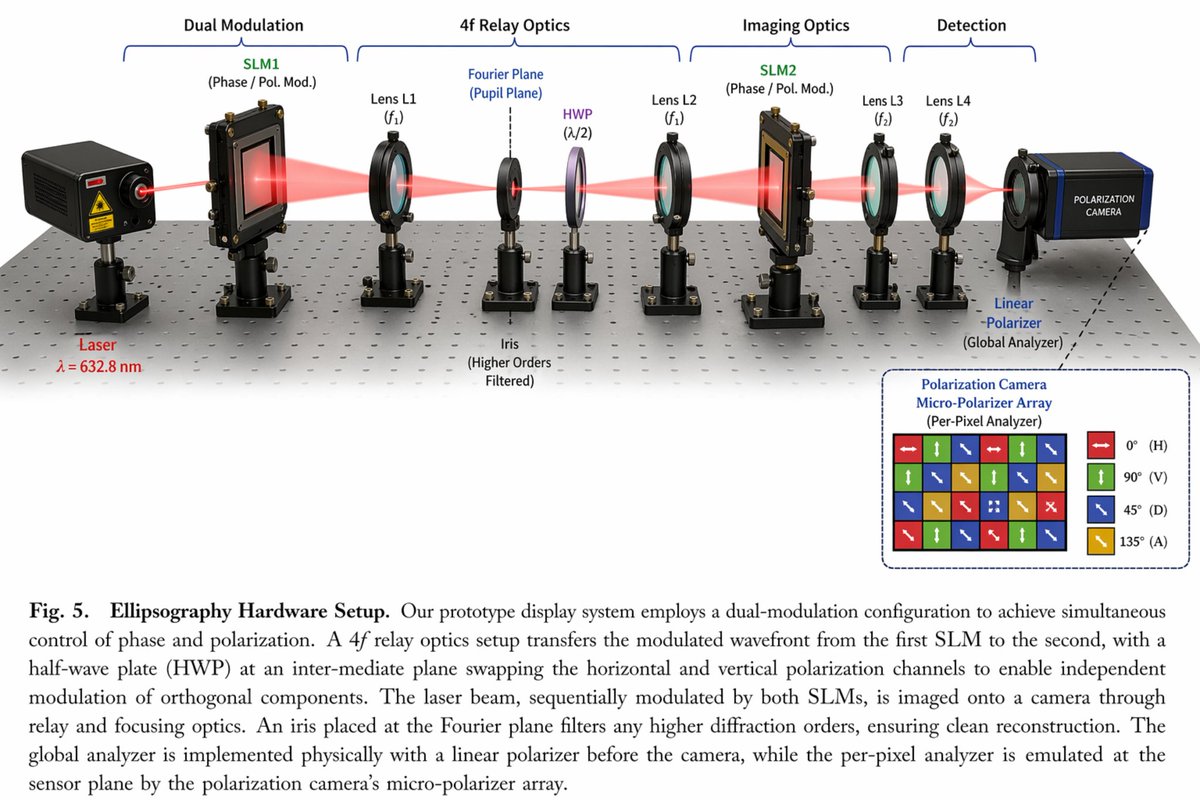
{
  "type": "scientific optical setup diagram",
  "main_setup": {
    "base": "optical breadboard table with grid of mounting holes",
    "beam": "red laser beam passing horizontally through all components",
    "top_grouping_brackets": [
      "{argument name=\"first component group\" default=\"Dual Modulation\"}",
      "4f Relay Optics",
      "Imaging Optics",
      "Detection"
    ],
    "components_left_to_right": [
      { "name": "Laser", "label": "{argument name=\"laser wavelength\" default=\"λ = 632.8 nm\"}", "appearance": "black rectangular box" },
      { "name": "SLM1", "label": "(Phase / Pol. Mod.)", "appearance": "black square device on post" },
      { "name": "Lens L1", "label": "(f1)", "appearance": "lens in black ring mount" },
      { "name": "Iris", "label": "Fourier Plane (Pupil Plane) / (Higher Orders Filtered)", "appearance": "black ring mount with dashed line above" },
      { "name": "HWP", "label": "(λ/2)", "appearance": "purple-tinted optic in black ring mount" },
      { "name": "Lens L2", "label": "(f1)", "appearance": "lens in black ring mount" },
      { "name": "SLM2", "label": "(Phase / Pol. Mod.)", "appearance": "black square device on post" },
      { "name": "Lens L3", "label": "(f2)", "appearance": "lens in black ring mount" },
      { "name": "Lens L4", "label": "(f2)", "appearance": "lens in black ring mount" },
      { "name": "Linear Polarizer", "label": "(Global Analyzer)", "appearance": "lens in black ring mount" },
      { "name": "Polarization Camera", "label": "POLARIZATION CAMERA", "appearance": "blue and black box camera" }
    ]
  },
  "inset_diagram": {
    "position": "bottom right, dashed border",
    "title": "{argument name=\"inset title\" default=\"Polarization Camera Micro-Polarizer Array\"} (Per-Pixel Analyzer)",
    "visuals": "4x4 grid of colored squares with white directional arrows",
    "legend_count": 4,
    "legend_labels": [
      "red right-arrow 0° (H)",
      "green up-arrow 90° (V)",
      "blue diagonal-arrow 45° (D)",
      "yellow diagonal-arrow 135° (A)"
    ]
  },
  "bottom_caption": {
    "figure_number": "Fig. 5.",
    "title": "{argument name=\"setup title\" default=\"Ellipsography Hardware Setup.\"}",
    "description": "{argument name=\"figure caption\" default=\"Our prototype display system employs a dual-modulation configuration to achieve simultaneous control of phase and polarization. A 4f relay optics setup transfers the modulated wavefront...\"}"
  }
}
Generate a 12-grid card i...

信息图可视化设计

原文169 个字符
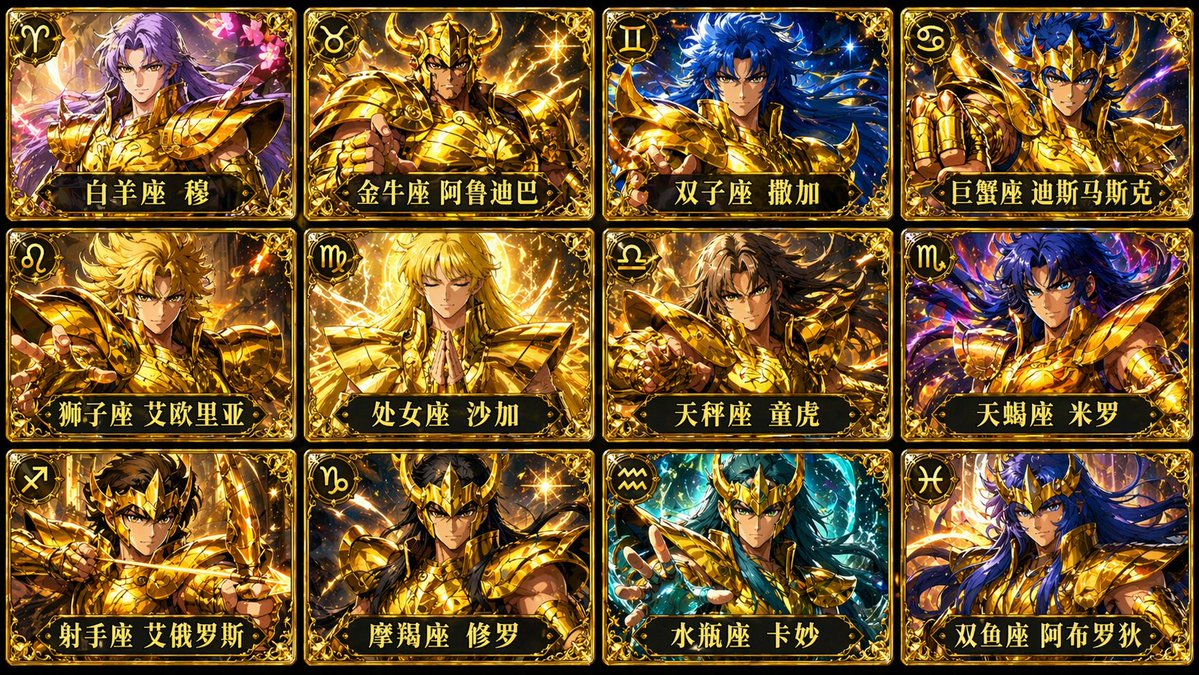
Generate a 12-grid card image of the 12 Golden Saints from Saint Seiya, with each card featuring its corresponding Chinese name, 4 cards per row, in a 16:9 aspect ratio.
零食品牌技术分解图

零食品牌技术分解图

原文1,565 个字符
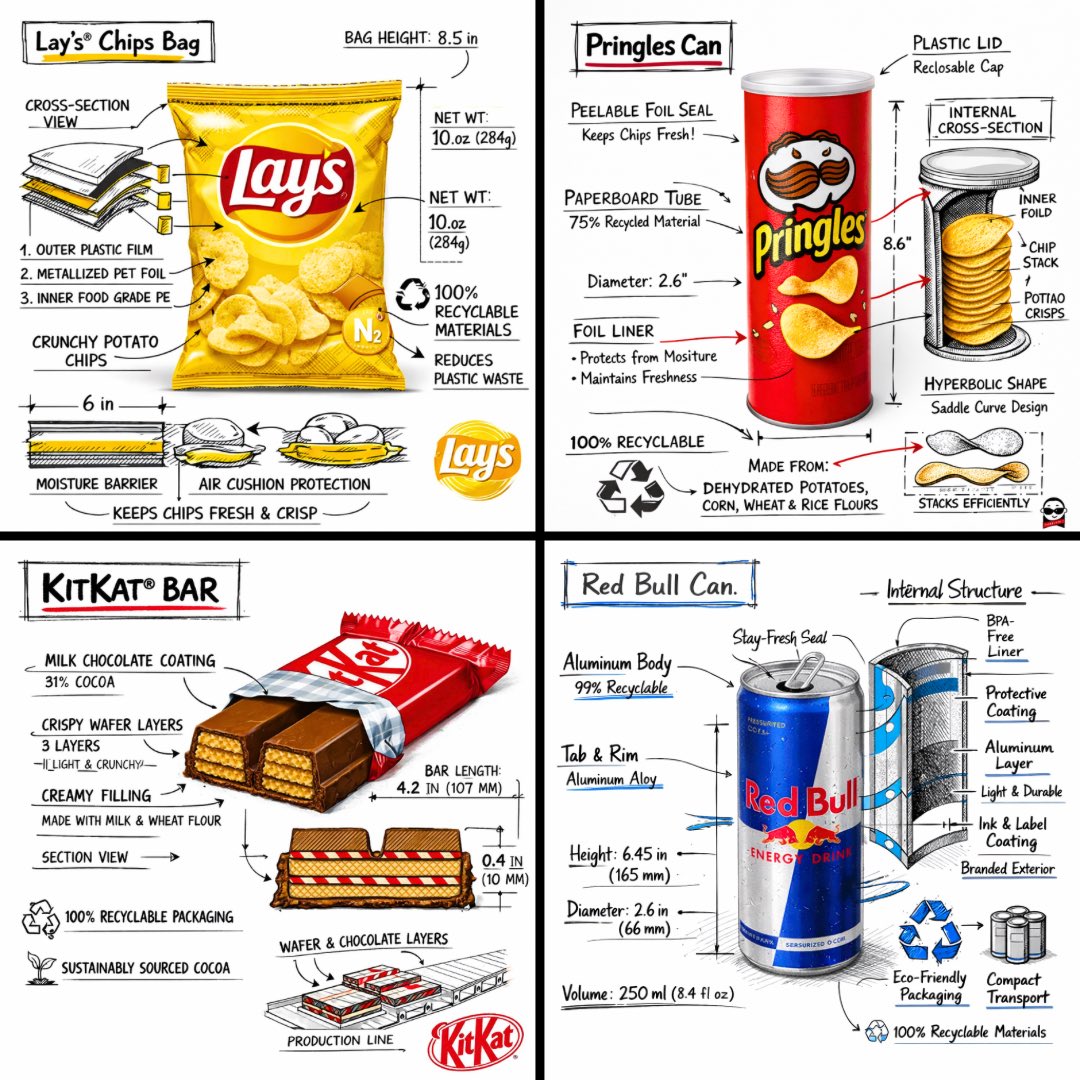
Create a branded technical infographic of a [SNACK], combining a realistic photograph or photoreal render of the product with technical annotation overlays placed directly on top. Use black ink–style line drawings with strategic [BRAND COLOR] accents (architectural sketch look) on a pure white studio background, including:
• Key component labels
• Internal cross-section showing structure, layering, or internal design
• Measurements, dimensions, and specifications
• Material callouts with composition and quantities
• Arrows indicating function for primary features and structural integrity
• Simple schematic or sectional diagram showing key mechanical or design elements
• Sustainability callouts
Title placement: Inside a hand-drawn technical annotation box with accent border reading the product name in bold font, positioned in upper corner.
Style & layout rules:
• The realistic product remains clearly visible
• Annotations feel sketched, technical, and architectural
• Accents used for highlight (20-30% of linework), black for primary technical lines (70-80%)
• Clean composition with balanced negative space
• Educational, food-engineering vibe with premium branding
• Include subtle brand logo mark in corner
Visual style: Minimal technical illustration aesthetic, black linework with accents over realistic imagery, precise but slightly hand-drawn feel.
Color palette: White background, black annotation lines/text, [BRAND COLOR] for accents and key callouts only.
Output: 1080×1080, ultra-crisp, social-feed optimized, no watermark.​​​​​​​​​​​​​​​​
type

信息图可视化设计

原文3,171 个字符
{
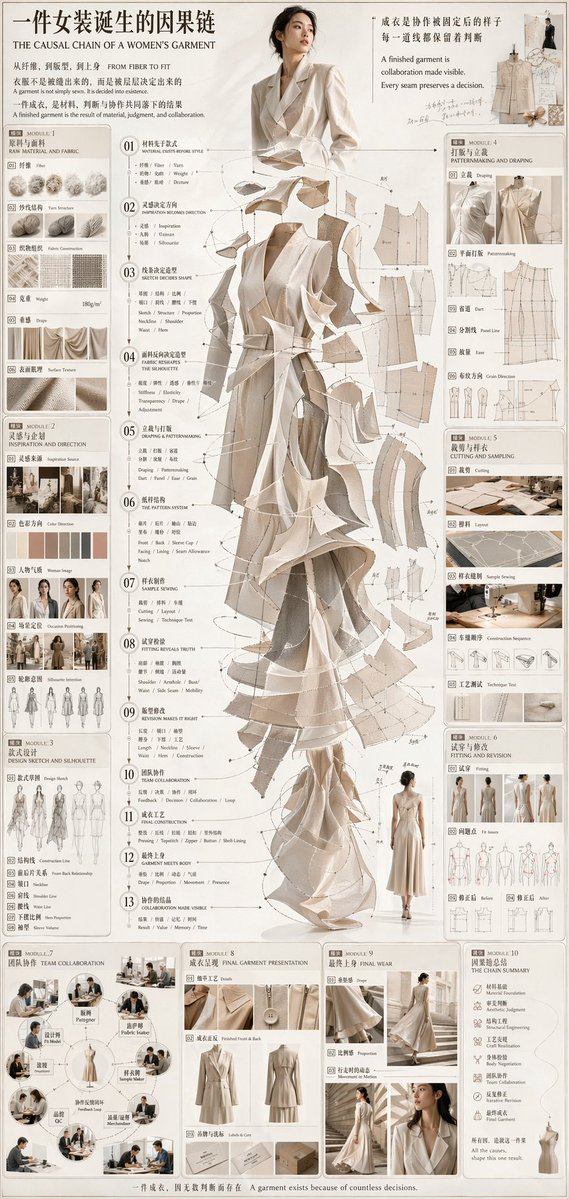
  "type": "fashion design process infographic",
  "title": "{argument name=\"main title\" default=\"THE CAUSAL CHAIN OF A WOMEN'S GARMENT\"}",
  "subtitle": "FROM FIBER TO FIT",
  "style": {
    "aesthetic": "elegant editorial, technical fashion illustration, highly detailed",
    "color_palette": "{argument name=\"color palette\" default=\"beige, cream, and neutral tones\"}"
  },
  "layout": {
    "centerpiece": {
      "description": "Exploded-view illustration of a {argument name=\"garment type\" default=\"women's trench coat dress\"} showing cascading layers of fabric, pattern pieces, and stitching lines. Top shows a model wearing the finished garment.",
      "central_list": {
        "count": 13,
        "type": "numbered steps with pointer lines",
        "labels": ["01 Material", "02 Inspiration", "03 Sketch", "04 Fabric", "05 Draping", "06 Pattern", "07 Sewing", "08 Fitting", "09 Revision", "10 Team", "11 Construction", "12 Garment", "13 Collaboration"]
      }
    },
    "left_column": [
      {
        "module": "MODULE 1: RAW MATERIAL AND FABRIC",
        "count": 6,
        "items": ["Fiber", "Yarn Structure", "Fabric Construction", "Weight", "Drape", "Surface Texture"]
      },
      {
        "module": "MODULE 2: INSPIRATION AND DIRECTION",
        "count": 5,
        "items": ["Inspiration Source", "Color Direction", "Woman Image", "Occasion Positioning", "Silhouette Intention"]
      },
      {
        "module": "MODULE 3: DESIGN SKETCH AND SILHOUETTE",
        "count": 7,
        "items": ["Design Sketch", "Construction Line", "Front Back Relationship", "Neckline", "Shoulder Line", "Waist Line", "Hem Proportion"]
      }
    ],
    "right_column": [
      {
        "module": "MODULE 4: PATTERNMAKING AND DRAPING",
        "count": 6,
        "items": ["Draping", "Patternmaking", "Dart", "Panel Line", "Ease", "Grain Direction"]
      },
      {
        "module": "MODULE 5: CUTTING AND SAMPLING",
        "count": 5,
        "items": ["Cutting", "Layout", "Sample Sewing", "Construction Sequence", "Technique Test"]
      },
      {
        "module": "MODULE 6: FITTING AND REVISION",
        "count": 4,
        "items": ["Fitting", "Fit Issues", "Before", "After"]
      }
    ],
    "bottom_row": [
      {
        "module": "MODULE 7: TEAM COLLABORATION",
        "count": 8,
        "items": ["Designer", "Patternmaker", "Fabric Buyer", "Sample Maker", "Merchandiser", "QC", "Feedback Loop", "Model"]
      },
      {
        "module": "MODULE 8: FINAL GARMENT PRESENTATION",
        "count": 3,
        "items": ["Details", "Finished Front & Back", "Labels & Care"]
      },
      {
        "module": "MODULE 9: FINAL WEAR",
        "count": 3,
        "items": ["Drape", "Proportion", "Movement in Motion"]
      },
      {
        "module": "MODULE 10: THE CHAIN SUMMARY",
        "count": 8,
        "items": ["Material Foundation", "Aesthetic Judgment", "Structural Engineering", "Craft Realization", "Body Negotiation", "Team Collaboration", "Iterative Revision", "Final Garment"]
      }
    ],
    "footer": "{argument name=\"footer text\" default=\"A garment exists because of countless decisions.\"}"
  }
}
type

信息图可视化设计

原文2,645 个字符
{
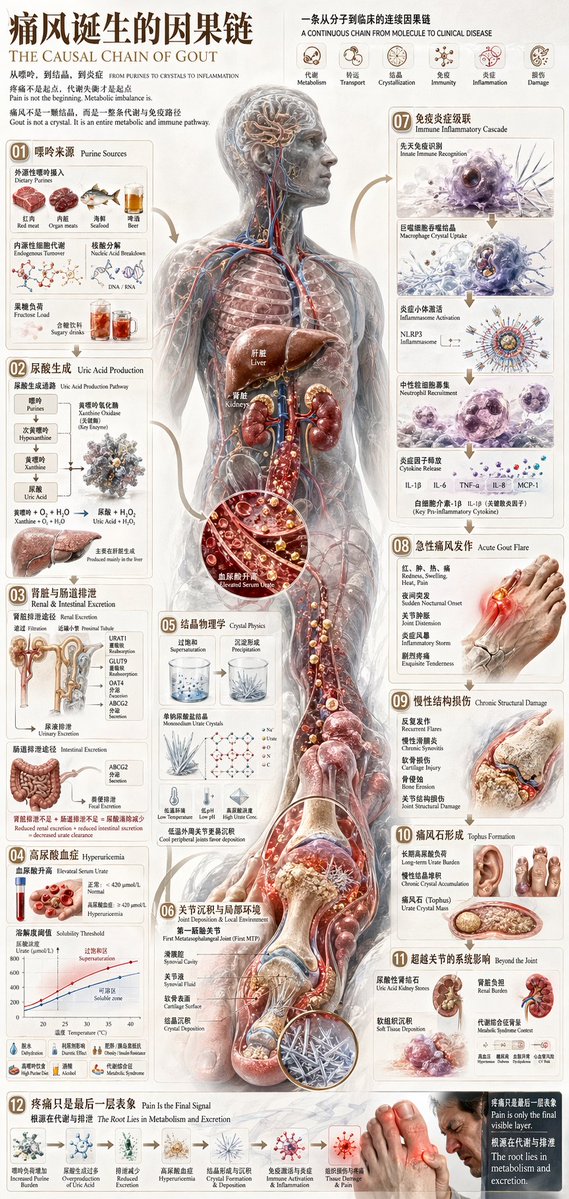
  "type": "comprehensive medical infographic",
  "style": "highly detailed 3D medical illustration, clinical white background, clean typography",
  "header": {
    "title_cn": "{argument name=\"main title\" default=\"The Causal Chain of Gout\"}",
    "title_en": "{argument name=\"english title\" default=\"THE CAUSAL CHAIN OF GOUT\"}",
    "subtitle": "Pain is not the beginning. Metabolic imbalance is.",
    "top_right_sequence": {
      "count": 6,
      "labels": ["Metabolism", "Transport", "Crystallization", "Immunity", "Inflammation", "Damage"]
    }
  },
  "centerpiece": {
    "description": "{argument name=\"central figure\" default=\"transparent anatomical human body showing liver, kidneys, and vascular system\"}",
    "details": "pathway highlighted in {argument name=\"highlight color\" default=\"glowing red\"} descending to the foot"
  },
  "layout": {
    "left_column": [
      { "id": "01", "title": "Purine Sources", "elements": 6, "labels": ["Red meat", "Organ meats", "Seafood", "Beer", "Endogenous", "Fructose"] },
      { "id": "02", "title": "Uric Acid Production", "elements": 2, "labels": ["Chemical pathway", "Liver"] },
      { "id": "03", "title": "Renal & Intestinal Excretion", "elements": 2, "labels": ["Kidney nephron", "Intestines"] },
      { "id": "04", "title": "Hyperuricemia", "elements": 2, "labels": ["Blood vial", "Solubility graph"] }
    ],
    "center_overlay": [
      { "id": "05", "title": "Crystal Physics", "elements": 3, "labels": ["Supersaturation beaker", "Precipitation beaker", "Molecular structure"] },
      { "id": "06", "title": "Joint Deposition & Local Environment", "elements": 1, "labels": ["First MTP joint cross-section"] }
    ],
    "right_column": [
      { "id": "07", "title": "Immune Inflammatory Cascade", "elements": 4, "labels": ["Macrophage", "Inflammasome", "Neutrophil", "Cytokines"] },
      { "id": "08", "title": "Acute Gout Flare", "elements": 1, "labels": ["Inflamed foot"] },
      { "id": "09", "title": "Chronic Structural Damage", "elements": 1, "labels": ["Bone erosion joint"] },
      { "id": "10", "title": "Tophus Formation", "elements": 2, "labels": ["Hand tophi", "Foot tophi"] },
      { "id": "11", "title": "Beyond the Joint", "elements": 2, "labels": ["Kidney stones", "Systemic burden"] }
    ],
    "bottom_row": [
      { "id": "12", "title": "Pain Is the Final Signal", "elements": 7, "labels": ["Increased Purine", "Overproduction", "Reduced Excretion", "Hyperuricemia", "Crystal Formation", "Immune Activation", "Man in pain"] }
    ]
  },
  "theme": "{argument name=\"disease focus\" default=\"gout and uric acid crystallization\"}"
}
type

信息图可视化设计

原文1,340 个字符
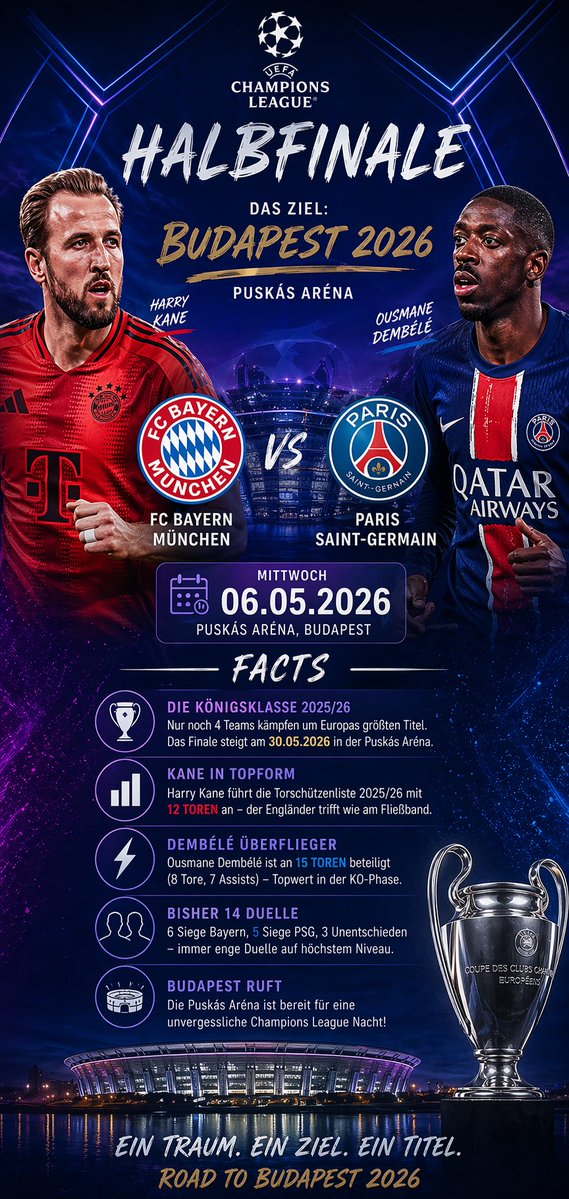
{
  "type": "sports match infographic poster",
  "theme": "UEFA Champions League",
  "background": "dark blue and purple cosmic sky, glowing blue hexagonal lines, illuminated stadium reflecting on water at bottom",
  "header": {
    "logo": "UEFA Champions League",
    "title": "{argument name=\"stage\" default=\"HALBFINALE\"}",
    "subtitle": "THE GOAL: {argument name=\"location\" default=\"BUDAPEST 2026\"}",
    "venue": "PUSKÁS ARÉNA"
  },
  "matchup": {
    "player_left": "{argument name=\"team 1 player\" default=\"Harry Kane\"} in red FC Bayern kit",
    "player_right": "{argument name=\"team 2 player\" default=\"Ousmane Dembélé\"} in blue PSG kit",
    "center_logos": "FC Bayern München and Paris Saint-Germain with VS",
    "date_box": "calendar icon, WEDNESDAY, {argument name=\"date\" default=\"06.05.2026\"}"
  },
  "facts_section": {
    "title": "FACTS",
    "count": 5,
    "items": [
      "Trophy icon: THE ROYAL CLASS 2025/26",
      "Bar chart icon: KANE IN TOP FORM",
      "Lightning bolt icon: DEMBÉLÉ FLYING HIGH",
      "Two people icon: 14 DUELLES SO FAR",
      "Stadium icon: BUDAPEST CALLS"
    ]
  },
  "footer": {
    "trophy": "Champions League trophy on right",
    "stadium_image": "Puskás Aréna at night",
    "tagline": "A DREAM. A GOAL. A TITLE.",
    "bottom_text": "ROAD TO BUDAPEST 2026"
  }
}
博物馆级中文拆解信息图鉴

博物馆级中文拆解信息图鉴

原文2,206 个字符
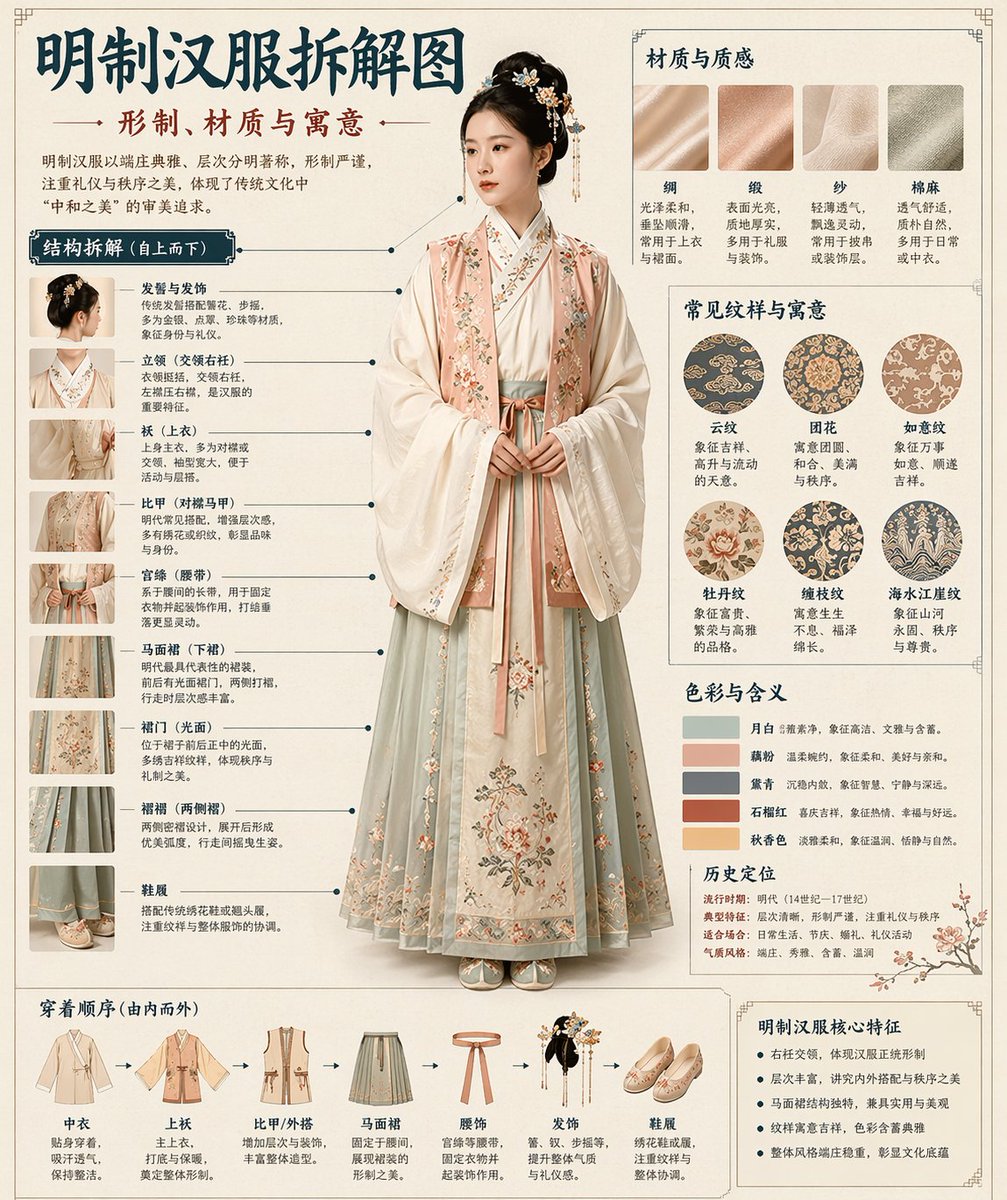
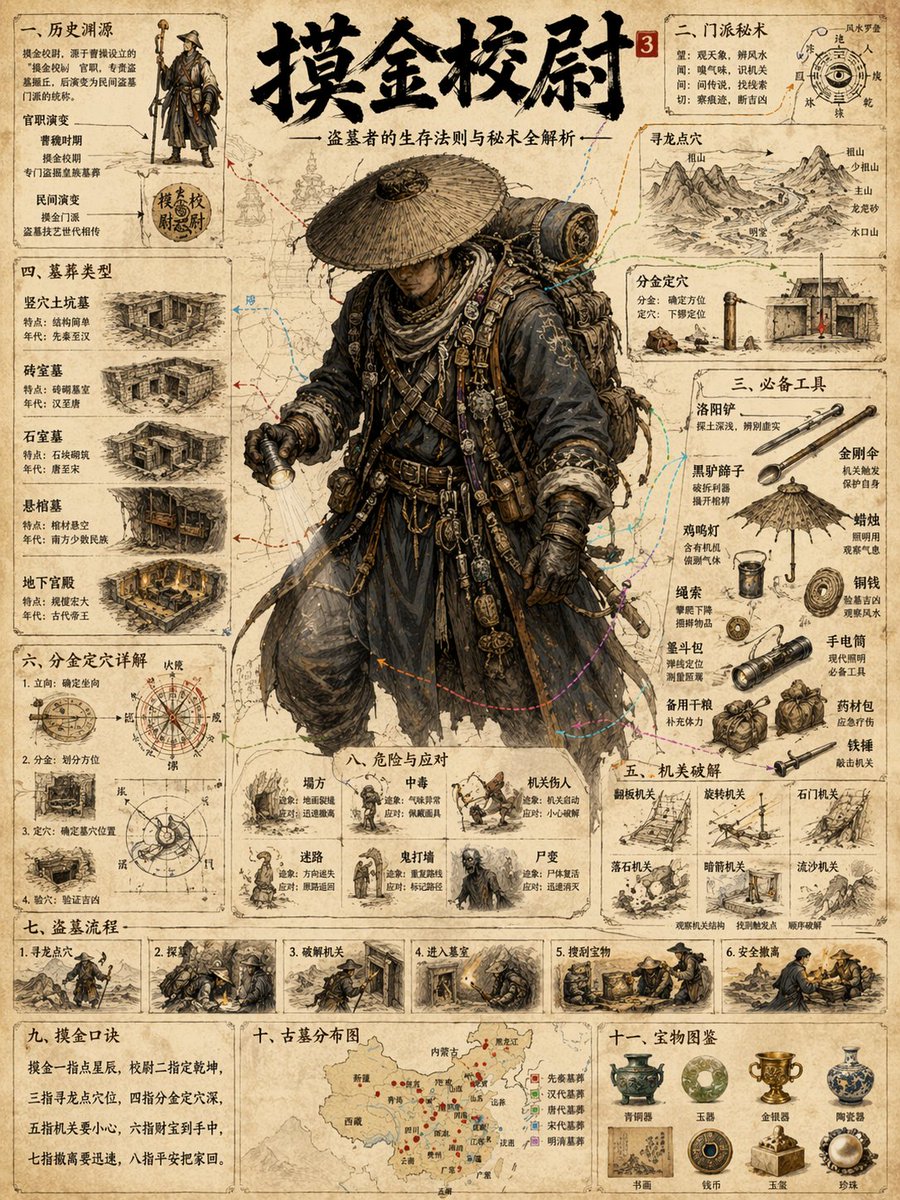
Please automatically generate a "museum catalog-style Chinese disassembly infographic" based on the [Subject].

The entire image is required to combine a realistic main visual, structural disassembly, Chinese annotations, material descriptions, pattern meanings, color meanings, and core feature summaries. You need to automatically determine the most appropriate main subject, clothing system, artifact structure, era style, key components, material craftsmanship, color scheme, and layout structure based on the [Subject], and the user does not need to provide any other information.

The overall style should be: national museum exhibition boards, historical clothing catalogs, and cultural/museum thematic infographics, rather than ordinary posters, ancient-style portraits, e-commerce detail pages, or anime illustrations. The background uses paper textures such as off-white, silk white, and light tea color, making the overall look premium, restrained, professional, and collectible.

The layout is fixed as:
- Top: Chinese main title + subtitle + introduction
- Left: Structural disassembly area, with Chinese lead lines annotating key components, accompanied by close-up details
- Upper right: Material / craftsmanship / texture area, displaying real texture samples with descriptions
- Middle right: Pattern / color / meaning area, displaying the main color palette, pattern samples, and cultural explanations
- Bottom: Dressing order / composition flowchart + core feature summary

If the subject is suitable for character display, use a full-body standing posture of a real person as the central subject; if it is more suitable for artifacts or single structures, change it to a central subject disassembly diagram, but the overall form remains a complete Chinese infographic. All text must be in Simplified Chinese, clear, neat, and readable, without garbled characters, typos, English, or pinyin. The focus is on highlighting real structures, material differences, cultural explanations, and a catalog atmosphere.

Avoid: poster feel, studio portrait feel, e-commerce feel, anime feel, cosplay feel, random annotations, incorrect structures, blurry text, fake materials, excessive decoration.
AI 眼镜爆炸拆解图

AI 眼镜爆炸拆解图

原文125 个字符
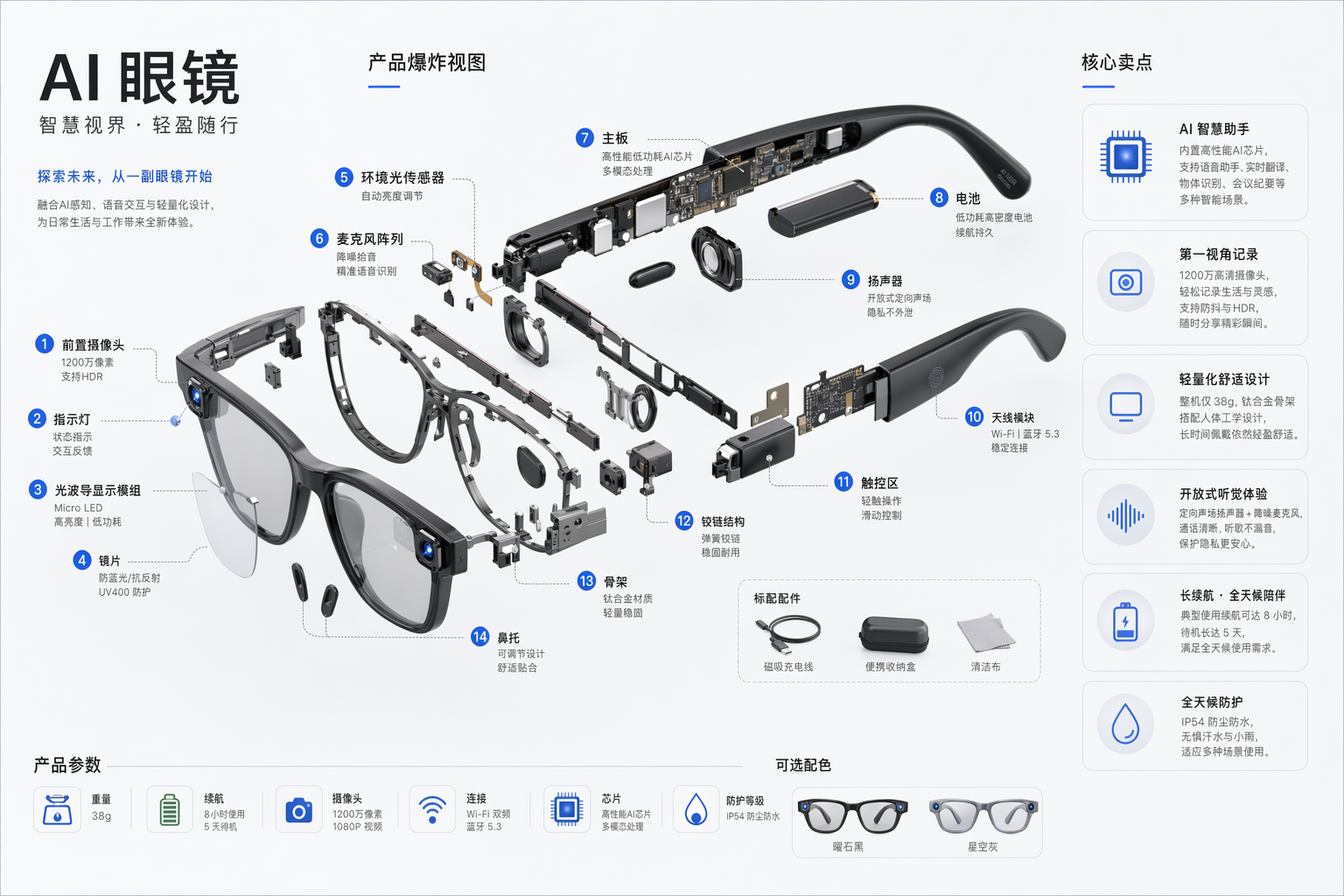
Generate an exploded view of AI glasses, including the name of each component and several key selling points of this product.
A realistic photo of a Ch...

信息图可视化设计

原文519 个字符
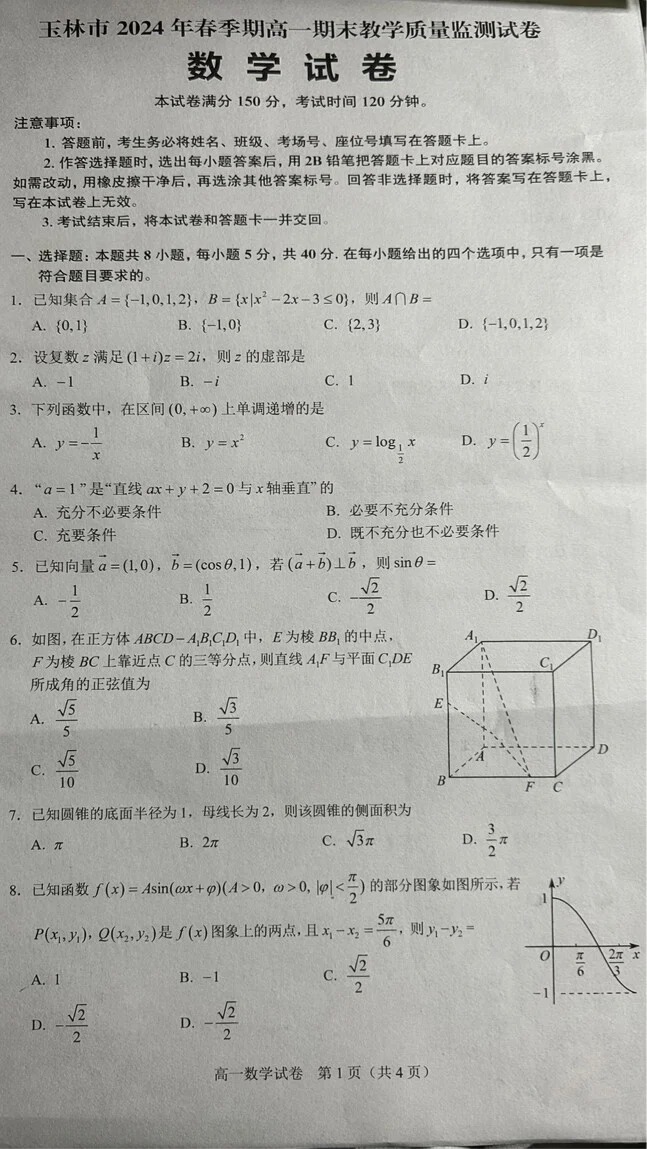
A realistic photo of a Chinese high school math exam paper, printed in black and white on slightly gray paper, titled "Mathematics Test Paper", with multiple choice questions and math formulas, including a small 3D geometry cube diagram. The paper is photographed casually with a smartphone, slightly tilted, with uneven lighting, soft shadows, and minor blur. The text is in Chinese with a mix of bold title font and standard serif body font. Realistic paper texture, exam layout, authentic classroom test sheet style.
{argument name=

信息图可视化设计

原文2,605 个字符
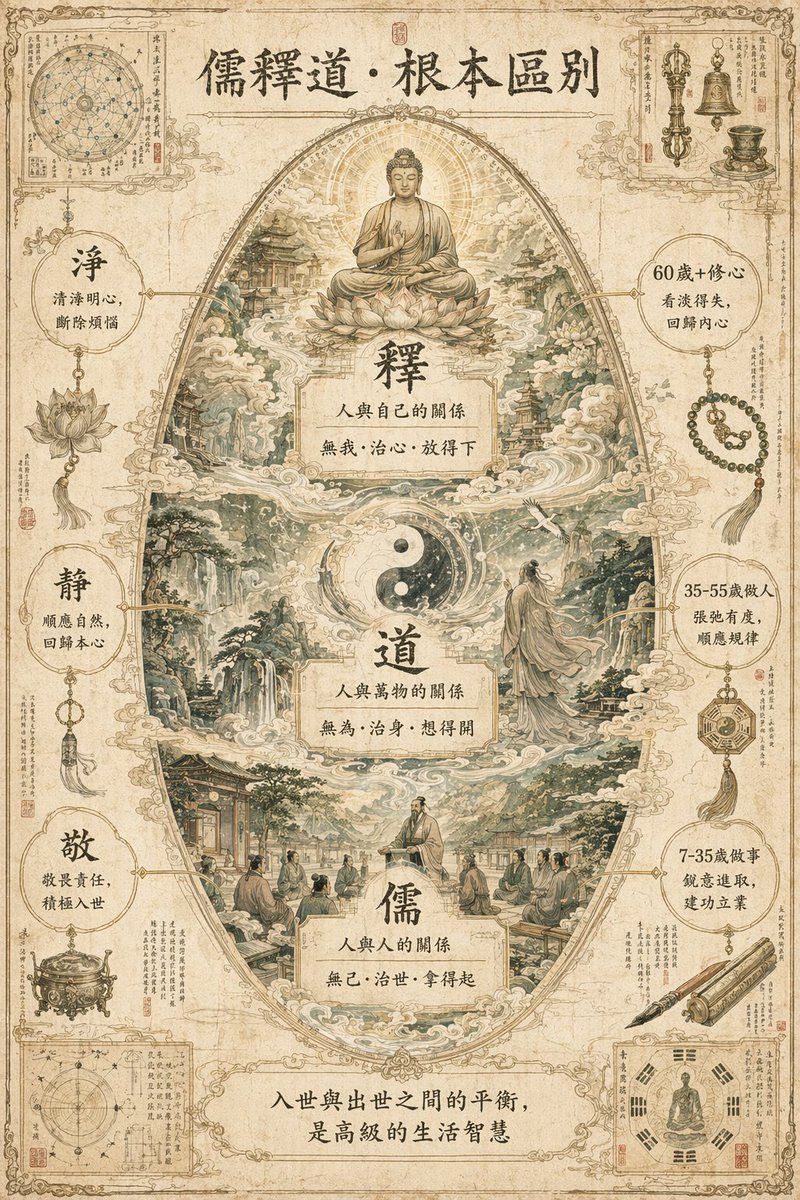
A breathtaking and extremely complex world-building infographic masterpiece conceptualizing the "{argument name="theme" default="Fundamental Differences between Confucianism, Buddhism, and Taoism"}", designed as a profound {argument name="style" default="ancient Oriental mythological manuscript"}.
Background: Pure white vintage textured canvas with a light beige aged parchment base color, subtle frayed edges, and water stain textures.
Core Layout: Central vision uses a grand "vertical egg-shaped layered structure", with Buddhism, Taoism, and Confucianism layers from top to bottom.
Margins: Four corners are decorated with fine micro-illustrations featuring ancient observation notes, ritual implements, and runes.
Colors: Low-saturation sage green, light gold, and off-white as main tones; overall light and soft without harsh high-saturation colors.
Details: Architectural lines, landscape brushwork, lotus patterns, and cloud layers are clearly visible and exquisitely detailed.
Seamless Fusion: The three layers transition naturally through clouds and flowing water; the Buddhist halo, Taoist Taiji mist, and Confucian scholarly aura connect seamlessly.
Style: Classical ink line art + low-saturation digital watercolor, with a light Chinese-style ancient book manuscript texture.
Text Annotations: Authentic Traditional Chinese characters in a mottled vintage Song typeface. Each annotation includes a short title + a line of poetic description, connected to corresponding details by dark gold hair-thin lines with no overlapping pointers.
Aspect Ratio: {argument name="aspect ratio" default="3:4"} vertical format, independent and complete.

Title Area (Top): `儒釋道·根本區別` (Confucianism, Buddhism, Taoism: Fundamental Differences)
Central Layer Labels:
Top "Buddhism": `釋`, `Relationship between man and self`, `Selflessness, governing the heart, letting go` 
Middle "Taoism": `道`, `Relationship between man and all things`, `Non-action, governing the body, being open-minded` 
Bottom "Confucianism": `儒`, `Relationship between man and man`, `No ego, governing the world, taking responsibility` 
Side Annotations:
Left: `Purity`: pure heart and clear mind, cutting off troubles; `Stillness`: following nature, returning to the original heart; `Respect`: respecting responsibility, active involvement in society.
Right: `60+ Spiritual Cultivation`: looking lightly at gain/loss; `35-55 Conduct`: living with flexibility, following laws; `7-35 Actions`: forging ahead, building careers.
Bottom Summary: `The balance between being in the world and being out of the world is high-level life wisdom.`
一张中文健身信息图

一张中文健身信息图

原文4,769 个字符
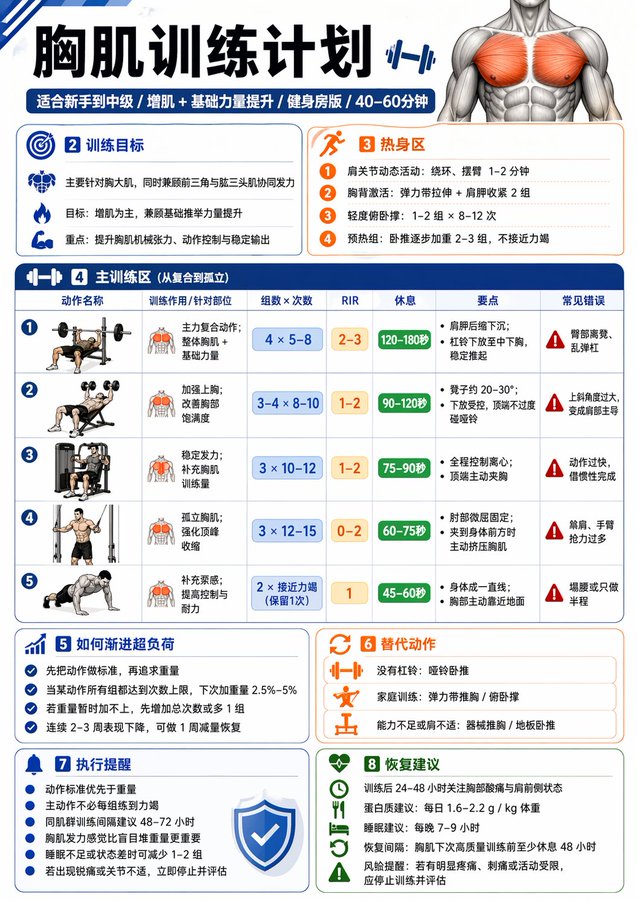
Please generate a Chinese fitness infographic with the theme: 【xxx】.

The infographic should be both professional and practical, suitable for regular adults as a training reference. The default target audience is healthy adults without serious injuries; if no additional specifications are provided, the default training goal is "muscle building + basic strength improvement", the default training level is "beginner to intermediate", the default training scenario is "regular gym", and the default single training session duration should be controlled within 40-60 minutes.

Please automatically determine the output type based on the 【Training Theme】:

1) If the 【Training Theme】 is a specific muscle group or body part (e.g., chest, lats, biceps, abs, shoulders, legs, etc.), please output a "Training Plan Infographic for that Body Part".
2) If the 【Training Theme】 is a specific exercise or skill goal (e.g., pull-ups, push-ups, dips, squats, etc.), please output an "Exercise Unlocking/Progression Training Plan Infographic".

The entire infographic should adopt a clear, modern, professional, and readable Chinese infographic style, with vertical layout, clean visuals, and prominent highlights. It should be suitable for social media sharing or as a training reference card. Avoid lengthy paragraphs; present each section with concise short sentences, and make numerical information stand out.

This infographic must include the following content:

【A. Title Section】
- Main Title: Directly write 【Training Theme】 Training Plan / Unlocking Plan
- Subtitle: Automatically include target audience, goals, training scenario, and suggested duration
Example: Suitable for beginners / Muscle building focused / Gym version / 45 minutes

【B. Training Goals Section】
Explain in concise language:
- What this training primarily targets
- Main goals (muscle building / strength / skill unlocking / core control, etc.)
- Key stimulation or capability improvement direction for this training

【C. Warm-up Section】
Provide 2-4 warm-up suggestions, listed concisely, for example:
- Dynamic activities
- Target muscle group activation
- Light weight warm-up sets
Each item can include a brief description

【D. Main Training Section】
This is the core section, please list 4-6 main training exercises.
Each exercise must include the following information:
- Exercise name
- Training effect / Targeted area
- Sets × Reps (or duration)
- RIR recommendation
- Rest time between sets
- Key points of the exercise (1-2 points)
- Common mistakes (1 point only)

Ensure reasonable exercise arrangement:
- Compound exercises first, then isolation exercises
- Moderate overall training volume
- Don't schedule overly intense training for beginners
- Main exercises typically recommend RIR 1-3
- Isolation exercises can suggest RIR 0-2
- For abs or core exercises, use "seconds / reps" format
- For skill-based exercises, prioritize "prerequisite ability exercises + transition exercises + target exercise attempts"

【E. Progression/Unlocking Logic Section】
Automatically generate based on theme:
- For muscle group training: Write "How to progressively overload", e.g., increase weight after reaching rep limits, prioritize proper form, etc.
- For exercise unlocking: Write "Phased progression path", e.g., from hanging, scapular pull-ups, eccentric training, resistance band assistance, to completing the standard exercise

【F. Alternative Exercises Section】
Please provide 2-3 alternative exercises suitable for the following situations:
- No equipment available
- Home training
- Current ability is insufficient
- Certain exercises cannot be performed

【G. Execution Reminders Section】
Please provide 4-6 concise reminders, for example:
- Proper form takes priority over weight
- Don't train to failure on every set
- Allow 48-72 hours between training the same muscle group
- Pain doesn't equal normal exertion
- When sleep-deprived, appropriately reduce training volume

【H. Recovery Suggestions Section】
Briefly explain:
- Post-training recovery focus points
- Protein / sleep / recovery interval recommendations
- 1 risk reminder (if experiencing significant pain, stop and assess)

【I. Visual Design Requirements】
- Overall as a single-page Chinese infographic
- Vertical layout
- Modern, clean, professional, and strong fitness-oriented style
- Use modular card layout
- Key numbers (sets, reps, RIR, rest) should be prominent
- Can include simple human muscle group icons, dumbbells, barbells, pull-up icons, etc.
- Colors should be premium, clean, and sporty
- Chinese text must be clear, accurate, and readable
- Avoid excessive decorations, emphasize practicality and executability

Please finally output as "a complete infographic content", not just regular paragraph text.
AP Calculus 学习表信息图

AP Calculus 学习表信息图

原文970 个字符
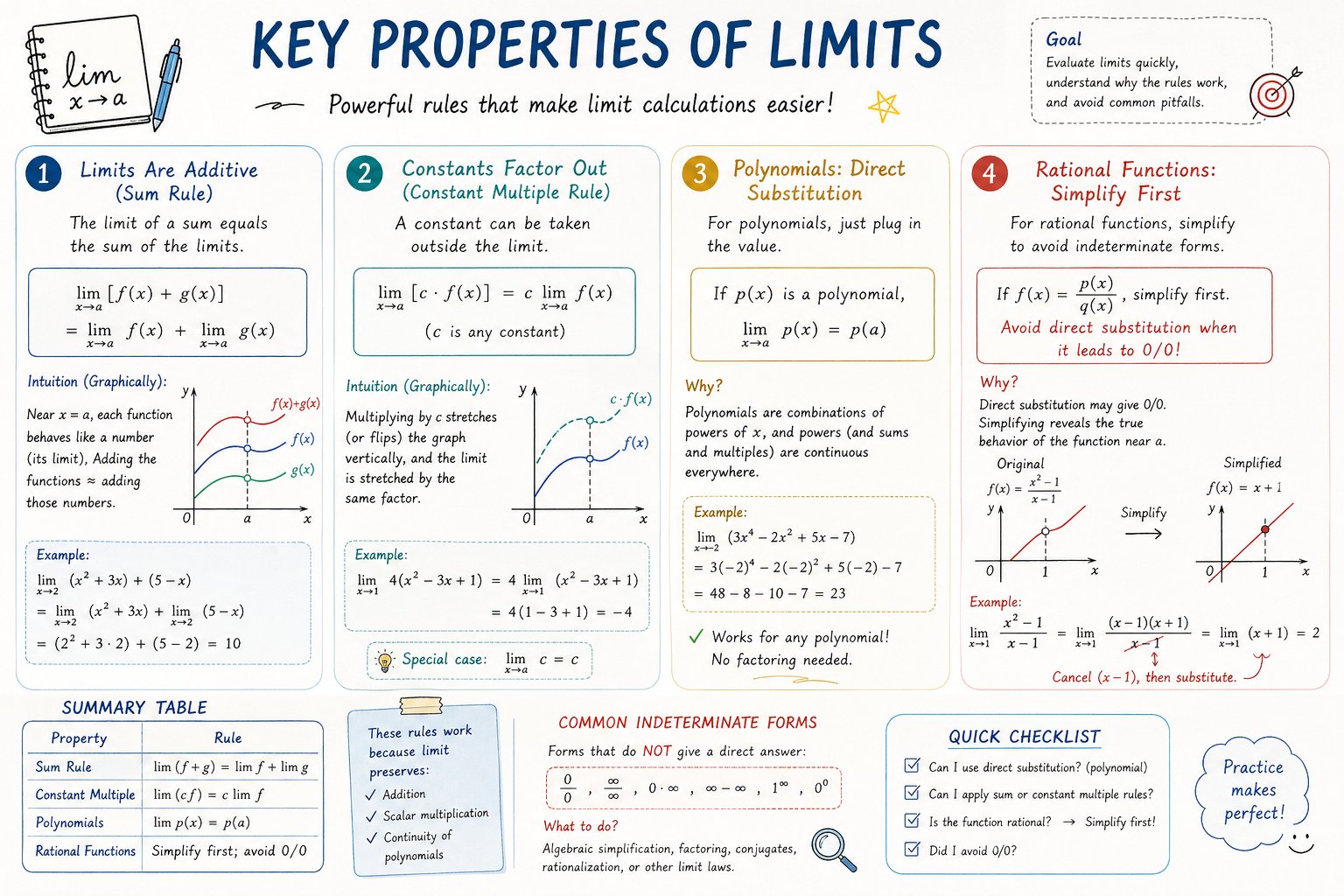
Please create a mathematical visualization infographic about "[math concept / topic]." The goal is to help the viewer intuitively understand what it is, why it works, its geometric or structural intuition, and how it behaves in different contexts. The visual should feel like a high-quality math lecture handout combined with a hand-drawn educational poster. It should be elegant, clear, and information-rich, but not cluttered. Visual style: either portrait or landscape is fine. Use a clean, light paper-like background, with a deep blue title and black or dark gray lines for the main content. Add a small number of refined accent colors such as blue, teal, gold, and red. Incorporate rounded-corner cards, thin borders, numbered labels, hand-drawn arrows, zoom-in callout boxes, and a summary section. The overall design should be aesthetically pleasing, balanced, and academic, allowing the viewer to grasp the structure of the concept and why it works at a glance.
type

信息图可视化设计

原文2,372 个字符
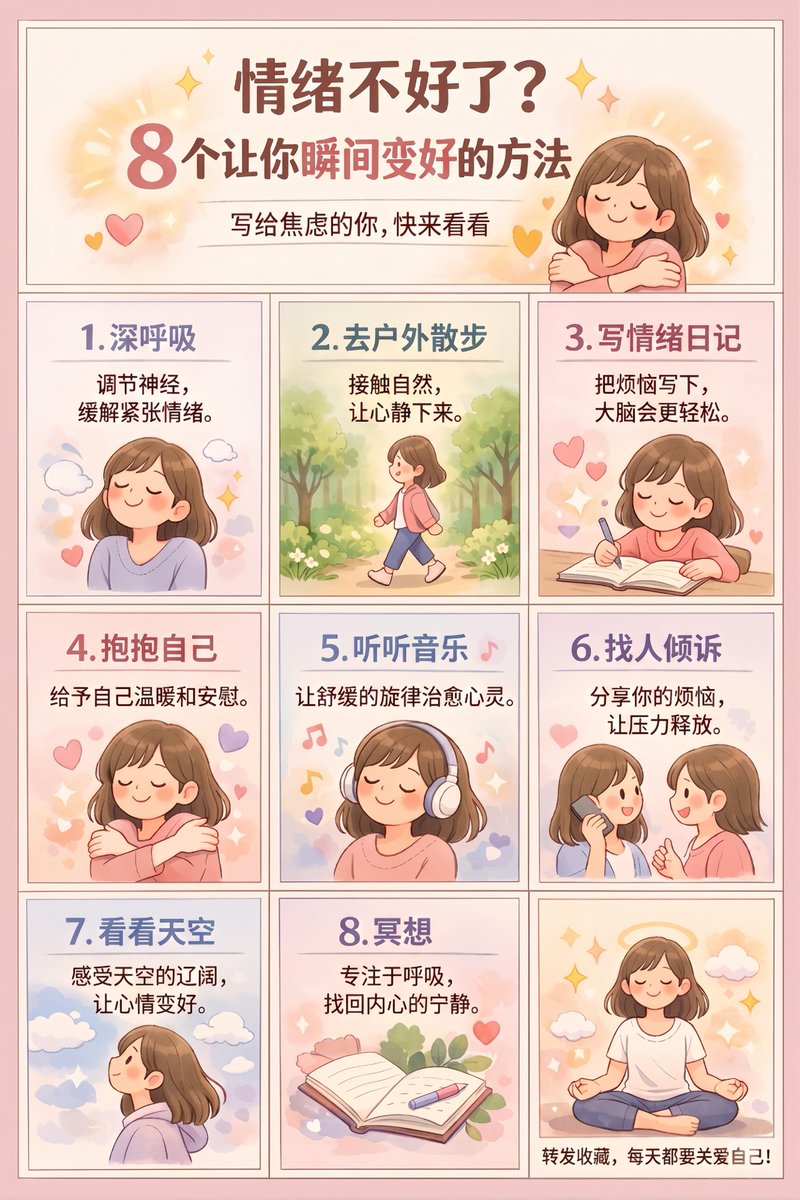
{"type":"infographic poster","style":"cute flat vector illustration, cozy, warm, soft shading, {argument name=\"color palette\" default=\"pastel Morandi colors, soft pinks, purples, and warm tones\"}","character":"{argument name=\"character description\" default=\"young woman with shoulder-length brown hair wearing a pinkish-purple shirt\"}","layout":{"structure":"4 rows, 3 columns. Top row is a merged header. Rows 2-4 contain 9 individual panels.","header":{"title":"{argument name=\"main title\" default=\"Feeling down?\"}","subtitle":"{argument name=\"subtitle\" default=\"8 instant ways to feel better\"}","sub_subtitle":"For those feeling anxious, take a look","visual":"character hugging herself, surrounded by yellow sparkles and hearts"},"grid_panels":[{"id":1,"title":"1. Take deep breaths","text":"Regulate your nervous system, relieve tension.","visual":"character with eyes closed, smiling, surrounded by clouds"},{"id":2,"title":"2. Go for a walk outdoors","text":"Connect with nature, calm your mind.","visual":"character walking outdoors among green trees and bushes"},{"id":3,"title":"3. Write an emotion journal","text":"Write down your worries, your brain will feel lighter.","visual":"character sitting at a desk writing in a notebook with a pen, floating hearts"},{"id":4,"title":"4. Hug yourself","text":"Give yourself warmth and comfort.","visual":"character hugging herself with eyes closed, floating hearts"},{"id":5,"title":"5. Listen to music","text":"Let soothing melodies heal your soul.","visual":"character wearing large white headphones, eyes closed, floating colorful music notes"},{"id":6,"title":"6. Talk to someone","text":"Share your worries, release your stress.","visual":"character holding a smartphone, talking to another similar-looking girl, floating hearts"},{"id":7,"title":"7. Look at the sky","text":"Feel the vastness of the sky, improve your mood.","visual":"character looking up at a blue sky with white clouds and sparkles"},{"id":8,"title":"8. Meditate","text":"Focus on your breath, find inner peace.","visual":"an open notebook, a pen, and a pink flower on a desk"},{"id":9,"title":"none","text":"{argument name=\"footer text\" default=\"Share and save, remember to care for yourself every day!\"}","visual":"character sitting cross-legged in a meditation pose, eyes closed, with a glowing halo behind her head"}]}}
theme

信息图可视化设计

原文2,413 个字符
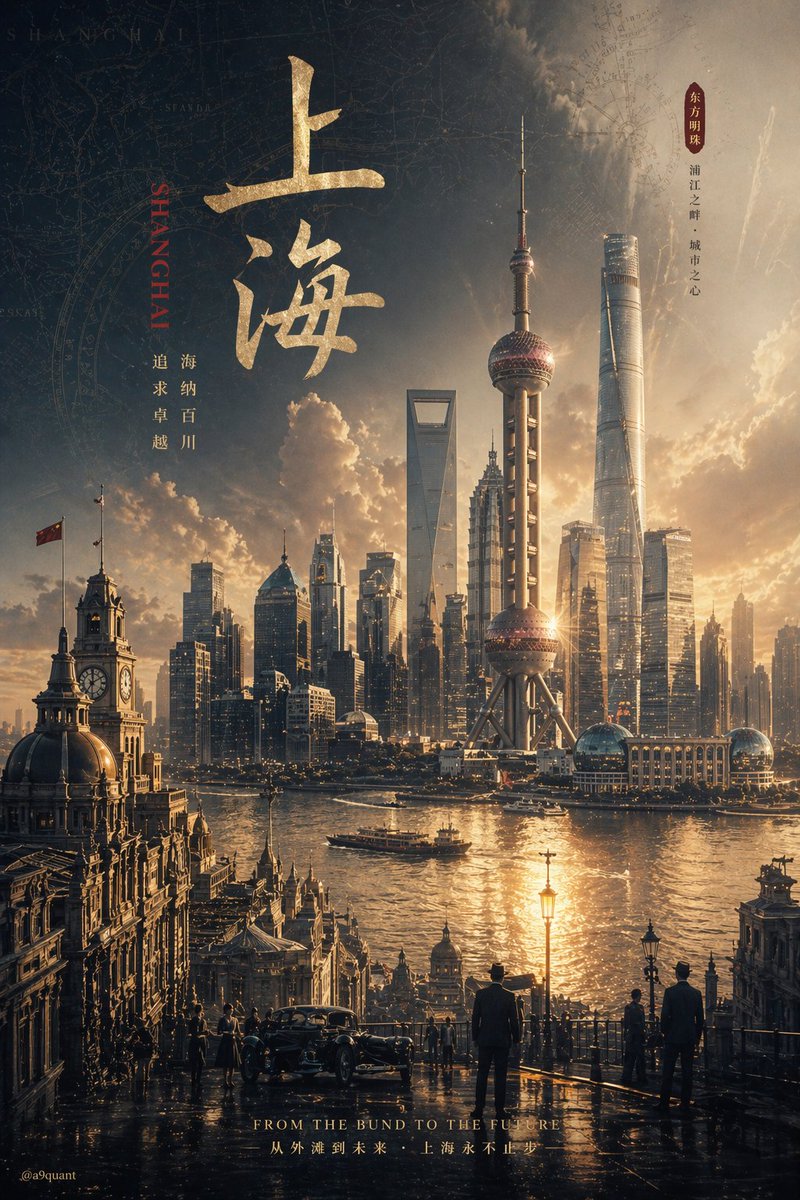
GPT-Image-2 prompt: please automatically generate a top-tier concept poster / infographic-style movie poster centered around {argument name="theme" default="ranking of emperors in Chinese history"}.

Require the AI to automatically derive and uniformly design the entire following visual system based on this theme, without my extra specification:
- Core subject (automatically judge suitability for people, products, architecture, artifacts, symbols, scenes, or abstract imagery)
- Bottom supporting structure
- Hovering symbols or spiritual symbols above
- Scene wrapping elements
- Metaphor system
- Color hierarchy
- Material contrast
- Lighting logic
- Title, subtitle, and auxiliary copy
- Brand sense and high-end expression

The final frame must be: a shocking, precise, unified, cinematic, ultra-high detail conceptual key visual poster suitable for high-end printing.

[Overall Style]
Ultra-realistic 3D commercial CGI rendering, merging cinematic lighting, luxury visual language, futuristic concept design, and epic composition. The image must have a "single main visual core," not messy, not like a collage, and not like a regular e-commerce poster.

[Automatic Derivation Rules]
AI must automatically decide based on the [theme]:
1. Core visual metaphor
2. Subject type and posture
3. Form of supporting structure
4. Form of suspended elements
5. Scene shell and spatial atmosphere
6. Main, auxiliary, and emphasis colors
7. Material combinations
8. Text temperament and layout style

[Composition Rules]
- Absolute sense of premium quality
- Strong central order, overall unity
- Allows for axial symmetry or epic composition near the central axis
- Clear visual gravity, forming clear levels from top to bottom
- Edge negative space is clean, restrained, and has room to breathe

[Visual Quality]
- Ultra-high detail
- Clear volumetric light
- Authentic materials
- Natural reflection, refraction, shadows, fog, and depth of field
- Overall standard of high-end brand campaign key visual / luxury invitation poster / conceptual editorial poster

[Typography System]
- Overall 90% visual, 10% text
- AI automatically generates the most matching main title and subtitle based on the [theme]
- Title must be concise, sharp, and powerful
- Text should be as minimal and accurate as possible; do not stack words

[Signature Requirement]
Naturally add the author signature in the bottom corner: @a9quant
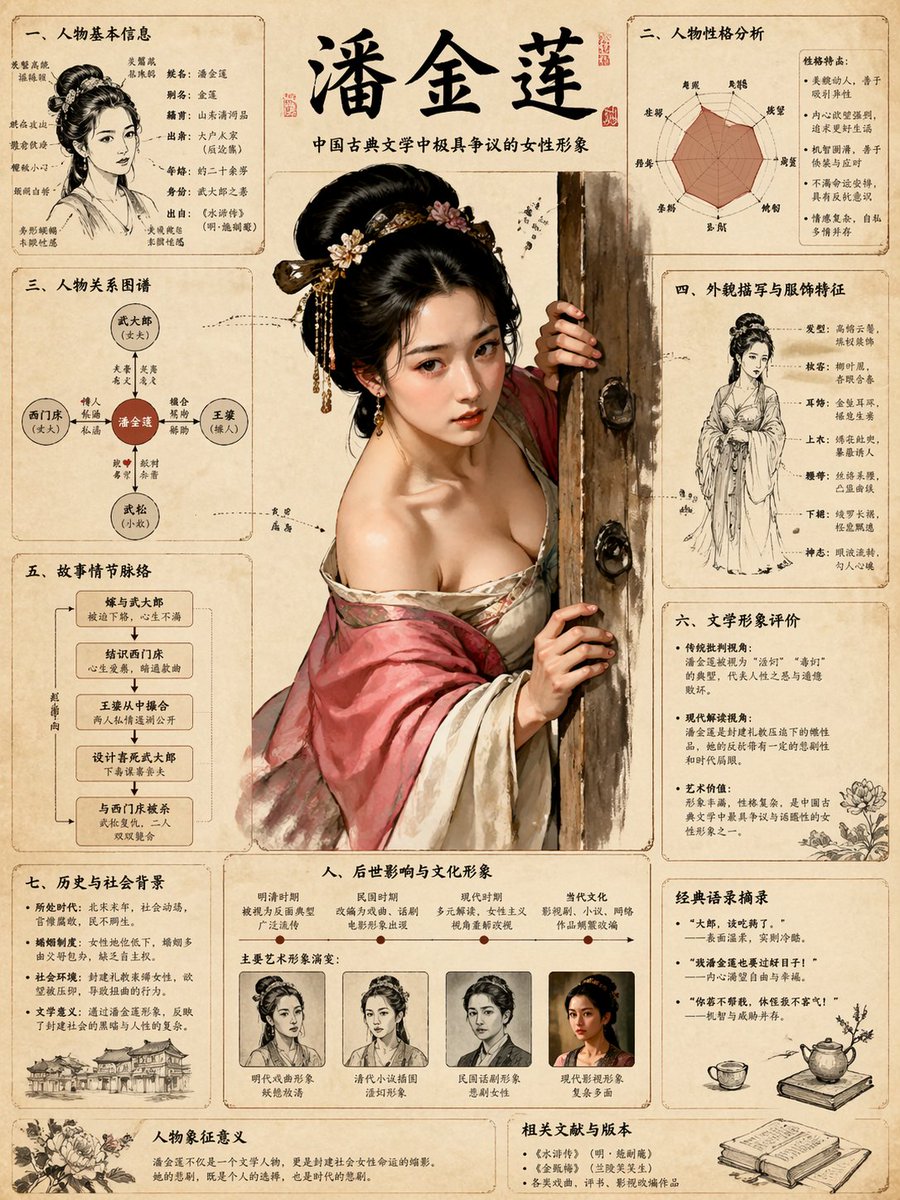
绘制金瓶梅知识图谱

绘制金瓶梅知识图谱

原文4,857 个字符
Field: promptText.translations.en

Role: World-class Scientific Encyclopedia Illustrator & Knowledge Graph Architect.

Task: Generate a highly detailed, extremely intricate, and visually stunning "Universal Illustrated Encyclopedia Science Infographic" in a classic, unbranded (NO logos) scientific encyclopedia style.

Subject Matter: Choose one from [People, Plants, or Animals]. 

Specific Subject: [e.g., The Giant Squid / Leonardo da Vinci / The Sequoia Tree].

Style: Fine, detailed scientific illustration on a retro, aged beige paper background. Delicate linework. Intricately complex and professional.

Key Visual Requirements:

1.  Lifelike 3D Effect (The Central Subject): The central subject in the "C position" must be rendered with extraordinary realism and dynamism. Create a dramatic sense of depth where the character, plant, or animal appears to break the frame, leaping or bursting out of the flat paper towards the viewer (an effect similar to anamorphic 3D or dynamic pop-out, with high-precision realism).

2.  Layout & Strategic White Space:
   * Central Subject: Dominates the center, with intentional "strategic white space" around it to enhance the popping-out effect and make the figure the clear focal point.
   * Surrounding Modules: The surrounding area (left, right, top, bottom, and corners) must be filled with 6-8 distinct, highly organized knowledge modules, depending on the subject. There should be a sense of organized density, not random clutter. The modules themselves must have clear borders, headers, and extensive, detailed content.

3.  Connections: Use a complex, logical network of fine leader lines, arrows, brackets, dotted lines, and small connection points to link the central figure to all surrounding modules, and interconnect the modules themselves into a cohesive knowledge web.

4.  Text & Annotation (Hard Requirement - Must be CLEAR Chinese):
   * Main Title: A large, prominent, beautifully executed **Chinese calligraphy** (书法体) of the specific subject's name [e.g., "大王乌贼"].
   * Calligraphic Accents: Scattered throughout the main content and module titles, use beautiful, clear Chinese calligraphy for important terms.
   * Standard Chinese Text: All other descriptive text, handwritten notes (大量清晰中文手写注释), module content, and annotations must be clear, legible Chinese characters (简体中文), not gibberish or unreadable symbols. Ensure text clarity is prioritized.
   * Leader Line Annotations: Every single small component, detail, submodule, diagram, or illustration within the modules must have detailed leader line annotations (拟解剖图) pointing directly to it for maximum professionalism and educational value. Every part should be labeled.

Subject-Specific Module Structure (Example for general reference):

A. For Humans [People]:
   - Module 1: Anatomy & Skeletal Structure (w/ magnified cross-sections)
   - Module 2: Physiological Processes (e.g., Circulatory/Nervous System)
   - Module 3: Historical Context & Timeline (Key Achievements)
   - Module 4: Major Contribution Diagram (Detailed breakdown)
   - Module 5: Cognitive Process / Psychological Insight
   - Module 6: Genetic Profile / Evolution
   - Module 7: Global Influence & Cultural Impact
   - Module 8: Cultural Representations / Legacy

B. For Animals:
   - Module 1: Full External Sketch & Anatomy (w/ microscope magnified detail circular windows)
   - Module 2: Behavioral Patterns & Lifecycle (e.g., Mating/Migration, Flowchart style)
   - Module 3: Digestive & Skeletal System
   - Module 4: Habitats & Distribution Map (with environmental details)
   - Module 5: Unique Adaptations (e.g., camouflage, hunting tools)
   - Module 6: Evolutionary History & Relatives
   - Module 7: Symbiotic Relationships / Ecosystem Role
   - Module 8: Conservation Status & Human Interaction

C. For Plants:
   - Module 1: Full Plant Sketch & Anatomy (w/ magnified leaf/root details)
   - Module 2: Photosynthesis & Lifecycle Flow (w/ icons for environment)
   - Module 3: Cellular Structure (Magnified circular views)
   - Module 4: Medicinal Properties / Practical Applications (as in original original prompt)
   - Module 5: Environmental Adaptations / Unique Features
   - Module 6: Distribution Map & Environmental Context
   - Module 7: Genetic Variations & Cultivation
   - Module 8: Historical Usage & Folklore

Overall Composition: Extremely dense with information, organized into 6-8 structured modules, but balanced with strategic empty space around the center to allow the main, hyper-realistic figure to pop. Hard-core, professional, academic, but visually engaging due to the dynamic 3D central figure. No branding from any specific encyclopedia (e.g., no "DK" logos). All annotations must be legible. All handwritten notes must be clear. Main titles in Chinese calligraphy. Aspect Ratio: 3:4.

Subject Matter: Pan Jinlian
format

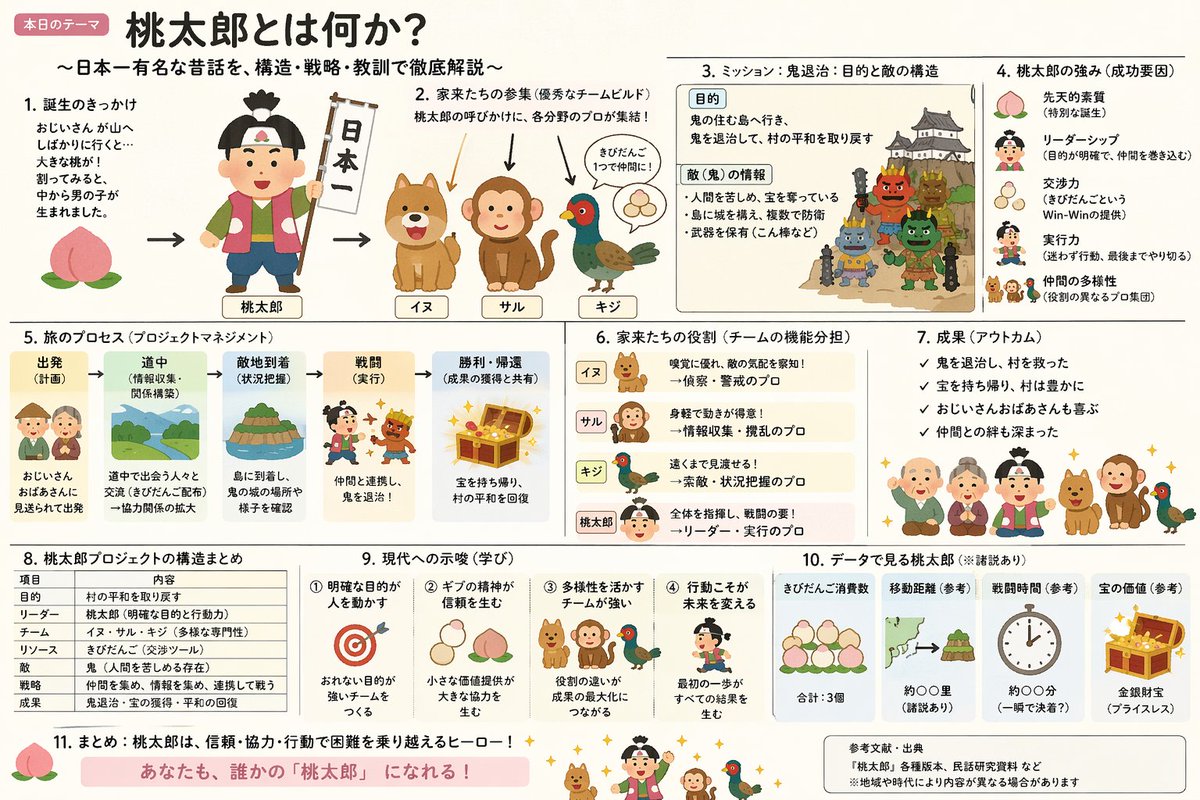
混合风格的桃太郎讲解 Slides

原文244 个字符
Create an explanatory slide ({argument name="format" default="ponchi-e diagram"}) for {argument name="theme" default="Momotaro"} that fuses the gentle atmosphere of "Irasutoya" with the overwhelming information density of "Kasumigaseki slides".
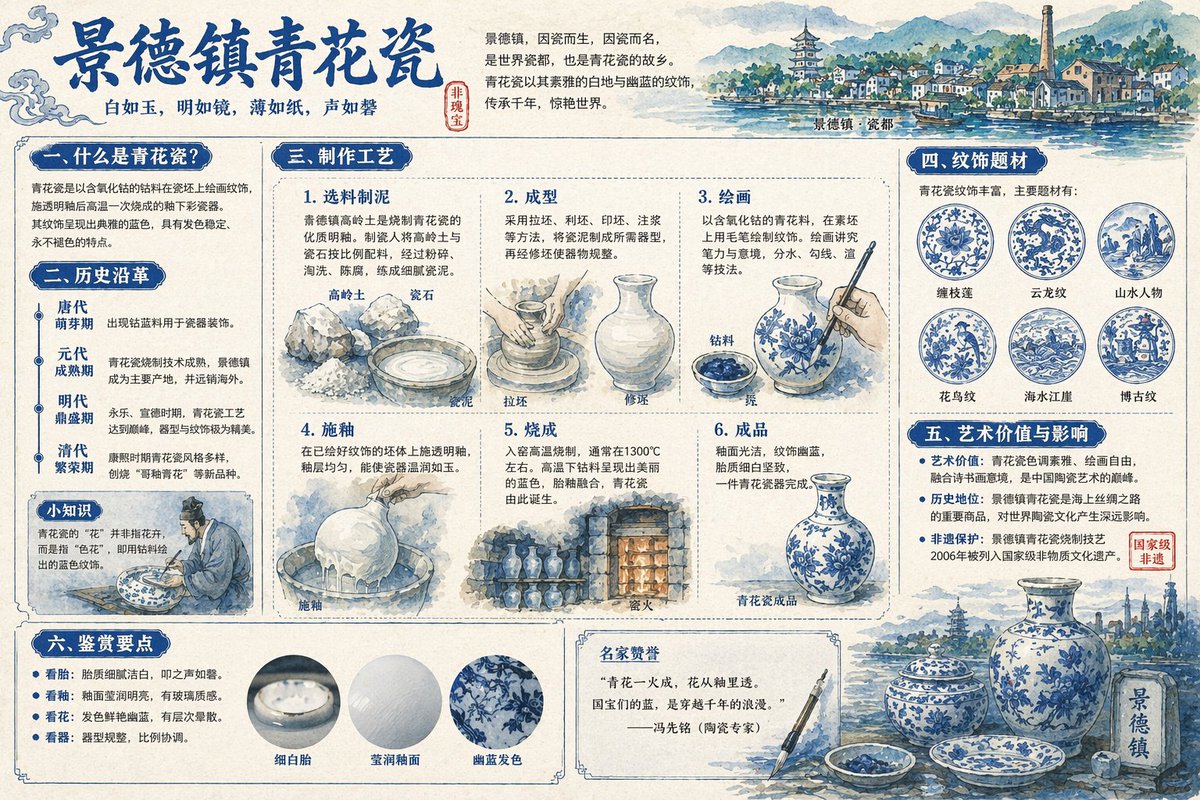
绘制科学百科知识图谱

绘制科学百科知识图谱

原文4,807 个字符
Role: World-class Scientific Encyclopedia Illustrator & Knowledge Graph Architect.

Task: Generate a highly detailed, extremely intricate, and visually stunning "Universal Illustrated Encyclopedia Science Infographic" in a classic, unbranded (NO logos) scientific encyclopedia style.

Subject Matter: Choose one from [People, Plants, or Animals]. 

Specific Subject: [e.g., The Giant Squid / Leonardo da Vinci / The Sequoia Tree].

Style: Fine, detailed scientific illustration on a retro, aged beige paper background. Delicate linework. Intricately complex and professional.

Key Visual Requirements:

1.  Lifelike 3D Effect (The Central Subject): The central subject in the "C position" must be rendered with extraordinary realism and dynamism. Create a dramatic sense of depth where the character, plant, or animal appears to break the frame, leaping or bursting out of the flat paper towards the viewer (an effect similar to anamorphic 3D or dynamic pop-out, with high-precision realism).

2.  Layout & Strategic White Space:
    * Central Subject: Dominates the center, with intentional "strategic white space" around it to enhance the popping-out effect and make the figure the clear focal point.
    * Surrounding Modules: The surrounding area (left, right, top, bottom, and corners) must be filled with 6-8 distinct, highly organized knowledge modules, depending on the subject. There should be a sense of organized density, not random clutter. The modules themselves must have clear borders, headers, and extensive, detailed content.

3.  Connections: Use a complex, logical network of fine leader lines, arrows, brackets, dotted lines, and small connection points to link the central figure to all surrounding modules, and interconnect the modules themselves into a cohesive knowledge web.

4.  Text & Annotation (Hard Requirement - Must be CLEAR Chinese):
    * Main Title: A large, prominent, beautifully executed **Chinese calligraphy** (书法体) of the specific subject's name [e.g., "大王乌贼"].
    * Calligraphic Accents: Scattered throughout the main content and module titles, use beautiful, clear Chinese calligraphy for important terms.
    * Standard Chinese Text: All other descriptive text, handwritten notes (大量清晰中文手写注释), module content, and annotations must be clear, legible Chinese characters (简体中文), not gibberish or unreadable symbols. Ensure text clarity is prioritized.
    * Leader Line Annotations: Every single small component, detail, submodule, diagram, or illustration within the modules must have detailed leader line annotations (拟解剖图) pointing directly to it for maximum professionalism and educational value. Every part should be labeled.

Subject-Specific Module Structure (Example for general reference):

A. For Humans [People]:
   - Module 1: Anatomy & Skeletal Structure (w/ magnified cross-sections)
   - Module 2: Physiological Processes (e.g., Circulatory/Nervous System)
   - Module 3: Historical Context & Timeline (Key Achievements)
   - Module 4: Major Contribution Diagram (Detailed breakdown)
   - Module 5: Cognitive Process / Psychological Insight
   - Module 6: Genetic Profile / Evolution
   - Module 7: Global Influence & Cultural Impact
   - Module 8: Cultural Representations / Legacy

B. For Animals:
   - Module 1: Full External Sketch & Anatomy (w/ microscope magnified detail circular windows)
   - Module 2: Behavioral Patterns & Lifecycle (e.g., Mating/Migration, Flowchart style)
   - Module 3: Digestive & Skeletal System
   - Module 4: Habitats & Distribution Map (with environmental details)
   - Module 5: Unique Adaptations (e.g., camouflage, hunting tools)
   - Module 6: Evolutionary History & Relatives
   - Module 7: Symbiotic Relationships / Ecosystem Role
   - Module 8: Conservation Status & Human Interaction

C. For Plants:
   - Module 1: Full Plant Sketch & Anatomy (w/ magnified leaf/root details)
   - Module 2: Photosynthesis & Lifecycle Flow (w/ icons for environment)
   - Module 3: Cellular Structure (Magnified circular views)
   - Module 4: Medicinal Properties / Practical Applications (as in original original prompt)
   - Module 5: Environmental Adaptations / Unique Features
   - Module 6: Distribution Map & Environmental Context
   - Module 7: Genetic Variations & Cultivation
   - Module 8: Historical Usage & Folklore

Overall Composition: Extremely dense with information, organized into 6-8 structured modules, but balanced with strategic empty space around the center to allow the main, hyper-realistic figure to pop. Hard-core, professional, academic, but visually engaging due to the dynamic 3D central figure. No branding from any specific encyclopedia (e.g., no "DK" logos). All annotations must be legible. All handwritten notes must be clear. Main titles in Chinese calligraphy. Aspect Ratio: 3:4.

[主题内容]
performance description

信息图可视化设计

原文319 个字符
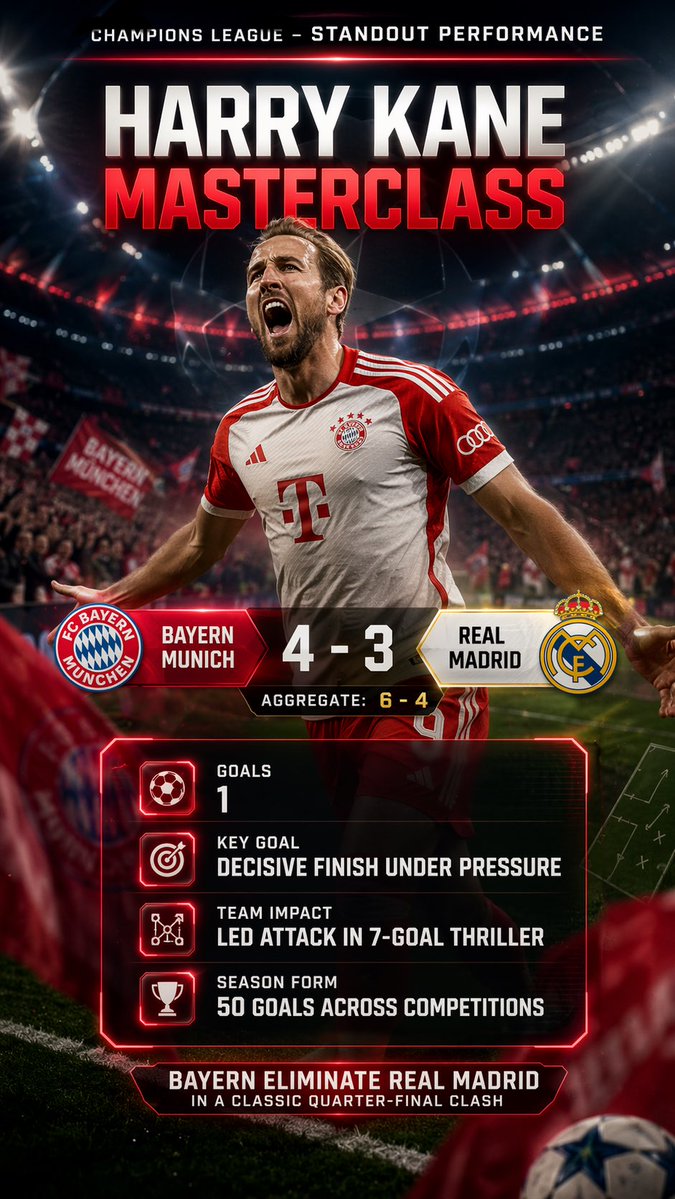
Search the web for {argument name="performance description" default="this week's standout individual performance in Champion's League"}, using exact stats and game summary, {argument name="colors" default="bold team colors"}, legible score breakdown, and generate a {argument name="card type" default="Highlight card"}.
视觉设计规格描述:画幅比 9:16(竖版手机信息图...

信息图可视化设计

原文2,844 个字符
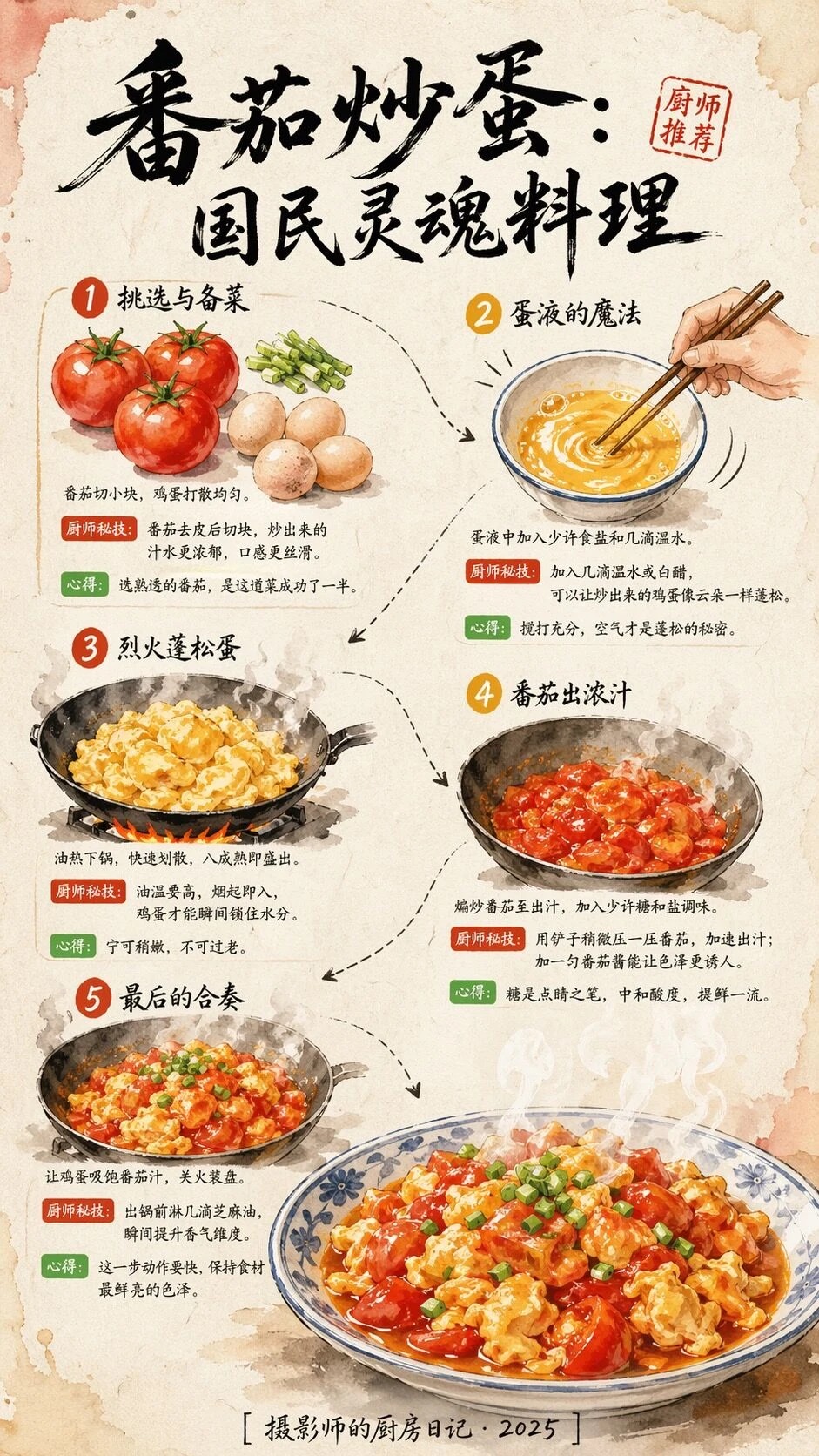
Visual design specifications: Aspect ratio 9:16 (vertical phone infographic); background texture is beige handmade washi paper with a breathing feel, featuring fine fiber texture and slight water stain diffusion at the corners; color scheme includes ripe tomato red (#E23A28), extra virgin olive oil gold (#F2C94C), tender grass green (#6FCF97), and carbon black ink lines; layout logic features large title at the top, Z-shaped flow in the middle, panoramic finished product at the bottom, and artistic white space treatment.

Recipe content planning: 1) Top title "Tomato and Egg Stir-fry: The Soul Dish of the Nation", in hand-drawn calligraphy style, with a small red "Chef's Recommendation" seal on the side. 2) Step sections (Z-shaped flow layout): Step 1 Selection and Preparation (top left): Three tomatoes, four free-range eggs, one bunch of green onions; Instructions: Dice tomatoes into small pieces, beat eggs evenly; Chef's tip: Peel tomatoes before dicing for richer juice and smoother texture; Insight: Choose fully ripe tomatoes, and you're halfway to success. Step 2 The Magic of Egg Mixture (top right): Rapidly beating egg mixture with chopsticks, creating bubbles and dynamic lines; Instructions: Add a pinch of salt and a few drops of warm water; Chef's tip: Adding warm water or white vinegar makes eggs fluffier; Insight: Beat thoroughly, as air is the secret to fluffiness. Step 3 High-Heat Fluffy Eggs (middle left): Egg mixture rapidly expanding like clouds in an iron wok, with watercolor effects showing steam; Instructions: Pour into hot oil, quickly scramble, and remove when 80% cooked; Chef's tip: Use high heat, add when smoke appears to instantly lock in moisture; Insight: Better slightly undercooked than overcooked. Step 4 Rich Tomato Juice (middle right): Tomatoes rolling with semi-melted edges and bright red juice flowing; Instructions: Stir-fry until juice releases, add a little sugar and salt; Chef's tip: Lightly press with spatula to speed up juice extraction, add a spoon of tomato paste for color; Insight: Sugar neutralizes acidity and enhances freshness. Step 5 The Final Harmony (bottom left): Eggs returned to the wok to intertwine with tomato juice, sprinkle with green onions; Instructions: Let eggs absorb tomato juice, turn off heat and plate; Chef's tip: Add a few drops of sesame oil before serving for aroma; Insight: Work quickly to maintain vibrant colors. 3) Bottom finished product illustration: Tomato and egg stir-fry served in a deep blue-and-white porcelain plate, bright red sauce enveloping golden chunks of eggs, garnished with green onions, watercolor rendering of translucent sauce texture, with wisps of steam at the edges; Visual appeal: Makes you want to immediately serve it with a bowl of rice. 4) Bottom center signature: [ The Photographer's Kitchen Diary · 2025 ].
type

信息图可视化设计

原文3,492 个字符
{
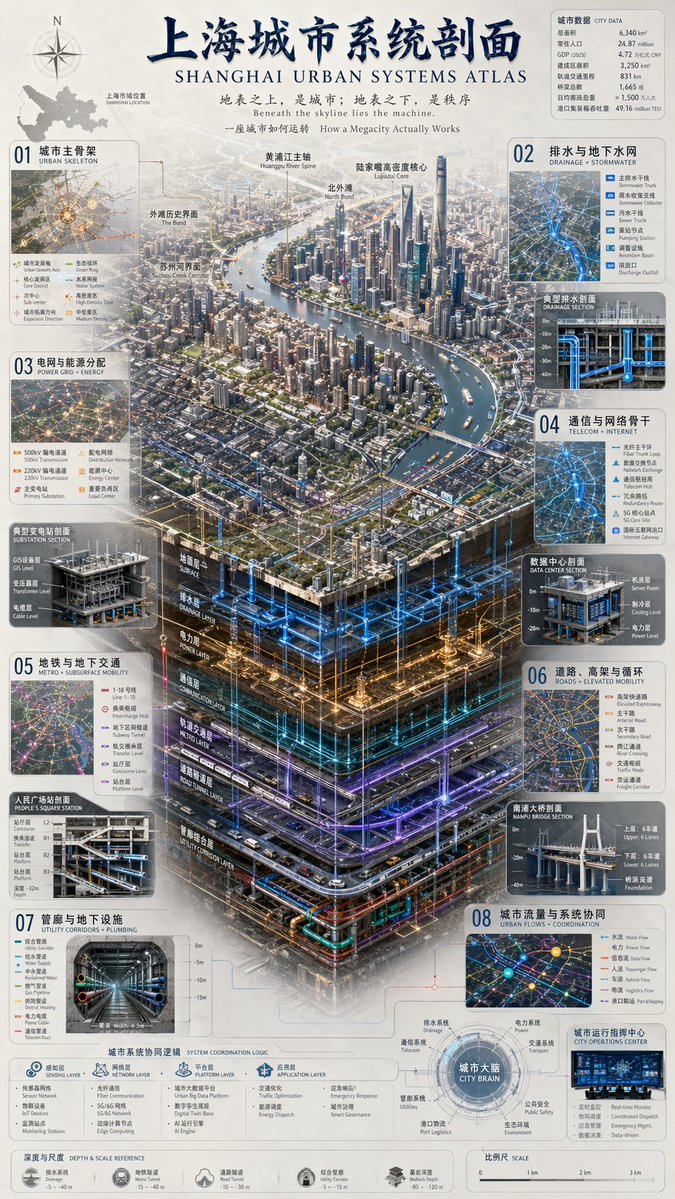
  "type": "complex urban systems atlas infographic",
  "style": "{argument name=\"color palette\" default=\"dark background with glowing blue, gold, and purple accents\"}, highly detailed technical illustration, 3D isometric cutaway",
  "header": {
    "title": "{argument name=\"chinese city name\" default=\"上海\"}Urban Systems Profile {argument name=\"english city name\" default=\"SHANGHAI\"} URBAN SYSTEMS ATLAS",
    "subtitles": [
      "Above ground is the city; below ground is order {argument name=\"english subtitle\" default=\"Beneath the skyline lies the machine.\"}",
      "How a Megacity Actually Works"
    ]
  },
  "layout": {
    "top_left": "Compass rose and city map labeled 'Shanghai City Location SHANGHAI LOCATION'",
    "top_right": "Data table titled 'City Data CITY DATA' with 7 rows of statistics",
    "centerpiece": {
      "description": "{argument name=\"centerpiece style\" default=\"highly detailed 3D isometric cutaway render\"} of a megacity river landscape",
      "layers": [
        "Surface Layer SURFACE",
        "Drainage Layer DRAINAGE LAYER",
        "Power Layer POWER LAYER",
        "Communication Layer COMMUNICATION LAYER",
        "Metro Rail Layer METRO LAYER",
        "Road Tunnel Layer ROAD TUNNEL LAYER",
        "Utility Corridor Layer UTILITY CORRIDOR LAYER"
      ]
    },
    "side_panels": [
      { "id": "01", "title": "Urban Main Framework URBAN SKELETON", "elements": "Map with 8 legend items" },
      { "id": "02", "title": "Drainage and Groundwater Network DRAINAGE + STORMWATER", "elements": "Cross-section diagram 'Typical Drainage Profile DRAINAGE SECTION' with 5 legend items" },
      { "id": "03", "title": "Power Grid and Energy Distribution POWER GRID + ENERGY", "elements": "Cross-section diagram 'Typical Substation Profile SUBSTATION SECTION' with 6 legend items" },
      { "id": "04", "title": "Communication and Network Backbone TELECOM + INTERNET", "elements": "Cross-section diagram 'Data Center Profile DATA CENTER SECTION' with 6 legend items" },
      { "id": "05", "title": "Metro and Underground Transportation METRO + SUBSURFACE MOBILITY", "elements": "Cross-section diagram 'People's Square Station Profile PEOPLE'S SQUARE STATION' with 6 legend items" },
      { "id": "06", "title": "Roads, Elevated Roads and Circulation ROADS + ELEVATED MOBILITY", "elements": "Cross-section diagram 'Nanpu Bridge Profile NANPU BRIDGE SECTION' with 6 legend items" },
      { "id": "07", "title": "Utility Corridors and Underground Facilities UTILITY CORRIDORS + PLUMBING", "elements": "Cross-section diagram 'Comprehensive Utility Corridor UTILITY CORRIDOR' with 8 legend items" },
      { "id": "08", "title": "Urban Flows and System Coordination URBAN FLOWS + COORDINATION", "elements": "Map diagram 'City Operations Center CITY OPERATIONS CENTER' with 6 legend items" }
    ],
    "bottom_panels": {
      "system_logic": {
        "title": "Urban System Coordination Logic SYSTEM COORDINATION LOGIC",
        "steps": 4,
        "labels": ["Sensing Layer SENSING LAYER", "Network Layer NETWORK LAYER", "Platform Layer PLATFORM LAYER", "Application Layer APPLICATION LAYER"]
      },
      "city_brain": {
        "title": "Urban Brain CITY BRAIN",
        "central_node": 1,
        "peripheral_nodes": 8
      },
      "references": {
        "depth_scale": { "title": "Depth and Scale DEPTH & SCALE REFERENCE", "icons": 5 },
        "map_scale": { "title": "Scale SCALE", "markers": 4 }
      }
    }
  }
}
dish name

信息图可视化设计

原文191 个字符
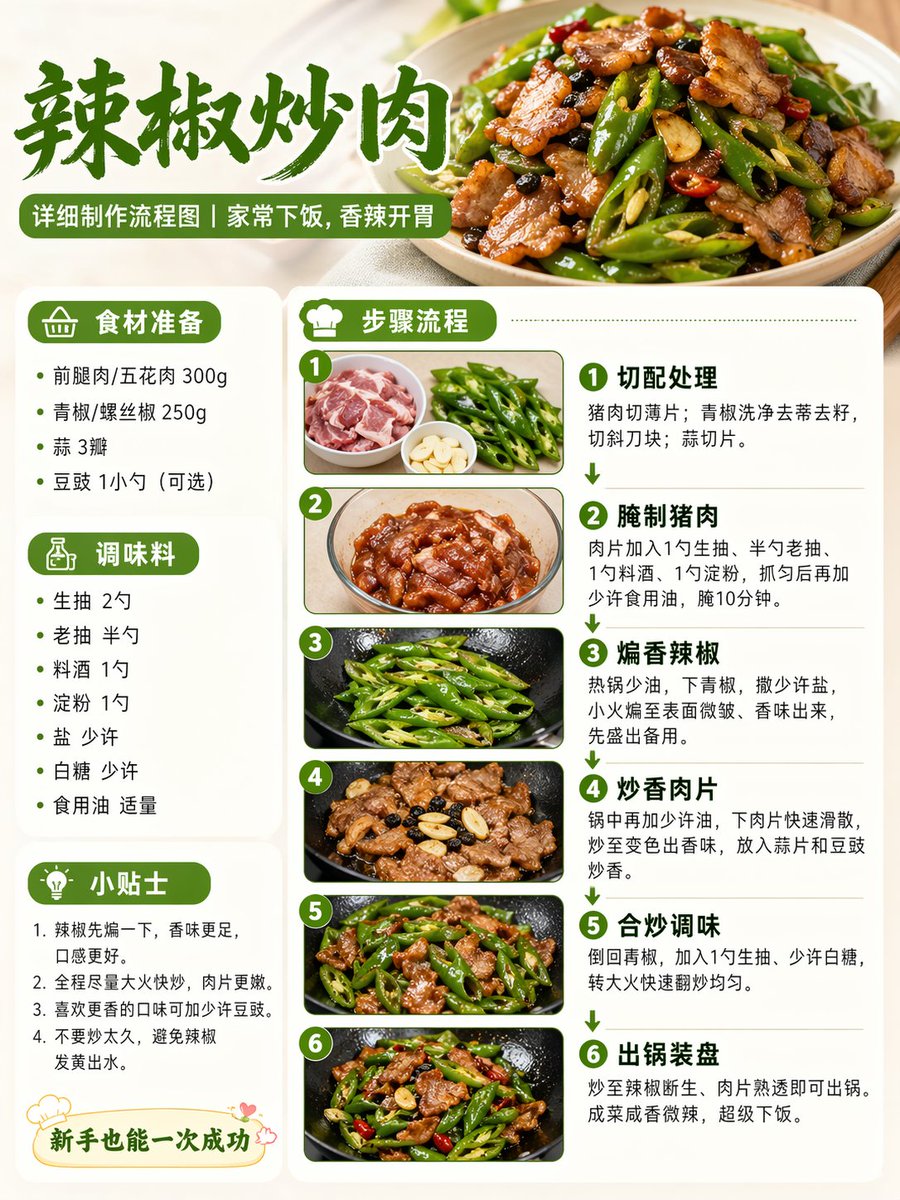
Help me create a detailed production flowchart for the dish {argument name="dish name" default="Fried Pork with Chili"}, in a realistic style, suitable for Xiaohongshu image-text proportions.
长发造型分析信息图

长发造型分析信息图

原文1,148 个字符
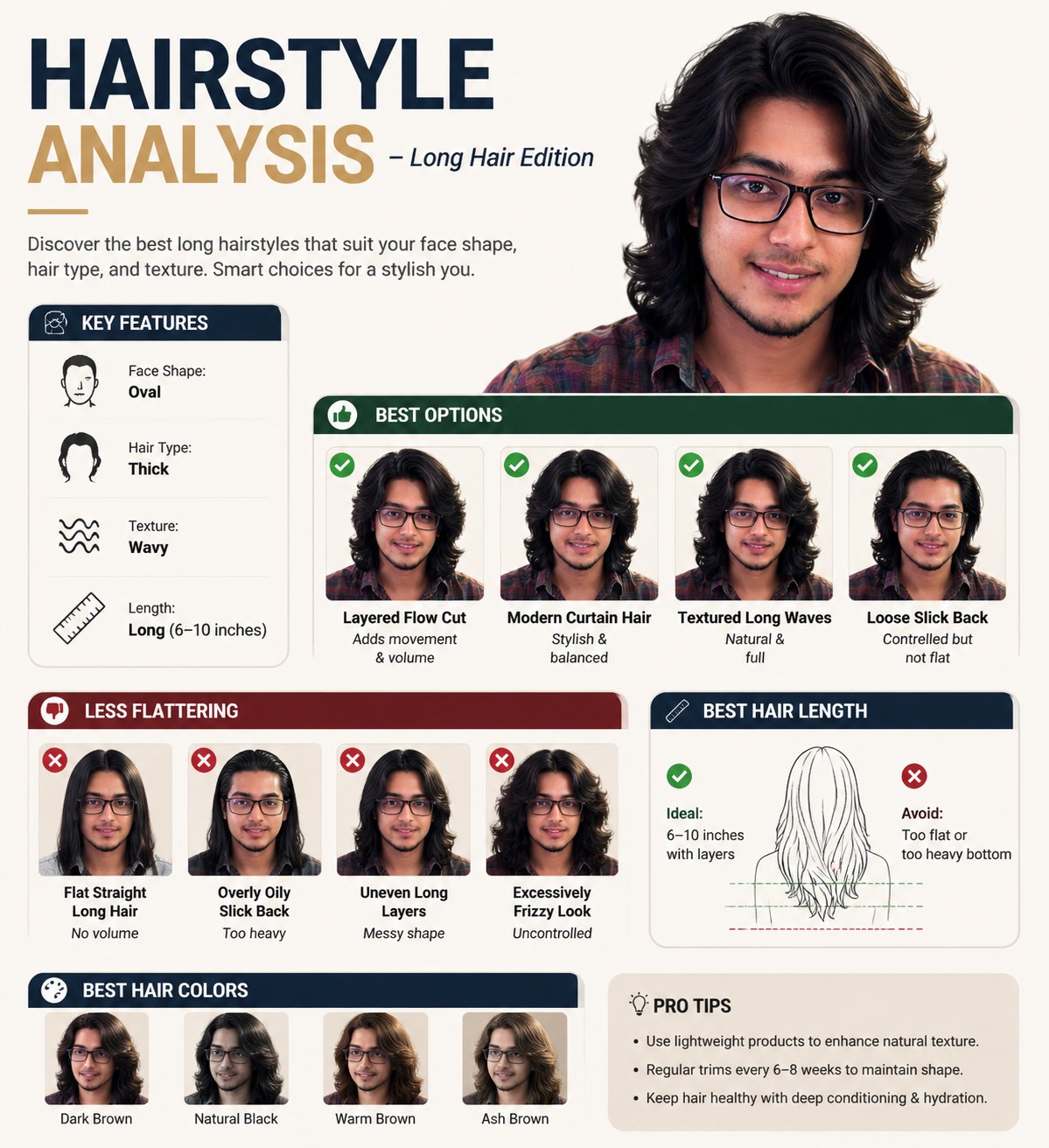
Create a professional "HAIRSTYLE ANALYSIS" infographic with a different male model (the same face) having long, thick hair (6-10 inches), slightly wavy texture.

Style should be clean, modern, premium grooming guide (similar layout but not identical).

TOP TITLE:
"HAIRSTYLE ANALYSIS - Long Hair Edition"

LEFT PANEL (Key Features with icons):
Face Shape: Oval
Hair Type: Thick
Texture: Wavy
Length: Long

BEST OPTIONS (Top row with green indicators):
Layered Flow Cut (Adds movement & volume)
Modern Curtain Hair (Stylish & balanced)
Textured Long Waves (Natural & full)
Loose Slick Back (Controlled but not flat)

LESS FLATTERING (Bottom row with red indicators):
Flat Straight Long Hair (No volume)
Overly Oily Slick Back (Too heavy)
Uneven Long Layers (Messy shape)
Excessively Frizzy Look (Uncontrolled)

BEST HAIR LENGTH SECTION:
Ideal: 6-10 inches with layers
Avoid: Too flat or too heavy bottom

BEST HAIR COLORS:
Dark Brown
Natural Black
Warm Brown
Ash Brown

DESIGN STYLE:
Clean grid infographic
White/beige background
Soft shadows
Premium magazine look
Realistic face and hair detail
Consistent spacing and typography
High resolution, 4K
官方角色设定资料图鉴

信息图可视化设计

原文463 个字符
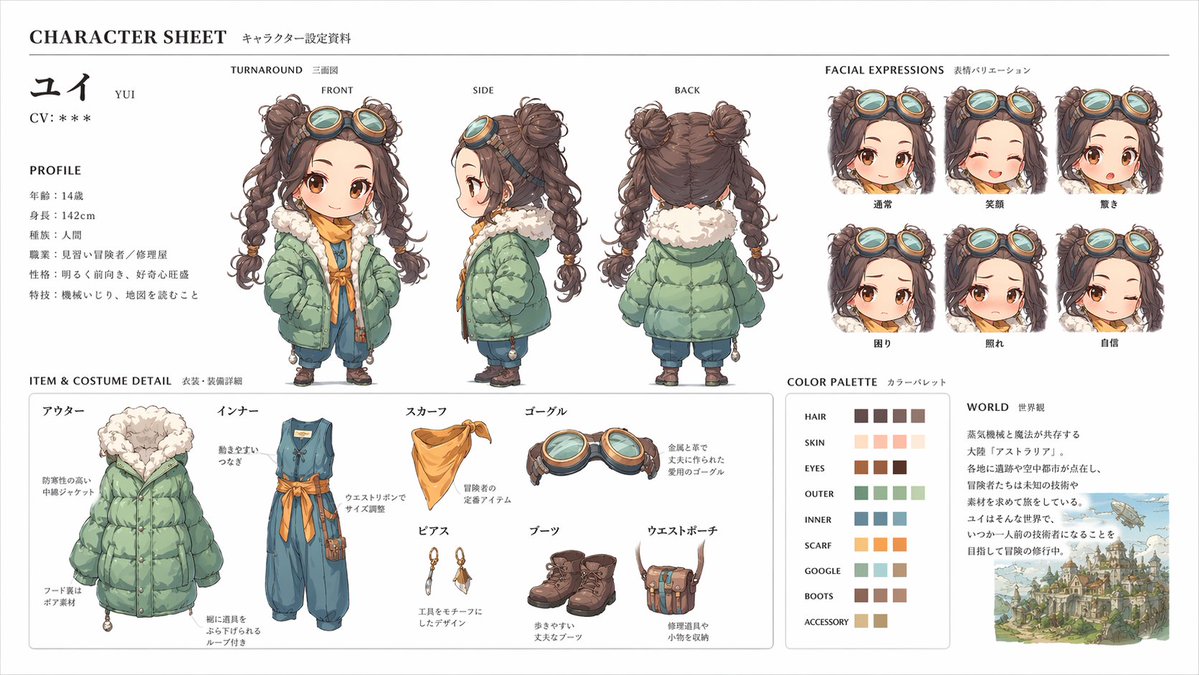
Based on this character and background, please create a character sheet like an official setting material. 
・Include front, side, and back 3-view drawings ・Add character expression variations 
・Disassemble and display detailed parts of costumes and equipment ・Add a color palette ・Include a brief explanation of the world view 
・Overall organized layout
(White background, diagrammatic style) 
・Aspect ratio 16:9  ←
High resolution, professional concept art style