
How to Keep Character Consistency
How to Keep Character Consistency connects keep characters consistent across AI images to a curated English SEO page with model notes, prompt patterns, FAQ coverage, real examples, and related internal links.
Editorially reviewed by GPT Images for prompt usefulness, internal links, FAQ coverage, and source-aware model context.
What this guide covers
How to Keep Character Consistency is designed for people learning how to get more dependable AI image outputs. It targets the intent to keep characters consistent across AI images, but the page avoids thin keyword stuffing by connecting the topic to prompt structure, real prompt examples, internal links, and FAQ answers.
The practical goal is simple: help someone understand what to write next. The page explains how How to Keep Character Consistency prompts should define subject, constraints, references, style, and output checks before a model or generator is blamed for a weak result.
- Use this guide when the search intent is "keep characters consistent across AI images" and the visitor needs examples before writing from scratch.
- Choose it when How to Keep Character Consistency work requires visible constraints such as subject, angle, lighting, composition, text, aspect ratio, or editing target.
- Use the real prompt examples below to see how other prompts structure the same problem, then adapt one variable at a time.
- Keep it as an internal link target for related prompt collections so users can move from broad discovery into specific prompt pages.
Recommended How to Keep Character Consistency workflow
teach a repeatable prompting method connected to real prompt examples. A good workflow should be repeatable, inspectable, and easy to adapt across tools. The same prompt can behave differently in GPT-IMAGE-2, Nano Banana 2, Stable Diffusion, Midjourney, Jimeng AI, or a local ComfyUI setup, so this page keeps the reusable structure separate from tool-specific adjustments.
- Start by defining the job: what the image must communicate, where it will be used, and what failure would make the result unusable.
- Translate the job into a prompt skeleton for How to Keep Character Consistency: subject, scene, medium, camera or composition, style constraints, and output constraints.
- Pick one example prompt from this page and copy only the structure that matches the job; avoid copying decorative phrases that do not serve the image.
- Run a first generation, then change one variable at a time: framing, lighting, color palette, reference strength, text content, or background density.
- Save the winning prompt with notes about model, tool, aspect ratio, and any reference images so the pattern can be reused later.
- diagnose the prompt, improve one variable at a time, and preserve reusable patterns
Quality checks before publishing
Before using a generated image in production, review the output against the original job. The best prompt is not the longest prompt; it is the prompt that makes the model spend attention on the details that matter.
- How to Keep Character Consistency should have a clear subject and a visible hierarchy; if the prompt gives equal weight to every detail, the image often becomes noisy.
- The prompt should separate content from style, especially when moving between GPT-IMAGE-2, Nano Banana 2, Stable Diffusion, Midjourney, or other image models.
- If the output needs readable text, keep the phrase short, quote it exactly, and verify the final image rather than assuming the model handled typography perfectly.
- If the output must match a brand, character, room, product, or reference image, name the fixed traits and describe what is allowed to change.
- Avoid stacking too many model-specific shortcuts on a reusable prompt page; keep the main prompt portable, then add model notes as a final layer.
- Review whether the page sends visitors to deeper prompt examples, related use cases, and FAQ answers instead of trapping them in a generic SEO article.
Common mistakes to avoid
Most failed image generations are not caused by a missing magic word. They usually come from unclear hierarchy, mixed intent, unsupported text requirements, or a prompt that asks for too many changes at once.
- Writing a How to Keep Character Consistency prompt as a pile of keywords without a production goal.
- Changing model, tool, aspect ratio, and reference image at the same time, which makes it impossible to learn what improved the output.
- Using vague quality words such as beautiful or professional without defining the visible evidence of quality.
- Ignoring downstream use, such as ecommerce crop safety, ad text legibility, app store screenshots, or poster readability.
- Treating How to Keep Character Consistency as a final answer instead of a starting point connected to prompt examples and iteration notes.
How to Keep Character Consistency prompt patterns
Production brief prompt
Create a How to Keep Character Consistency image for [audience] that communicates [message]. Main subject: [subject]. Scene: [setting]. Composition: [camera angle, crop, spacing]. Style: [medium, lighting, color direction]. Constraints: [aspect ratio, readable text, brand colors, negative space]. Avoid: [visual mistakes, clutter, wrong mood].
It separates the job, subject, scene, style, and constraints, which makes the prompt easier to test across different image models.
Reference-aware prompt
Using the reference as the fixed source of truth, generate a How to Keep Character Consistency variation. Preserve [identity traits, product shape, logo placement, character features, room layout]. Change only [background, lighting, camera angle, outfit, color palette]. Keep the output consistent with [use case] and do not invent extra objects.
It tells the model what is fixed and what can change, which is critical for image editing, character consistency, product shots, and brand work.
Iteration prompt
Revise the previous How to Keep Character Consistency result by improving [one problem]. Keep [successful elements] unchanged. Adjust [single variable] to [specific direction]. The final image should feel [desired mood] and remain suitable for [placement or channel]. Do not change [protected details].
It controls iteration by changing one variable at a time, so you can learn which instruction improved or damaged the output.
Model transfer prompt
Rewrite this How to Keep Character Consistency prompt for [target model or tool]. Keep the core subject, composition, and constraints. Convert unsupported syntax into natural language. Add model-specific notes only at the end: [aspect ratio, style strength, reference strength, negative prompt, seed, or typography instruction].
It preserves the creative brief while allowing each model or tool to receive the instructions in a format it can use.
Prompt examples for How to Keep Character Consistency
These examples are selected from the current English prompt catalog so the page links visitors into real prompt detail pages instead of stopping at generic advice.
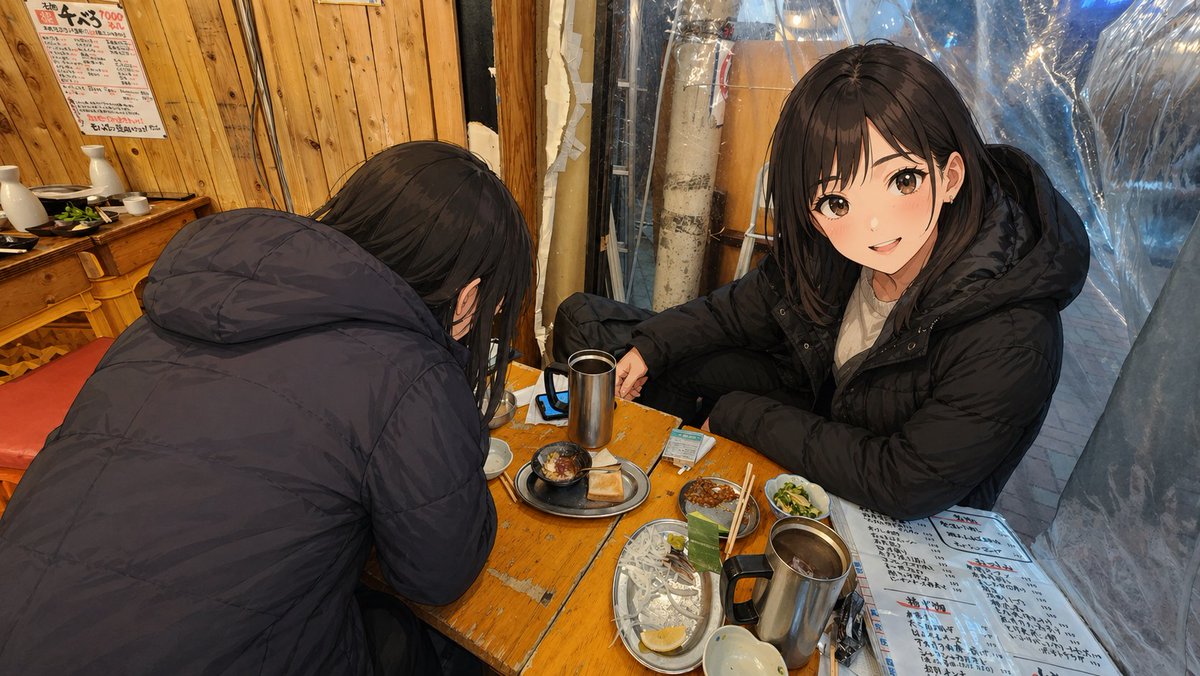
Anime Characters in Real Izakaya Photo
A candid indoor restaurant photo in a realistic anime-inspired style, showing two young women seated at a small worn wooden table inside a cozy Japanese izakaya with vertical wood-paneled walls and a clear plastic tent-like curtain on the right side. The camera is slightly above table height and angled diagonally toward the table, creating a casual snapshot feeling. One woman is in the left foreground with her back mostly to the viewer, leaning forward over the table; she has long straight dark hair and wears a bulky dark navy or black puffer jacket with a large hood. The second woman sits across from her on the right, facing the camera with a relaxed posture and one arm bent on the table; she has shoulder-length dark brown to black hair, a center part, a black puffer jacket, and a light inner shirt. Replace only the people with clean, natural-looking anime characters while keeping the restaurant environment photorealistic and unchanged. Preserve the mixed-media look of anime characters composited believably into a real photo. On the table, include 2 stainless steel mugs, 2 pairs of chopsticks, 1 smartphone with a bright blue case near the center-left edge of the table, 1 cigarette pack near the right woman, 1 large oval plate with thinly sliced white onions and a lemon wedge, 1 small dish of green vegetables, 1 small plate of brown food, 1 small plate with toast or grilled bread, 1 small dark bowl, 2 small empty white bowls, and 1 printed handwritten Japanese menu sheet lying on the lower right corner of the table. In the upper left background, include a wooden counter with white ceramic bottles and dishes, plus 1 handwritten Japanese wall menu poster. Warm indoor lighting, everyday nightlife atmosphere, documentary realism, detailed wood grain, slightly cluttered tabletop, authentic casual dining scene in Japan.
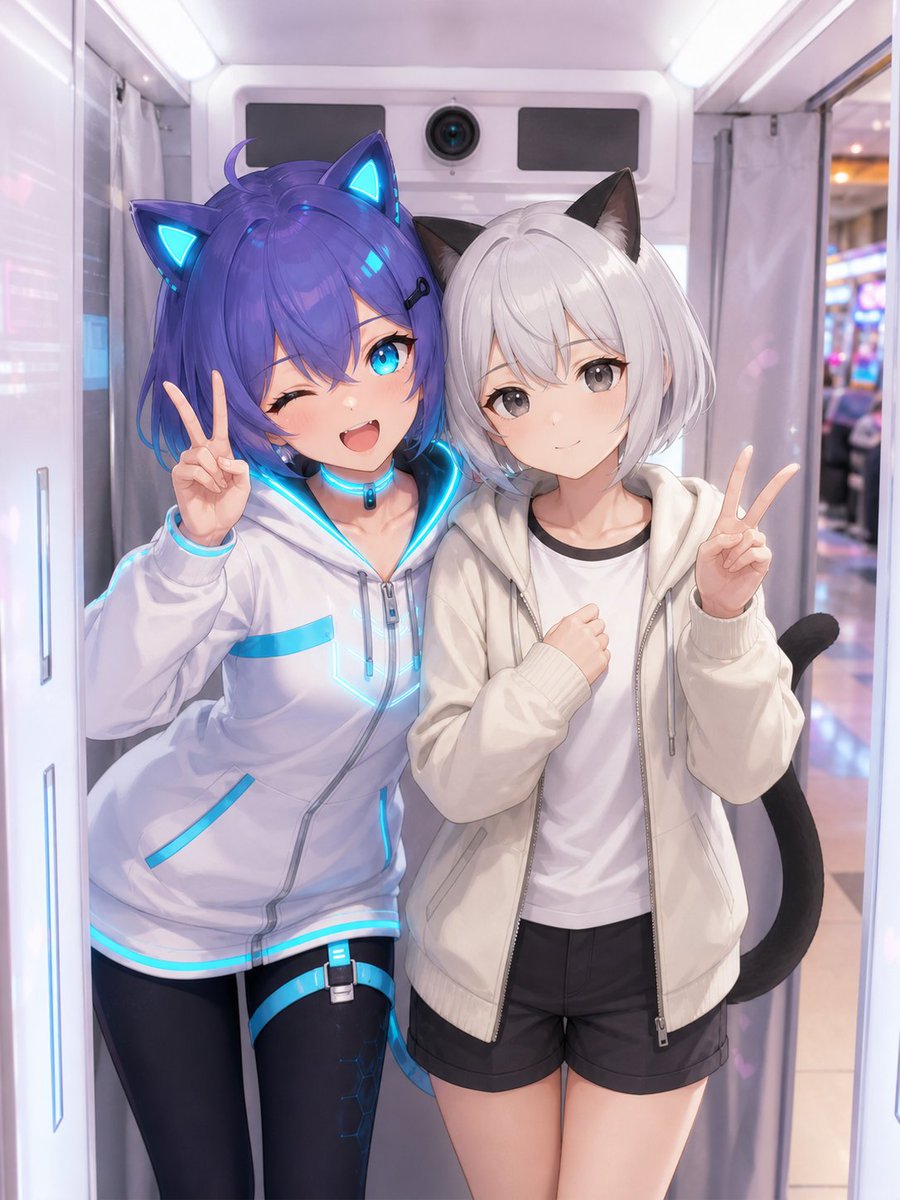
Profile / Avatar - Anime Characters in Real Purikura Booth
Generate an image of these {argument name="number of people" default="two"} characters taking a photo in a {argument name="situation" default="purikura booth"}, focusing on realism. The background should be a realistic live-action style, while the characters should be in an anime-style 3D rendering, looking like they are close friends.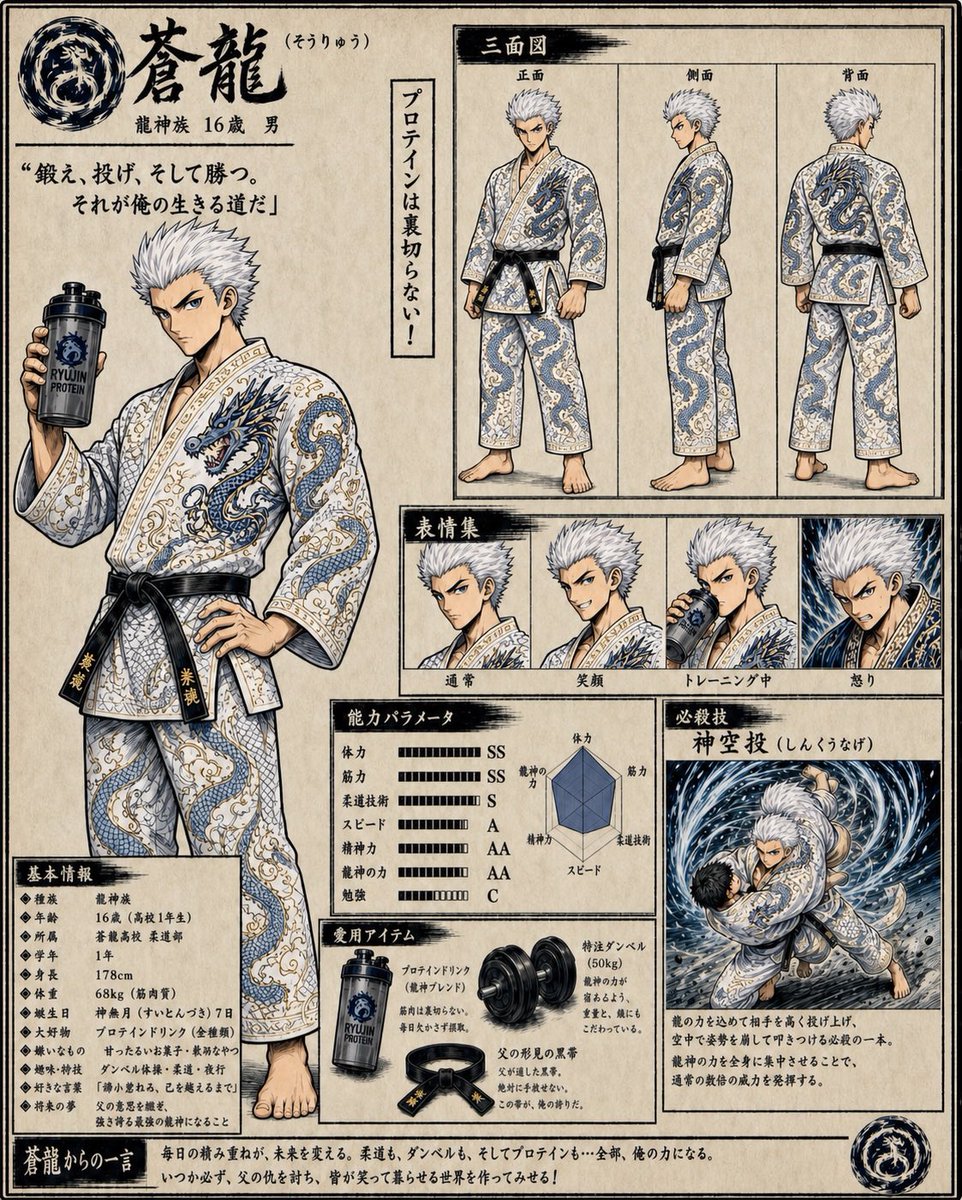
Comic / Storyboard - Fantasy Judo Anime Character Sheet
{"type":"vintage manga/anime character reference sheet for a fantasy judo fighter","style":"aged parchment paper, black ink manga linework, muted navy and cream palette, hand-drawn Japanese character sheet, rough brush headers, thin panel borders, dramatic sports-anime energy effects, slightly weathered print texture","character":{"name":"{argument name=\"character name\" default=\"蒼龍\"}","reading":"そうりゅう","profile":"dragon-god tribe boy, 16 years old, male","face":"all visible faces are deliberately obscured by soft square pixel blur blocks","hair":"spiky short white hair","build":"lean athletic teenage martial artist","outfit":"white judo gi with ornate blue dragon illustrations and gold cloud arabesque patterns across jacket and pants, black belt with gold embroidery, barefoot","prop":"black shaker bottle labeled RYUJIN PROTEIN with a blue dragon emblem"},"main_left_panel":{"position":"left half","content":"large full-body portrait from knees up, character confidently holding the protein shaker in his left hand and resting his right hand on his hip","top_emblem":"circular black-and-blue dragon crest","large_calligraphy_name":"{argument name=\"character name\" default=\"蒼龍\"}","quote":"{argument name=\"quote\" default=\"鍛え、投げ、そして勝つ。それが俺の生きる道だ\"}","vertical_tagline":"プロテインは裏切らない!"},"layout":{"sections":[{"title":"三面図","position":"upper right","count":3,"labels":["正面","側面","背面"],"description":"three full-body turnaround views of the same fighter wearing the dragon-pattern gi, front view, side view, and back view"},{"title":"表情集","position":"middle right","count":4,"labels":["通常","笑顔","トレーニング中","怒り"],"description":"four head-and-shoulder expression portraits; normal side profile, smiling three-quarter view, drinking from shaker during training, and angry with blue lightning aura"},{"title":"能力パラメータ","position":"lower middle-left","count":7,"labels":["体力 SS","筋力 SS","柔道技術 S","スピード A","精神力 AA","龍神の力 AA","勉強 C"],"description":"horizontal rating bars plus a blue radar chart labeled with the same attributes"},{"title":"愛用アイテム","position":"bottom middle","count":3,"labels":["プロテインドリンク(龍神ブレンド)","特注ダンベル(50kg)","父の形見の黒帯"],"description":"three item illustrations: black RYUJIN protein bottle, heavy black dumbbell, and folded black belt with gold embroidery"},{"title":"必殺技","position":"lower right","count":1,"labels":["神空投(しんくうなげ)"],"description":"dynamic action panel showing the white-haired fighter throwing an opponent while spiraling blue dragon-like energy and wind curl around them"},{"title":"基本情報","position":"lower left","count":11,"labels":["種族","年齢","所属","学年","身長","体重","誕生日","大好物","嫌いなもの","趣味・特技","将来の夢"],"description":"compact bullet-style biography box in Japanese with small diamond markers"}],"bottom_message":{"title":"蒼龍からの一言","text":"{argument name=\"bottom message\" default=\"毎日の積み重ねが、未来を変える。柔道も、ダンベルも、そしてプロテインも…全部、俺の力になる。いつか必ず、父の仇を討ち、皆が笑って暮らせる世界を作ってみせる!\"}"}},"composition":"dense single-page character sheet, balanced grid, left side dominated by the large portrait and basic info, right side filled with turnaround views, expressions, stats, items, and special move panel; add small dragon crest stamp in bottom right","rendering_notes":"make Japanese typography look hand-brushed and printed on paper, keep panel text legible, use crisp manga hatching and blue ink accents, include ornate dragon patterns consistently on all gi views"}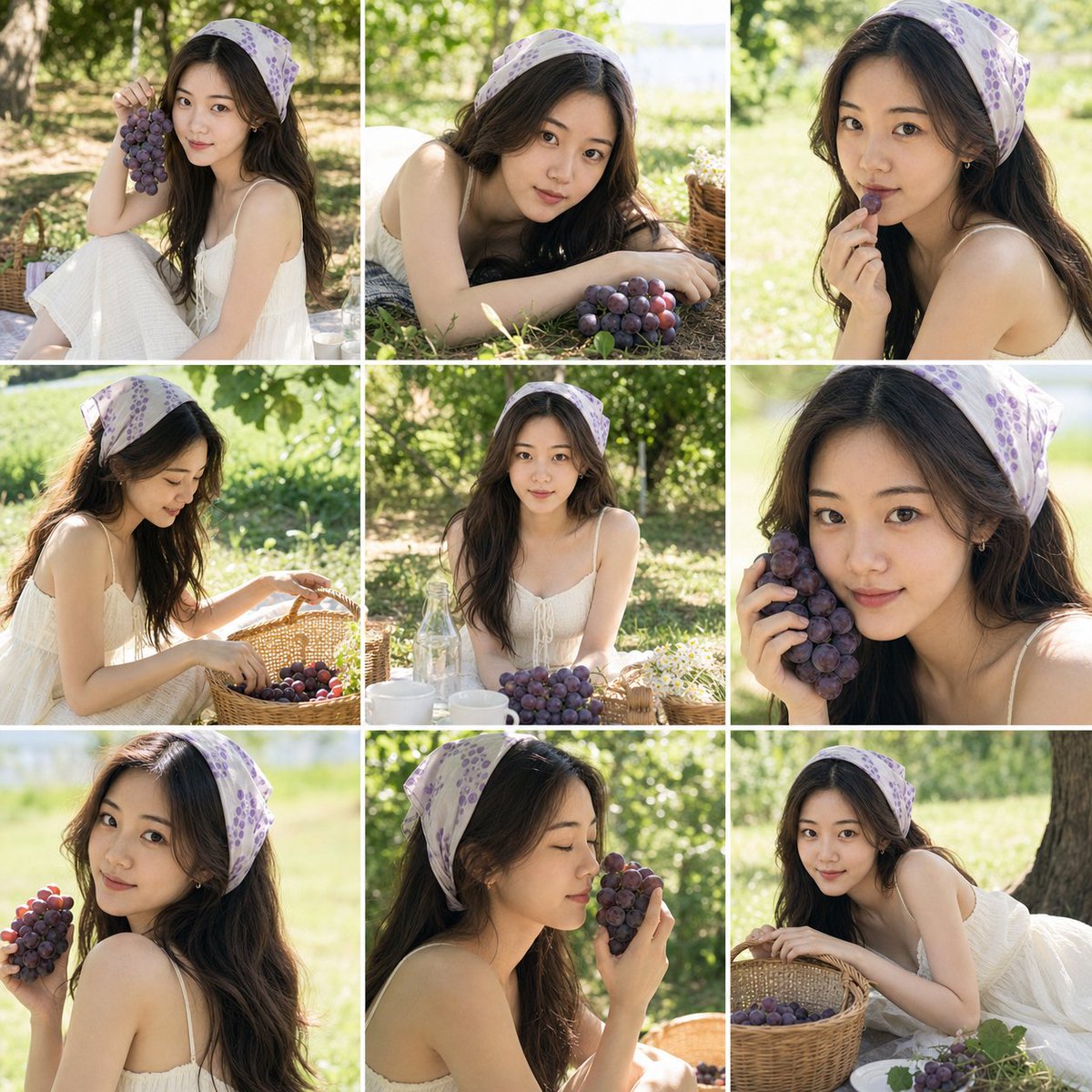
Profile / Avatar - Summer Grape Girl Photo Series
Based on 1-3 clear personal photos uploaded by the user, generate a 3x3 grid photo puzzle with the theme "{argument name="photo theme" default="Summer Grape Girl Photo Series"}".

Strictly preserve the subject's real identity characteristics, including face shape, facial proportions, eye/brow structure, nose, lips, skin tone, age, hairstyle features, and overall temperament. The person in all nine images must clearly look like the same real girl; she must not become a stranger, look Westernized, look like a generic influencer, be over-beautified, or have an AI-generated face.

The overall theme is a fresh and natural everyday girl's portrait. The character wears a {argument name="clothing description" default="creamy white or off-white soft dress / slip dress"} and a {argument name="accessory" default="purple vintage floral headscarf"}. The overall look is clean, natural, and daily, with a summer girl vibe. Accessories are simple, like small earrings, but not overly ornate.

Set the scene as a summer picnic portrait in an outdoor meadow, under tree shadows, or by a vineyard. Include elements like purple grapes, grape clusters, woven baskets, glass bottles, picnic blankets, and light-colored tableware to create a natural lifestyle feel. Sunlight filters through leaves, creating soft dappled shadows, with a naturally blurred background.

Design the final image as a 3x3 grid with white borders. All nine small photos must feature the same person, same outfit, and same scene, but each must be distinctly different: different expressions, different facial angles, different poses, different camera positions, and different compositions (wide vs. close-up). Do not just have nine slight variations of the same angle.

The nine photos can show: holding grapes and smiling, lying on the grass looking at the camera, holding a grape to the mouth, organizing the basket, sitting still facing forward, a close-up of a grape against the cheek, a candid turning shot, smelling the grapes with eyes closed, and lying on the grass holding the basket. Expressions should be varied, including quiet, playful, gentle, smiling with eyes closed, naturally daydreaming, and candid laughter.

The style is Fujifilm camera texture, Japanese film photography style, realistic shooting feel, soft natural light, shallow depth of field, slight film grain, and fresh natural tones. Purple grapes should be the visual focus. The image is clean, durable, and has a sense of life and youth.

Avoid: Western faces, influencer faces, over-beautification, plastic skin, fake faces, repetitive expressions, repetitive angles, hand deformities, distorted props, messy backgrounds, studio style, illustration style, or CG feel.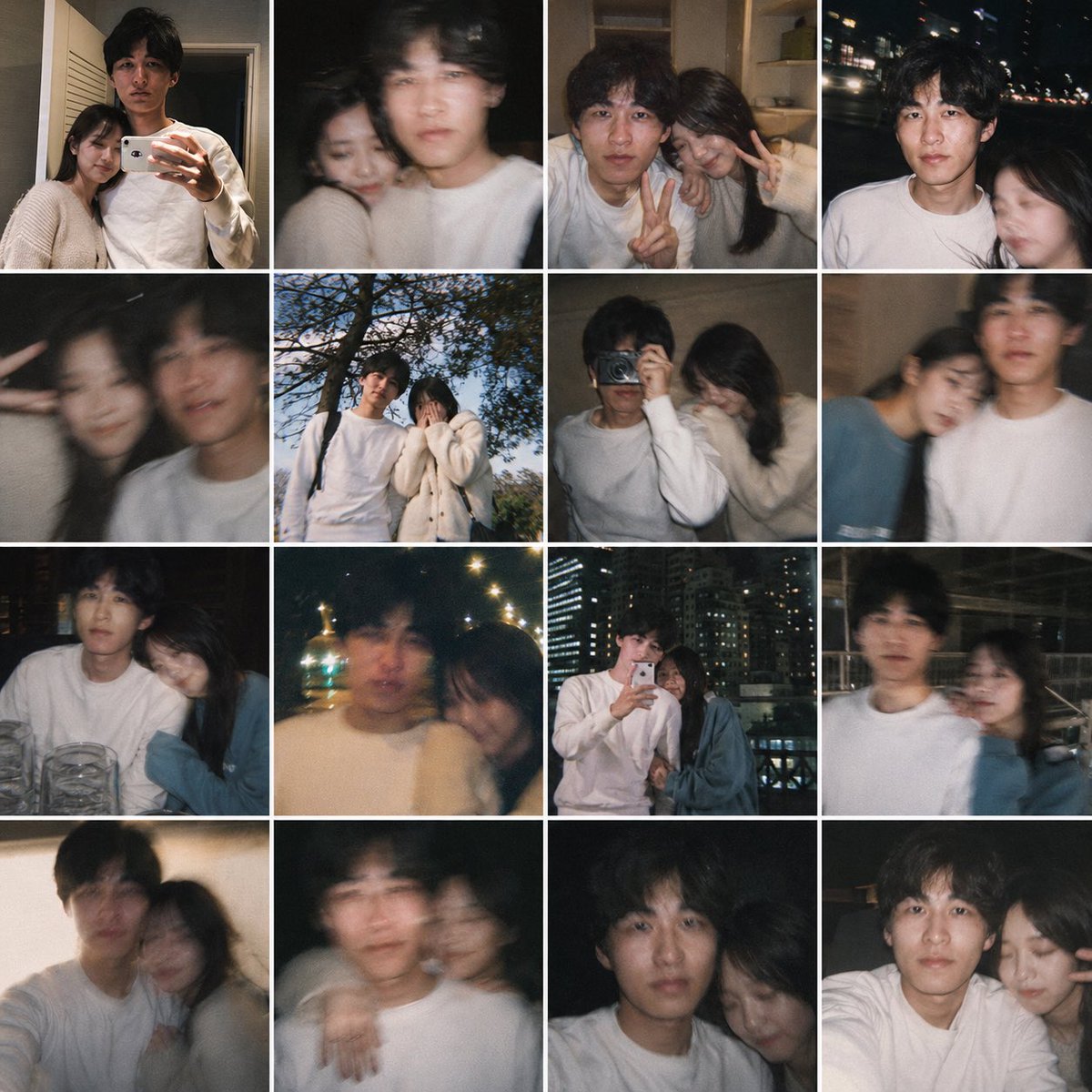
Profile / Avatar - Fake Couple Photo Dump Collage
Using the provided reference image as the base for the man, transform it into a realistic casual smartphone photo collage showing him as if he has a girlfriend. Keep his identity, hairstyle, age, white sweatshirt, and candid non-model look consistent, but place him together with a young woman across 16 square snapshots arranged in a 4x4 grid with thin white borders. Add exactly 1 recurring female companion with long dark hair, styled like a real person rather than a glam model, and vary her outfits subtly across the collage, including a cream knit cardigan, a dark top, and a muted blue top. Make the photos feel like authentic couple memories shot on a phone: close mirror selfie together, dark blurry selfie, indoor peace-sign selfie, night street selfie, motion-blur closeup, outdoor daytime shot under a tree, indoor shoulder-leaning shot, another blurry affectionate shot, seated restaurant shot with glasses on the table, warm night bokeh shot, rooftop or balcony mirror selfie with city lights, nighttime urban walking shot, cozy leaning-together shot, shoulder-around pose, close side-by-side portrait, and another intimate close crop. Mix indoor home scenes, nighttime city scenes, one daytime outdoor scene, and one restaurant setting. Use imperfect framing, slight blur, flash, grain, and spontaneous candid composition so it feels like a real person's saved couple photo dump, not a polished campaign.
Brand Mascot Character Design
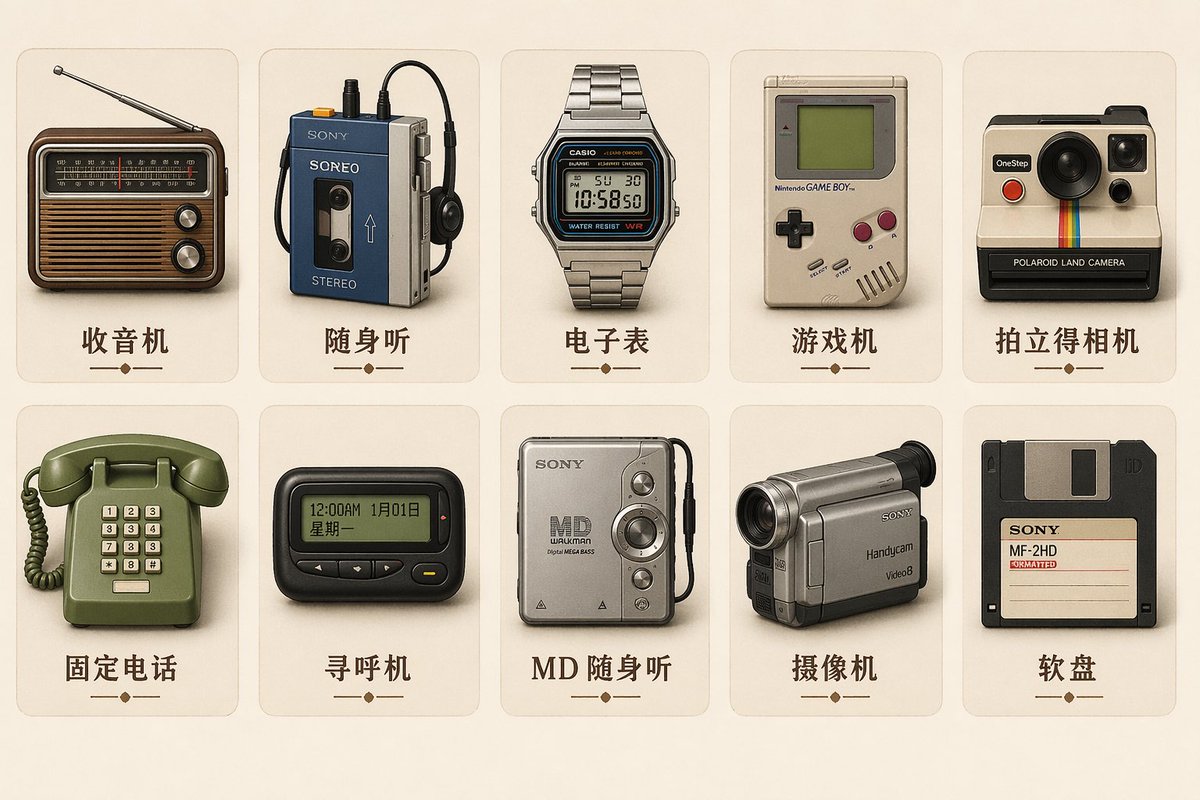
Generate a set of icons for {argument name="device" default="vintage electronic equipment"} in {argument name="style" default="retro skeuomorphic style"}, including icon names in the image.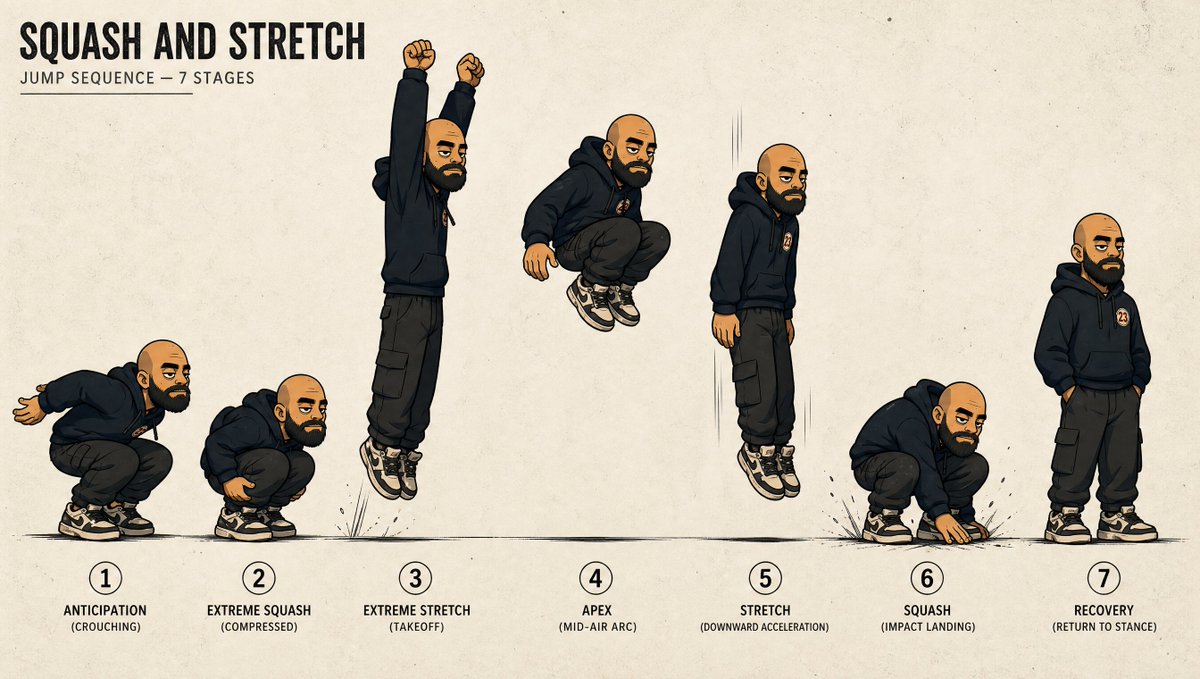
Comic / Storyboard - Squash and Stretch Jump Sheet
Using REFERENCE_0 as the character base, create a clean animation movement sheet that turns the character into a full-body jump sequence study while preserving the same outfit, badge, bald head, shoes, stylized ink-and-color illustration look, and the censored/blurred face treatment. Expand the view from the cropped portrait into a wide beige paper-textured layout with a ground line, subtle motion lines, small impact marks, and instructional typography. Add the title text {argument name="title text" default="SQUASH AND STRETCH"} at the upper left with the subtitle {argument name="subtitle text" default="JUMP SEQUENCE — 7 STAGES"}. Show exactly 7 numbered poses arranged left to right across the page: 1 “ANTICIPATION (CROUCHING)” with the character crouched and arms back; 2 “EXTREME SQUASH (COMPRESSED)” with a deeper compact crouch; 3 “EXTREME STRETCH (TAKEOFF)” with the character elongated upward, arms raised, feet leaving the ground; 4 “APEX (MID-AIR ARC)” with the character tucked in midair; 5 “STRETCH (DOWNWARD ACCELERATION)” with the character stretched vertically while descending; 6 “SQUASH (IMPACT LANDING)” with the character compressed on landing, one hand touching the ground; 7 “RECOVERY (RETURN TO STANCE)” with the character standing relaxed with hands in pockets. Use bold black uppercase labels under each numbered stage, keep consistent character proportions across poses except for the intentional squash-and-stretch deformation, and make the sheet read like a professional 2D animation reference chart.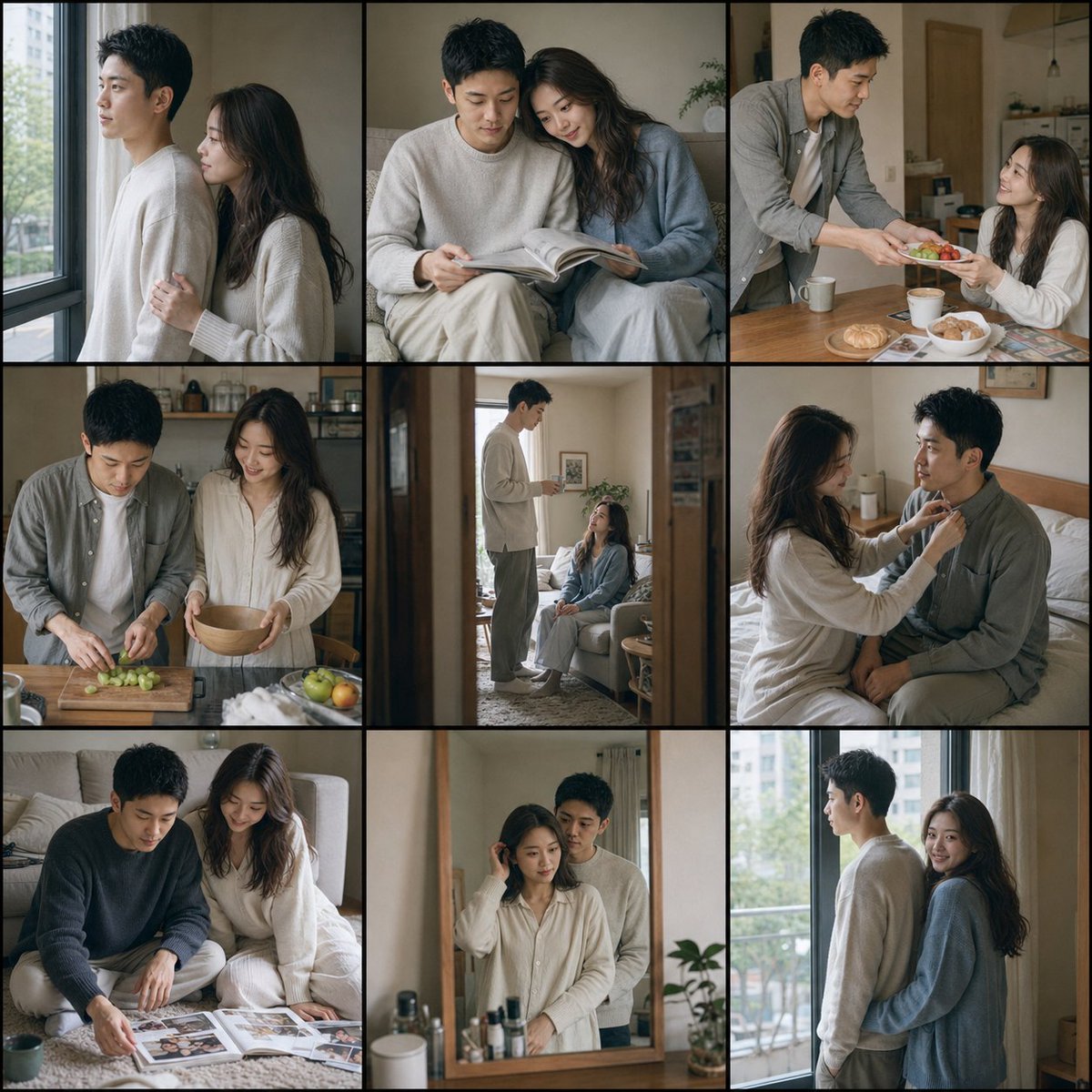
Social Media Post - Fujifilm Style Home Couple Portraits
Based on the real photos of two adult couples uploaded by the user, generate a "{argument name="photo style" default="Fujifilm-style Japanese home couple portrait"} 3x3 grid album collage".

Strictly preserve the real identity characteristics of the two people. Both the girl and the boy must clearly look like the original people in the uploaded photos, including face shape, facial proportions, eye/brow structure, nose, lips, jawline, skin tone, age, hairline, hairstyle features, and overall temperament. Do not turn them into Western faces, Korean studio styles, influencers, or over-beautified strangers. All 9 final small photos must feature the same real Chinese couple, captured from different angles, distances, and moments during the same home session.

## Visual Format
Generate a 3x3 collage with 9 small photos, overall 1:1 ratio. Use narrow {argument name="border color" default="black"} separator lines between photos, all placed on a {argument name="background color" default="black"} background, like a curated home photo album. Not a commercial poster or studio layout; avoid repetitive templates.

## Core Visual Style
Overall style: Japanese lifestyle photography, Fujifilm camera texture, real home couple portrait, candid shots, gentle, relaxed, quiet, and storytelling.
Focus on the colors and atmosphere of Fujifilm stocks like Superia, Pro 400H, or C200. The images should have low saturation without looking gray, soft natural highlights, transparent but restrained skin tones, slight film grain, slight shadow noise, and soft contrast. It should look like an air-filled, layered Fujifilm lifestyle photo.
Avoid: old iPhone texture, mobile compression, digital sharpness, heavy retro filters, commercial ads, or e-commerce styles.

## Character Relationship
The two are a {argument name="relationship" default="real, intimate, and natural young Chinese couple"}. Each frame should clearly show they are a couple with a sense of familiarity and companionship. Interactions should be realistic and relaxed: leaning in, making eye contact, looking down and laughing, leaning on a shoulder, reading together, passing things, preparing food, adjusting clothes, seeing each other in the mirror, or watching from a doorway. Intimate but restrained—no grease, no eroticism, and no staged wedding-style acting.

## Expressions and Angles
The 9 photos should not all look at the camera or just smile slightly. Expressions must be rich and varied: giggling, being teased, looking down laughing, quiet, daydreaming, gentle staring, relaxed chatting, focused on a task, responding with a look back, closing eyes laughing, looking out the window, or looking at each other.
Facial angles must vary significantly. Do not repeat the same template. Use a mix of: front, semi-front, profile, looking down, looking back, looking up slightly, near-back, mirror angles, distant observation, and close-up life details. Each frame should have a new head direction and visual rhythm.

## Clothing Requirements
Do not use the original clothes from the uploaded photos. Change them into natural Japanese lifestyle outfits: low saturation, neutral colors, soft materials. Colors like creamy white, oatmeal, light gray, pale coffee, misty blue, or charcoal. Items include knit cardigans, soft T-shirts, linen shirts, loungewear, long skirts, or socks. Should look like comfortable clothes a real couple wears at home.

## Home Setting
A clean, tidy apartment with real life traces (not a model home). Include elements like curtains, wood floors, sofas, pillows, blankets, books, albums, cups, plates, plants, bed lamps, mirrors, or tables—all as subtle aids to focus on the couple.

## Content of the 9 Frames
1. Quiet by the window: Boy looks out; girl leans in naturally. Quiet atmosphere.
2. Reading on the sofa: Reading a book together; one leans on the other's shoulder.
3. Passing a plate: At the dining table, passing fruit; active movement and eye contact.
4. Kitchen prep: Preparing food; one cuts fruit while the other watches and laughs.
5. Doorway view: Observer's perspective through a door frame into the living room.
6. Bedroom touch: Sitting on the bed; girl adjusts the boy's collar gently.
7. Floor photos: Sitting on the carpet looking at magazines together; candid sitting poses.
8. Mirror fragment: Captured through a dressing mirror; adjusting hair or a brief look in the mirror.
9. Balcony pause: Standing by the sliding door; one looks out while the other approaches with a smile.

## Consistency and Stability
Keep facial consistency across all 9 frames. Avoid complex hand gestures (no face-touching or finger-crossing). The quality should include slight film grain and scanning texture to feel like a real set, not a perfect AI grid. Avoid digital artifacts, extra limbs, or strange text.Related prompt guides and libraries
FAQ about How to Keep Character Consistency
How do I use How to Keep Character Consistency prompts from gptimages.dev?
Start with the examples that match your visual job, then copy the prompt structure rather than copying every adjective. Replace the subject, scene, channel, aspect ratio, and constraints with your own details. If the first result is close, keep the successful parts fixed and change one variable at a time. This makes the page useful as a prompt library, not just a keyword page.
What is the best prompt format for How to Keep Character Consistency?
A dependable format is brief first, details second, checks last: describe the image goal, then the subject, scene, composition, style, reference rules, and output constraints. For models such as GPT-IMAGE-2, Nano Banana 2, Stable Diffusion, Midjourney, or Jimeng AI, keep the core prompt portable and add tool-specific settings only when the interface supports them.
Can I reuse these prompts across different AI image models?
Yes, but reuse the structure more than the exact syntax. A prompt that works in one generator may need different wording, reference strength, aspect ratio settings, or negative prompts in another. The safest workflow is to preserve the creative brief, then adapt only the model-specific layer after you inspect the first output.
How should I collect the best AI image prompts?
Save prompts with the final image, model or tool name, aspect ratio, reference images, and a short note explaining why the result worked. Group them by use case such as product photography, character consistency, UI mockups, posters, logos, or text-in-image prompts. That collection becomes much more useful than a flat list of attractive phrases.
Why do How to Keep Character Consistency prompts fail?
Common causes include unclear subject hierarchy, too many styles in one prompt, vague quality words, unsupported text requirements, missing reference rules, and uncontrolled iteration. Fix the prompt by naming the production goal, protecting the details that cannot change, and testing one adjustment per generation instead of rewriting the whole prompt every time.
Are these prompt examples enough for commercial work?
They are a starting point, not legal or brand clearance. For commercial work, check the terms of the model or generator, review rights for reference images, verify text and logos manually, and keep a record of the prompt, source assets, and final edits. The page helps with prompt quality, while usage rights still depend on your workflow and provider terms.