Comic Storyboard Prompts
Comic Storyboard Prompts connects find comic storyboard prompts to a curated English SEO page with model notes, prompt patterns, FAQ coverage, real examples, and related internal links.
Editorially reviewed by GPT Images for prompt usefulness, internal links, FAQ coverage, and source-aware model context.
What this use-case library covers
Comic Storyboard Prompts is designed for people trying to make a specific type of image for a product, brand, story, interface, or campaign. It targets the intent to find comic storyboard prompts, but the page avoids thin keyword stuffing by connecting the topic to prompt structure, real prompt examples, internal links, and FAQ answers.
The practical goal is simple: help someone understand what to write next. The page explains how Comic Storyboard prompts should define subject, constraints, references, style, and output checks before a model or generator is blamed for a weak result.
- Use this use-case library when the search intent is "find comic storyboard prompts" and the visitor needs examples before writing from scratch.
- Choose it when Comic Storyboard work requires visible constraints such as subject, angle, lighting, composition, text, aspect ratio, or editing target.
- Use the real prompt examples below to see how other prompts structure the same problem, then adapt one variable at a time.
- Keep it as an internal link target for related prompt collections so users can move from broad discovery into specific prompt pages.
Recommended Comic Storyboard workflow
turn a visual job into reusable prompt recipes and examples. A good workflow should be repeatable, inspectable, and easy to adapt across tools. The same prompt can behave differently in GPT-IMAGE-2, Nano Banana 2, Stable Diffusion, Midjourney, Jimeng AI, or a local ComfyUI setup, so this page keeps the reusable structure separate from tool-specific adjustments.
- Start by defining the job: what the image must communicate, where it will be used, and what failure would make the result unusable.
- Translate the job into a prompt skeleton for Comic Storyboard: subject, scene, medium, camera or composition, style constraints, and output constraints.
- Pick one example prompt from this page and copy only the structure that matches the job; avoid copying decorative phrases that do not serve the image.
- Run a first generation, then change one variable at a time: framing, lighting, color palette, reference strength, text content, or background density.
- Save the winning prompt with notes about model, tool, aspect ratio, and any reference images so the pattern can be reused later.
- define output constraints, choose references, specify scene details, and review production quality
Quality checks before publishing
Before using a generated image in production, review the output against the original job. The best prompt is not the longest prompt; it is the prompt that makes the model spend attention on the details that matter.
- Comic Storyboard should have a clear subject and a visible hierarchy; if the prompt gives equal weight to every detail, the image often becomes noisy.
- The prompt should separate content from style, especially when moving between GPT-IMAGE-2, Nano Banana 2, Stable Diffusion, Midjourney, or other image models.
- If the output needs readable text, keep the phrase short, quote it exactly, and verify the final image rather than assuming the model handled typography perfectly.
- If the output must match a brand, character, room, product, or reference image, name the fixed traits and describe what is allowed to change.
- Avoid stacking too many model-specific shortcuts on a reusable prompt page; keep the main prompt portable, then add model notes as a final layer.
- Review whether the page sends visitors to deeper prompt examples, related use cases, and FAQ answers instead of trapping them in a generic SEO article.
Common mistakes to avoid
Most failed image generations are not caused by a missing magic word. They usually come from unclear hierarchy, mixed intent, unsupported text requirements, or a prompt that asks for too many changes at once.
- Writing a Comic Storyboard prompt as a pile of keywords without a production goal.
- Changing model, tool, aspect ratio, and reference image at the same time, which makes it impossible to learn what improved the output.
- Using vague quality words such as beautiful or professional without defining the visible evidence of quality.
- Ignoring downstream use, such as ecommerce crop safety, ad text legibility, app store screenshots, or poster readability.
- Treating Comic Storyboard Prompts as a final answer instead of a starting point connected to prompt examples and iteration notes.
Comic Storyboard prompt patterns
Production brief prompt
Create a Comic Storyboard image for [audience] that communicates [message]. Main subject: [subject]. Scene: [setting]. Composition: [camera angle, crop, spacing]. Style: [medium, lighting, color direction]. Constraints: [aspect ratio, readable text, brand colors, negative space]. Avoid: [visual mistakes, clutter, wrong mood].
It separates the job, subject, scene, style, and constraints, which makes the prompt easier to test across different image models.
Reference-aware prompt
Using the reference as the fixed source of truth, generate a Comic Storyboard variation. Preserve [identity traits, product shape, logo placement, character features, room layout]. Change only [background, lighting, camera angle, outfit, color palette]. Keep the output consistent with [use case] and do not invent extra objects.
It tells the model what is fixed and what can change, which is critical for image editing, character consistency, product shots, and brand work.
Iteration prompt
Revise the previous Comic Storyboard result by improving [one problem]. Keep [successful elements] unchanged. Adjust [single variable] to [specific direction]. The final image should feel [desired mood] and remain suitable for [placement or channel]. Do not change [protected details].
It controls iteration by changing one variable at a time, so you can learn which instruction improved or damaged the output.
Model transfer prompt
Rewrite this Comic Storyboard prompt for [target model or tool]. Keep the core subject, composition, and constraints. Convert unsupported syntax into natural language. Add model-specific notes only at the end: [aspect ratio, style strength, reference strength, negative prompt, seed, or typography instruction].
It preserves the creative brief while allowing each model or tool to receive the instructions in a format it can use.
Prompt examples for Comic Storyboard
These examples are selected from the current English prompt catalog so the page links visitors into real prompt detail pages instead of stopping at generic advice.
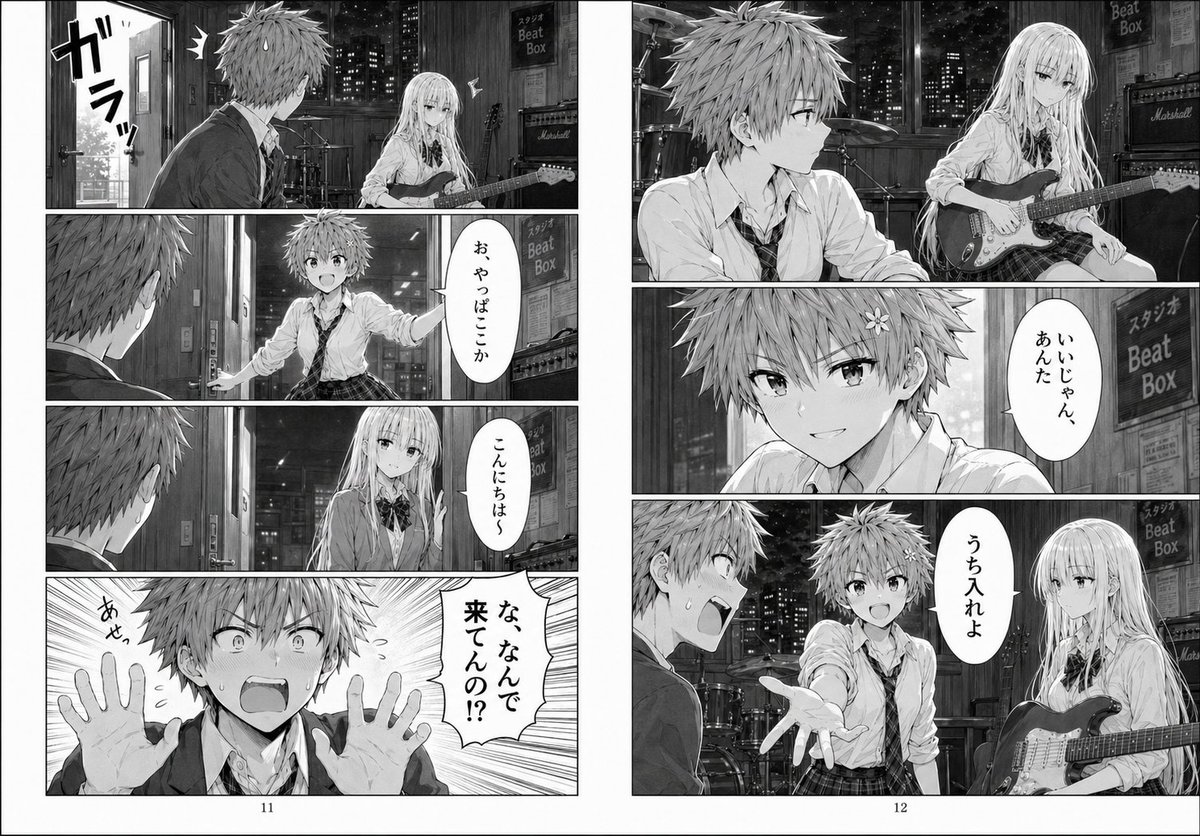
Comic / Storyboard - Night Rehearsal Manga Spread
{"type":"black-and-white manga two-page spread","style":{"medium":"monochrome manga screentone illustration","genre":"slice-of-life school music club drama","mood":"surprised reunion at night, quiet tension with comedic shock","reading":"Japanese manga layout, right-to-left feel","rendering":"clean ink lines, detailed hair, soft screentones, dramatic speed lines in the final reaction panel"},"setting":{"location":"small rehearsal studio at night","details":["large windows showing a city skyline with lit buildings","drum kit in the back","guitar amplifier stack including a visible Marshall amp","wall sign reading Studio Beat Box","wood-paneled or dark studio interior","open door leading into the room"]},"characters":{"count":3,"items":[{"role":"male student","appearance":"teenage boy with messy spiky light hair, school shirt with loosened tie, expressive face, average build"},{"role":"female guitarist","appearance":"teenage girl with very long straight light hair and blunt bangs, calm expression, school uniform, seated with an electric guitar across her lap"},{"role":"arriving student","appearance":"teenage student in school shirt and loosened tie, standing in the doorway and later stepping forward with an outstretched hand; face intentionally obscured or simplified"}]},"layout":{"pages":2,"total_panels":8,"page_numbers":[11,12],"sections":[{"title":"left page","position":"left half","count":5,"labels":["top horizontal panel: door bursts open with large sound effect ガラッ, the spiky-haired boy turns toward the entrance while the long-haired girl sits with her guitar in the studio","second panel: over-the-shoulder view of the boy facing the open doorway as the arriving student stands there with one hand on the door and a speech bubble saying おやっはこっか","third panel: the long-haired girl now stands or leans forward near the doorway, smiling gently with a speech bubble saying こんにちは〜","bottom wide reaction panel: the spiky-haired boy recoils in shock with both hands raised, sweat marks, dense speed lines, a large speech bubble saying な、なんで来てんの!? and a smaller exclamation あせっ","background details recurring: studio interior, night skyline, instruments and wall sign"]},{"title":"right page","position":"right half","count":4,"labels":["top row split into 2 panels: close side profile of the spiky-haired boy looking right, and the long-haired girl seated with her electric guitar in a calm pose","middle horizontal panel: closer view of the boy speaking with a speech bubble saying いいじゃん、あんじん","bottom wide panel: the arriving student reaches a hand toward the boy while standing beside the guitarist, the boy shouts in alarm, and a large speech bubble says うち入れよ","background details recurring: Beat Box sign, amp stack, drum kit, city lights outside"]}],"gutter":"thick white manga gutters separating the panels"},"text":{"visible_japanese":["ガラッ","おやっはこっか","こんにちは〜","な、なんで来てんの!?","あせっ","いいじゃん、あんじん","うち入れよ","Studio Beat Box","Marshall"]},"composition":"create an authentic printed manga spread with cinematic panel variety, alternating medium shots, over-the-shoulder views, close-ups, and one exaggerated comedic reaction panel; keep the female guitarist serene, the male lead increasingly flustered, and the newcomer casual and intrusive; emphasize nighttime atmosphere through the windowed skyline and rehearsal-room equipment.","parameters":{"headline":"{argument name=\"headline text\" default=\"音が違った日\"}","male_hair":"{argument name=\"hair color\" default=\"light ash blond\"}","guitar_type":"{argument name=\"guitar model\" default=\"black Stratocaster-style electric guitar\"}","studio_name":"{argument name=\"studio name\" default=\"Beat Box\"}","city_time":"{argument name=\"time of day\" default=\"night\"}"}}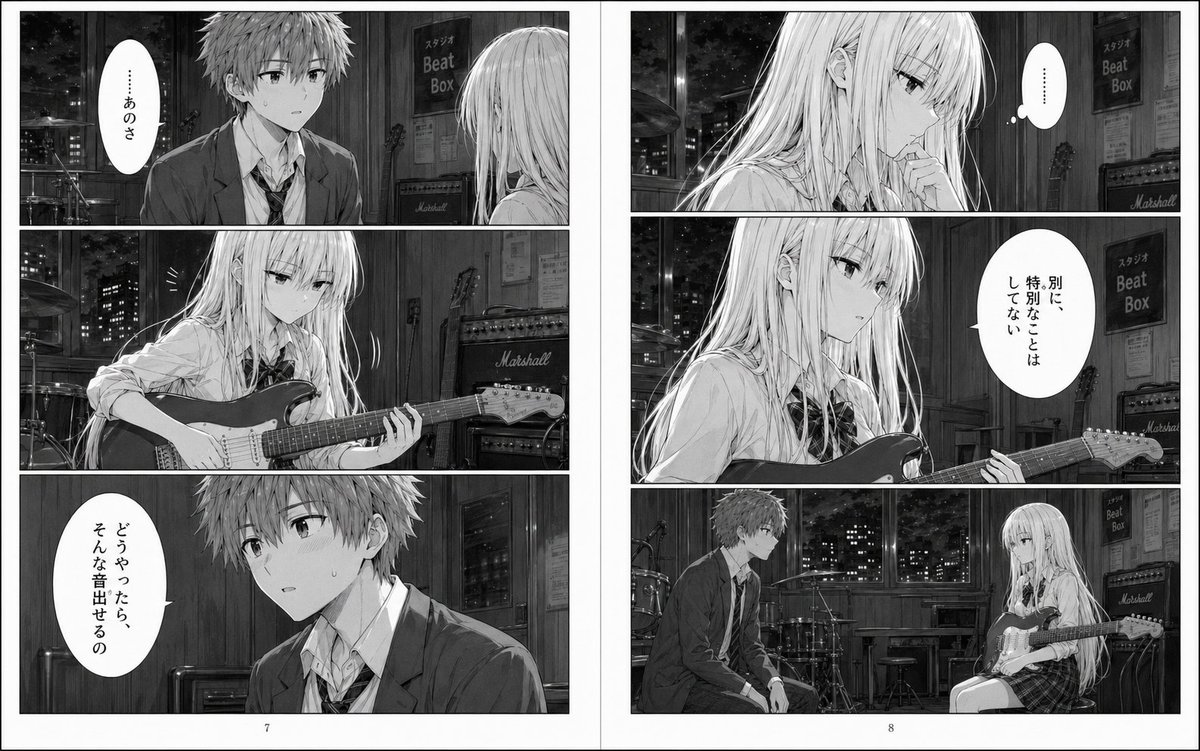
Comic / Storyboard - Night Studio Manga Two-Page Spread
{"type":"black-and-white manga two-page spread","genre":"quiet emotional school music drama","reading_direction":"right-to-left Japanese manga layout","print_style":"clean manga page composition with gutters, panel borders, screentone shading, detailed line art, soft night lighting, no color","setting":{"location":"small rehearsal studio at night","details":["large window showing a city skyline with illuminated buildings","drum kit near the back window","2 visible Marshall amplifiers","wood-paneled walls","door and studio notices","wall sign reading 'スタジオ Beat Box'","music stools and rehearsal-room clutter"]},"characters":[{"role":"girl guitarist","count":1,"appearance":"slender high-school girl with very long straight light-colored hair and bangs, calm melancholic expression, school uniform shirt with ribbon bow and plaid skirt, seated while holding a solid-body electric guitar"},{"role":"boy classmate","count":1,"appearance":"high-school boy with short spiky hair, school blazer, loosened necktie, seated facing the girl"}],"layout":{"spread_count":2,"page_numbers":[7,8],"sections":[{"title":"left page","position":"left half","count":3,"panels":["top panel: medium shot of the boy in the studio, facing the girl, with a tall vertical speech balloon containing '…… あのさ'","middle panel: close three-quarter view of the girl looking down while playing the electric guitar, hands on the fretboard and body","bottom panel: close shot of the boy speaking with a large vertical speech balloon containing 'どうやったら、そんな音出せるの'"]},{"title":"right page","position":"right half","count":4,"panels":["top panel: close-up profile of the girl in thought, hand near her mouth, with a vertical ellipsis speech balloon '……'","middle panel: medium shot of the girl holding the guitar and answering, with a large vertical speech balloon containing '別に、特別なことはしてない'","bottom panel: wide panel showing both characters seated across from each other in the studio, the girl with guitar and the boy listening, city lights visible through the window","small transitional panel feeling maintained by cinematic pacing across the page layout"]}],"centerpiece":"the quiet exchange between the boy and the girl about the sound of her guitar"},"mood":"introspective, restrained, intimate, slightly bittersweet","camera_style":"cinematic manga framing with close-ups, medium shots, and one wide establishing panel","text":{"language":"Japanese","speech_balloons_count":4,"visible_lines":["…… あのさ","どうやったら、そんな音出せるの","……","別に、特別なことはしてない"]},"quality":"highly detailed professional seinen manga artwork, polished grayscale tones, expressive hair rendering, realistic instruments and studio interior"}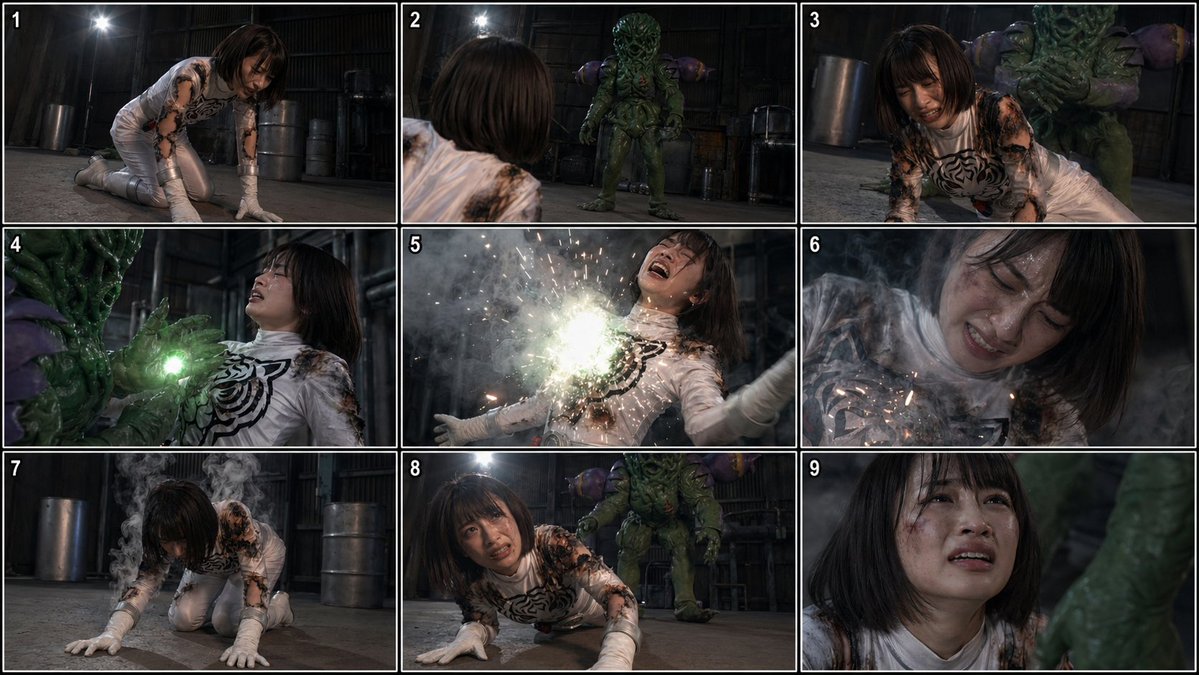
Comic / Storyboard - Superheroine Peril Storyboard Grid
{"type":"cinematic tokusatsu storyboard contact sheet","genre":"superheroine in peril","style":"live-action Japanese tokusatsu stills, gritty practical-effects look, dark industrial warehouse atmosphere, realistic costumes and creature suit, dramatic low-key lighting, smoke, sparks, filmic contrast","subject":{"heroine":{"role":"female superheroine","name":"{argument name=\"character name\" default=\"Torako\"}","appearance":"young Japanese woman with a straight dark bob haircut","costume":"white glossy bodysuit with black organic chest pattern, white gloves, white boots, battle-damaged and scorched with black burn marks on the shoulders, sleeves, and torso"},"villain":{"role":"monster attacker","appearance":"bulky humanoid creature in a green reptilian or plant-like suit with ridged texture, tentacled facial area, and rounded purple shoulder growths"}},"environment":{"location":"dim warehouse or factory interior","details":["concrete floor","metal barrels","dark corrugated walls","industrial pipes","single bright overhead lamp","haze and smoke"]},"layout":{"format":"3x3 storyboard grid","panel_count":9,"numbered_panels":["1","2","3","4","5","6","7","8","9"],"border":"thin white dividers between panels"},"panels":[{"panel":"1","shot":"medium wide shot","action":"the heroine is on her hands and knees on the floor, weakened and struggling to rise, head lowered"},{"panel":"2","shot":"over-the-shoulder shot from behind the heroine","action":"she looks forward at the monster standing several meters away in the warehouse"},{"panel":"3","shot":"medium shot","action":"the monster looms directly behind the heroine as she crawls forward, creating a stalking ambush composition"},{"panel":"4","shot":"tight medium shot","action":"the monster presses a glowing green hand or energy source against the heroine's upper chest at close range","effects":["green light bloom","threatening physical contact"]},{"panel":"5","shot":"dramatic impact close-up","action":"a bright energy blast detonates from the heroine's chest","effects":["intense white-green flash","flying sparks","smoke burst","torso arched backward","arms spread in shock"]},{"panel":"6","shot":"close-up","action":"the heroine recoils amid dense smoke and lingering sparks after the blast"},{"panel":"7","shot":"wide low-angle shot","action":"the heroine collapses back onto hands and knees, steam or smoke rising from her damaged suit"},{"panel":"8","shot":"low front angle","action":"she crawls weakly toward camera while the monster stands behind her, dominant and advancing"},{"panel":"9","shot":"close-up portrait","action":"exhausted heroine lifts her face slightly near the monster's leg, conveying pain and defeat"}],"cinematography":{"camera":"mostly low and medium angles, storyboard-style coverage with varied shot distance","lighting":"moody overhead practical light with hard highlights on the white suit and deep shadows","mood":"tense, dangerous, helpless, dramatic"},"negative_prompt":["anime style","cartoon rendering","clean pristine costume","bright daylight","multiple heroines","weapons","blood gore","text captions besides panel numbers","comedic expression"]}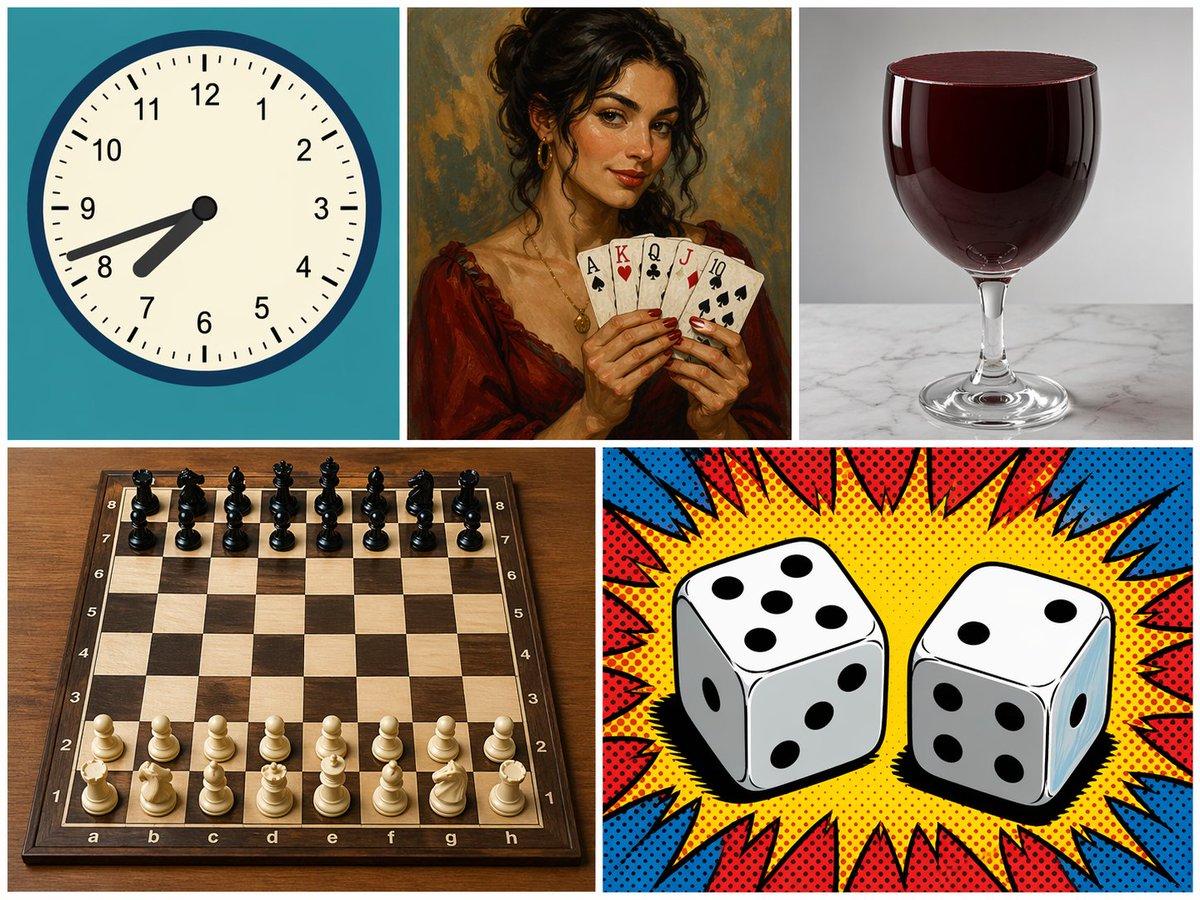
Comic Storyboard Narrative Design
{
  "type": "5-panel collage",
  "layout": "grid with 3 top panels and 2 bottom panels",
  "panels": [
    {
      "position": "top-left",
      "subject": "analog clock",
      "details": "teal background, time showing {argument name=\"clock time\" default=\"7:42\"}",
      "style": "flat vector illustration"
    },
    {
      "position": "top-middle",
      "subject": "woman holding playing cards",
      "details": "holding 5 cards: {argument name=\"card hand\" default=\"Ace of Spades, King of Hearts, Queen of Clubs, Jack of Diamonds, 10 of Spades\"}",
      "style": "classic oil painting portrait"
    },
    {
      "position": "top-right",
      "subject": "glass of red liquid",
      "details": "{argument name=\"glass type\" default=\"wine glass\"} filled to the brim with dark red liquid, marble surface",
      "style": "photorealistic studio photography"
    },
    {
      "position": "bottom-left",
      "subject": "chessboard",
      "details": "wooden board with 32 pieces in standard starting position",
      "style": "photorealistic high-angle shot"
    },
    {
      "position": "bottom-right",
      "subject": "two dice",
      "details": "left die shows {argument name=\"left die top\" default=\"5\"} on top, right die shows {argument name=\"right die top\" default=\"2\"} on top",
      "style": "pop art comic book halftone with red and blue burst"
    }
  ]
}
Ximen Qing 100-Panel Storyboard
A 48-panel grid is no longer enough for me. I need a 100-panel image, 8K.
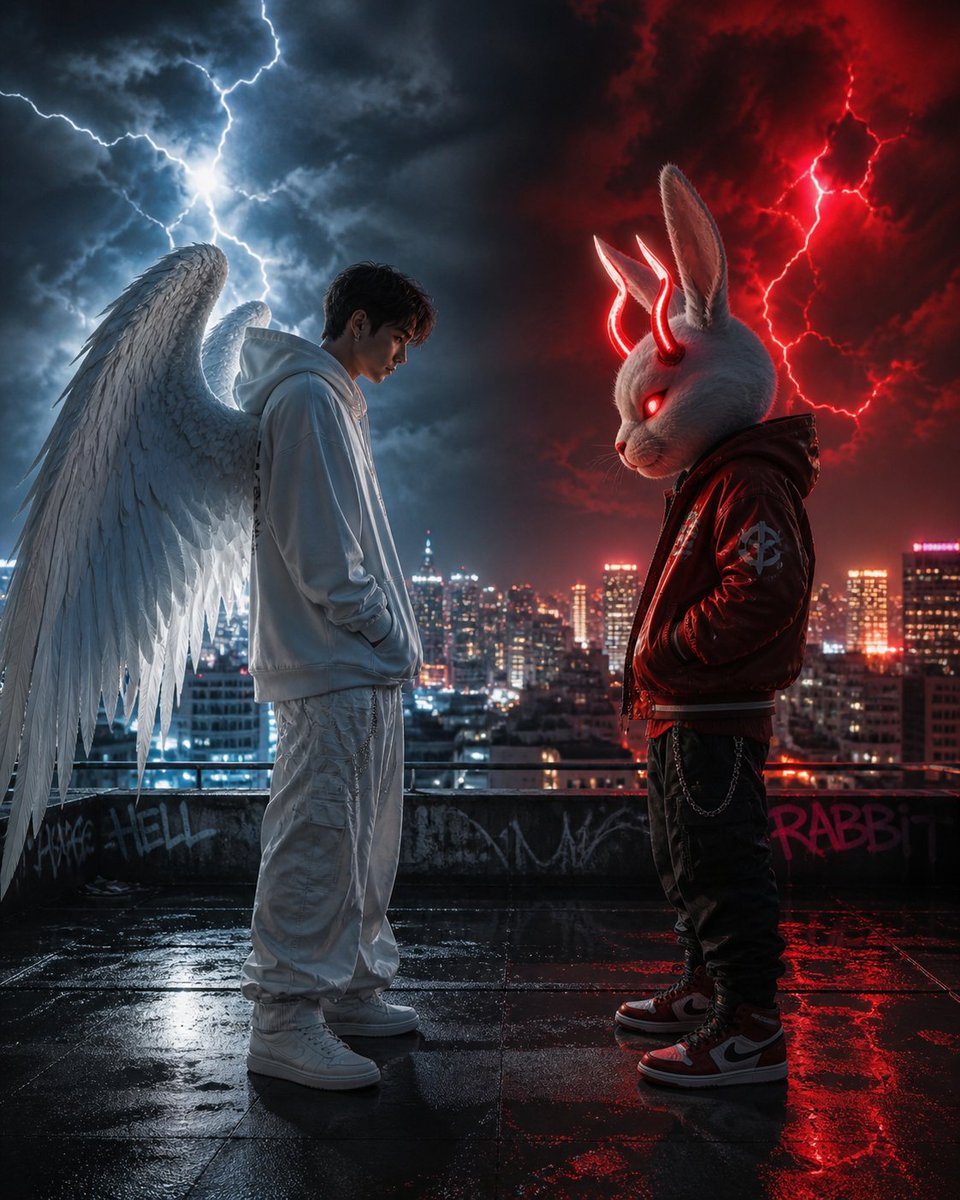
Comic / Storyboard - Cyberpunk Angel vs Demon Showdown
Hyperreal cinematic rooftop showdown at night in a futuristic megacity. A stylish streetwear model wearing an {argument name="clothing" default="oversized white hoodie with detailed feathered angel wings"} stands on one side, glowing softly with divine rim light and calm, powerful presence. Opposite him is a {argument name="opponent" default="stylized cartoon demon bunny small but menacing"} wearing a {argument name="opponent outfit" default="red leather jacket"}, glowing red horns, and neon-lit eyes, radiating chaotic energy.

Behind them stretches a vast cyberpunk city skyline filled with holographic billboards and glowing windows. Above, a storm splits the sky in two: one half illuminated with soft celestial light and drifting clouds, the other consumed by dark thunder, electric red lightning tearing through the atmosphere.

Dramatic contrast lighting, ultra-detailed textures, shallow depth of field, cinematic framing, 8K realism, surreal fantasy tone, intense face-off composition, wind motion in clothing and wings, atmosphere charged with tension and symbolism.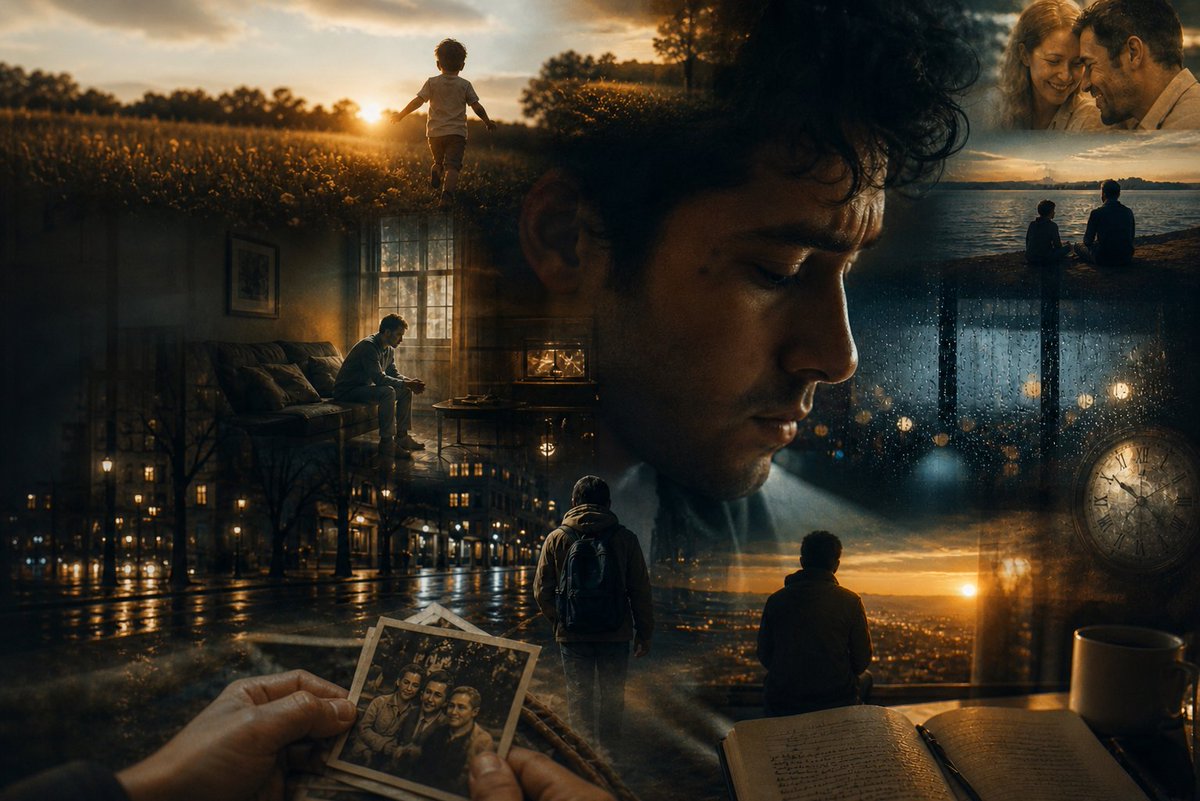
Comic / Storyboard - Dreamlike Double Exposure Montage
A cinematic journey through time where {argument name="themes" default="childhood, love, solitude, and dreams"} blur into one emotional story.

Cinematic memory replay montage, ultra-realistic, emotional storytelling a close-up of a {argument name="subject" default="thoughtful man"} blended with layered scenes: {argument name="scenery" default="a child running through a golden sunset field, a couple laughing softly, a man sitting alone in a dim room by a window, rainy city streets at night, a person overlooking a glowing city at dusk"}, old photographs in hand, soft warm and cool lighting mix, shallow depth of field, double exposure effect, film grain, nostalgic mood, 4K, dramatic lighting, seamless transitions, dreamlike atmosphere.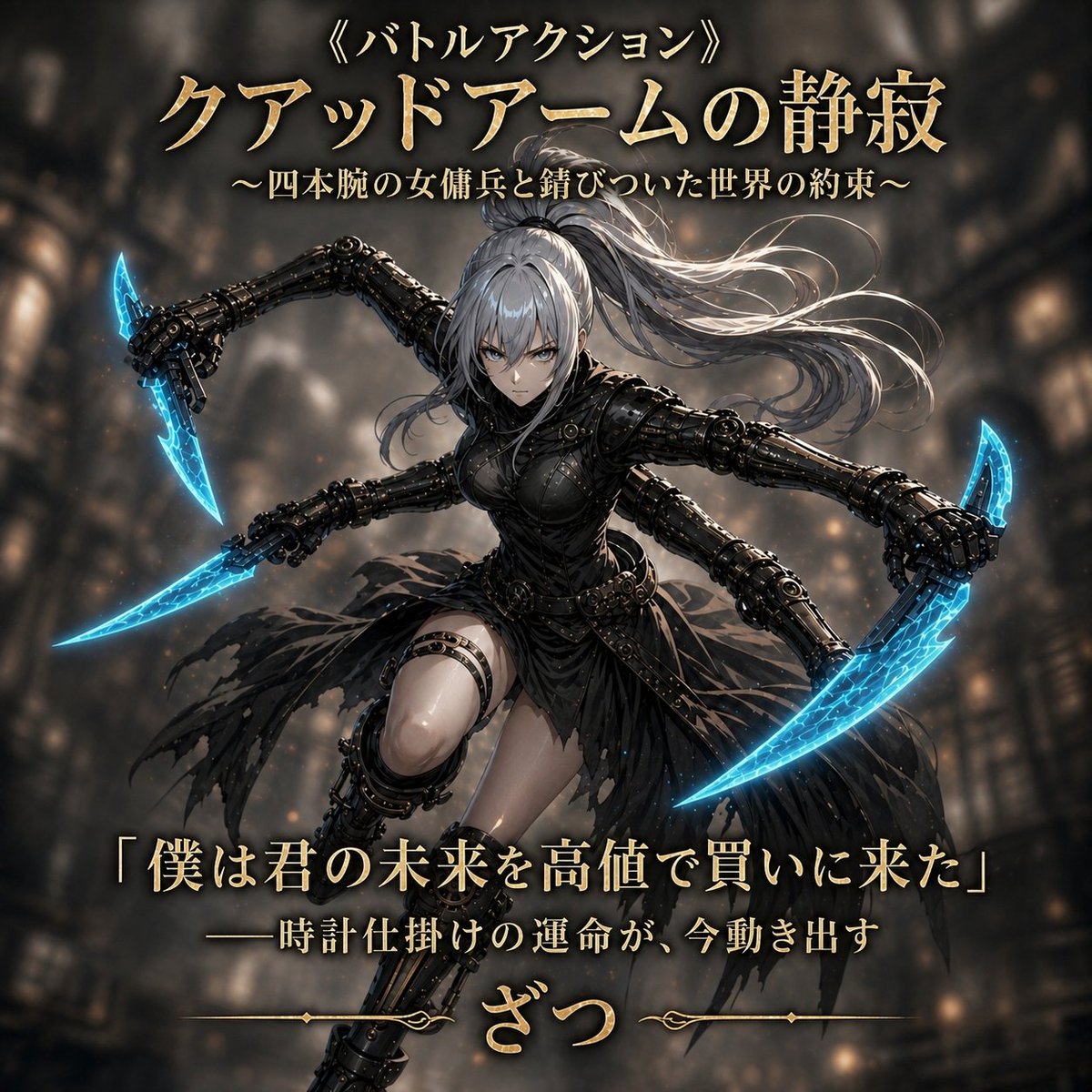
Comic / Storyboard - Dark Fantasy Four-Armed Heroine Cover
A dramatic dark fantasy light-novel cover illustration in a square format, featuring a fierce female warrior centered in a dynamic lunging pose inside a dim, ruined, cathedral-like or industrial gothic interior with a smoky blurred background and warm floating embers. She has long silver-white hair in a high ponytail whipping violently to the right, pale skin, and a deliberately obscured or featureless face. Her body is enhanced with four black mechanical arms in total, built from intricate clockwork and segmented metal joints, extending spider-like around her. She wears a tattered black dress-like battle outfit with armored corset detailing, belts, straps, a garter on one thigh, and biomechanical leg armor. Count exactly 4 arms visible: 2 upper arms and 2 lower arms; count exactly 4 glowing energy blades, one held in each hand, translucent neon blue with crystalline edges and magical circuitry-like light patterns. Emphasize the contrast between matte black metal, torn fabric, pale skin, and electric cyan weapons. The composition should feel cinematic, high-detail, intense, and heroic, with sharp focus on the character and soft depth-of-field in the background. Add ornate Japanese cover typography in metallic gold with subtle beveling and glow: at the top, small genre text 《バトルアクション》; below it, a large main title {argument name="headline text" default="クアッドアームの静寂"}; beneath that, a smaller subtitle ~四本腕の女傭兵と錆びついた世界の約束~. Near the bottom, add a large centered quote in gold Japanese text {argument name="quote" default="「僕は君の未来を高値で買いに来た」"}; directly below it, a smaller line ——時計仕掛けの運命が、今動き出す. At the very bottom center, place the author name {argument name="author name" default="ざっ"} in large gold text with elegant ornamental divider lines on both sides. Use a luxurious fantasy-book-cover layout, moody sepia-and-charcoal palette with bright cyan highlights, ultra-detailed anime-inspired realism, and a polished GPT-image-2 editorial illustration style.Related prompt guides and libraries
FAQ about Comic Storyboard
How do I use Comic Storyboard prompts from gptimages.dev?
Start with the examples that match your visual job, then copy the prompt structure rather than copying every adjective. Replace the subject, scene, channel, aspect ratio, and constraints with your own details. If the first result is close, keep the successful parts fixed and change one variable at a time. This makes the page useful as a prompt library, not just a keyword page.
What is the best prompt format for Comic Storyboard?
A dependable format is brief first, details second, checks last: describe the image goal, then the subject, scene, composition, style, reference rules, and output constraints. For models such as GPT-IMAGE-2, Nano Banana 2, Stable Diffusion, Midjourney, or Jimeng AI, keep the core prompt portable and add tool-specific settings only when the interface supports them.
Can I reuse these prompts across different AI image models?
Yes, but reuse the structure more than the exact syntax. A prompt that works in one generator may need different wording, reference strength, aspect ratio settings, or negative prompts in another. The safest workflow is to preserve the creative brief, then adapt only the model-specific layer after you inspect the first output.
How should I collect the best AI image prompts?
Save prompts with the final image, model or tool name, aspect ratio, reference images, and a short note explaining why the result worked. Group them by use case such as product photography, character consistency, UI mockups, posters, logos, or text-in-image prompts. That collection becomes much more useful than a flat list of attractive phrases.
Why do Comic Storyboard prompts fail?
Common causes include unclear subject hierarchy, too many styles in one prompt, vague quality words, unsupported text requirements, missing reference rules, and uncontrolled iteration. Fix the prompt by naming the production goal, protecting the details that cannot change, and testing one adjustment per generation instead of rewriting the whole prompt every time.
Are these prompt examples enough for commercial work?
They are a starting point, not legal or brand clearance. For commercial work, check the terms of the model or generator, review rights for reference images, verify text and logos manually, and keep a record of the prompt, source assets, and final edits. The page helps with prompt quality, while usage rights still depend on your workflow and provider terms.