
AI Image Prompting Guide
AI Image Prompting Guide connects learn how to write AI image prompts to a curated English SEO page with model notes, prompt patterns, FAQ coverage, real examples, and related internal links.
Editorially reviewed by GPT Images for prompt usefulness, internal links, FAQ coverage, and source-aware model context.
What this library covers
AI Image Prompting Guide is designed for prompt collectors, creators, marketers, and builders who need a reliable starting point. It targets the intent to learn how to write AI image prompts, but the page avoids thin keyword stuffing by connecting the topic to prompt structure, real prompt examples, internal links, and FAQ answers.
The practical goal is simple: help someone understand what to write next. The page explains how AI Image Prompting Guide prompts should define subject, constraints, references, style, and output checks before a model or generator is blamed for a weak result.
- Use this library when the search intent is "learn how to write AI image prompts" and the visitor needs examples before writing from scratch.
- Choose it when AI Image Prompting Guide work requires visible constraints such as subject, angle, lighting, composition, text, aspect ratio, or editing target.
- Use the real prompt examples below to see how other prompts structure the same problem, then adapt one variable at a time.
- Keep it as an internal link target for related prompt collections so users can move from broad discovery into specific prompt pages.
Recommended AI Image Prompting Guide workflow
connect broad search intent to curated prompt examples instead of sending visitors into a generic list. A good workflow should be repeatable, inspectable, and easy to adapt across tools. The same prompt can behave differently in GPT-IMAGE-2, Nano Banana 2, Stable Diffusion, Midjourney, Jimeng AI, or a local ComfyUI setup, so this page keeps the reusable structure separate from tool-specific adjustments.
- Start by defining the job: what the image must communicate, where it will be used, and what failure would make the result unusable.
- Translate the job into a prompt skeleton for AI Image Prompting Guide: subject, scene, medium, camera or composition, style constraints, and output constraints.
- Pick one example prompt from this page and copy only the structure that matches the job; avoid copying decorative phrases that do not serve the image.
- Run a first generation, then change one variable at a time: framing, lighting, color palette, reference strength, text content, or background density.
- Save the winning prompt with notes about model, tool, aspect ratio, and any reference images so the pattern can be reused later.
- move from keyword intent to usable prompt structure, then into real examples
Quality checks before publishing
Before using a generated image in production, review the output against the original job. The best prompt is not the longest prompt; it is the prompt that makes the model spend attention on the details that matter.
- AI Image Prompting Guide should have a clear subject and a visible hierarchy; if the prompt gives equal weight to every detail, the image often becomes noisy.
- The prompt should separate content from style, especially when moving between GPT-IMAGE-2, Nano Banana 2, Stable Diffusion, Midjourney, or other image models.
- If the output needs readable text, keep the phrase short, quote it exactly, and verify the final image rather than assuming the model handled typography perfectly.
- If the output must match a brand, character, room, product, or reference image, name the fixed traits and describe what is allowed to change.
- Avoid stacking too many model-specific shortcuts on a reusable prompt page; keep the main prompt portable, then add model notes as a final layer.
- Review whether the page sends visitors to deeper prompt examples, related use cases, and FAQ answers instead of trapping them in a generic SEO article.
Common mistakes to avoid
Most failed image generations are not caused by a missing magic word. They usually come from unclear hierarchy, mixed intent, unsupported text requirements, or a prompt that asks for too many changes at once.
- Writing a AI Image Prompting Guide prompt as a pile of keywords without a production goal.
- Changing model, tool, aspect ratio, and reference image at the same time, which makes it impossible to learn what improved the output.
- Using vague quality words such as beautiful or professional without defining the visible evidence of quality.
- Ignoring downstream use, such as ecommerce crop safety, ad text legibility, app store screenshots, or poster readability.
- Treating AI Image Prompting Guide as a final answer instead of a starting point connected to prompt examples and iteration notes.
AI Image Prompting Guide prompt patterns
Production brief prompt
Create a AI Image Prompting Guide image for [audience] that communicates [message]. Main subject: [subject]. Scene: [setting]. Composition: [camera angle, crop, spacing]. Style: [medium, lighting, color direction]. Constraints: [aspect ratio, readable text, brand colors, negative space]. Avoid: [visual mistakes, clutter, wrong mood].
It separates the job, subject, scene, style, and constraints, which makes the prompt easier to test across different image models.
Reference-aware prompt
Using the reference as the fixed source of truth, generate a AI Image Prompting Guide variation. Preserve [identity traits, product shape, logo placement, character features, room layout]. Change only [background, lighting, camera angle, outfit, color palette]. Keep the output consistent with [use case] and do not invent extra objects.
It tells the model what is fixed and what can change, which is critical for image editing, character consistency, product shots, and brand work.
Iteration prompt
Revise the previous AI Image Prompting Guide result by improving [one problem]. Keep [successful elements] unchanged. Adjust [single variable] to [specific direction]. The final image should feel [desired mood] and remain suitable for [placement or channel]. Do not change [protected details].
It controls iteration by changing one variable at a time, so you can learn which instruction improved or damaged the output.
Model transfer prompt
Rewrite this AI Image Prompting Guide prompt for [target model or tool]. Keep the core subject, composition, and constraints. Convert unsupported syntax into natural language. Add model-specific notes only at the end: [aspect ratio, style strength, reference strength, negative prompt, seed, or typography instruction].
It preserves the creative brief while allowing each model or tool to receive the instructions in a format it can use.
Prompt examples for AI Image Prompting Guide
These examples are selected from the current English prompt catalog so the page links visitors into real prompt detail pages instead of stopping at generic advice.
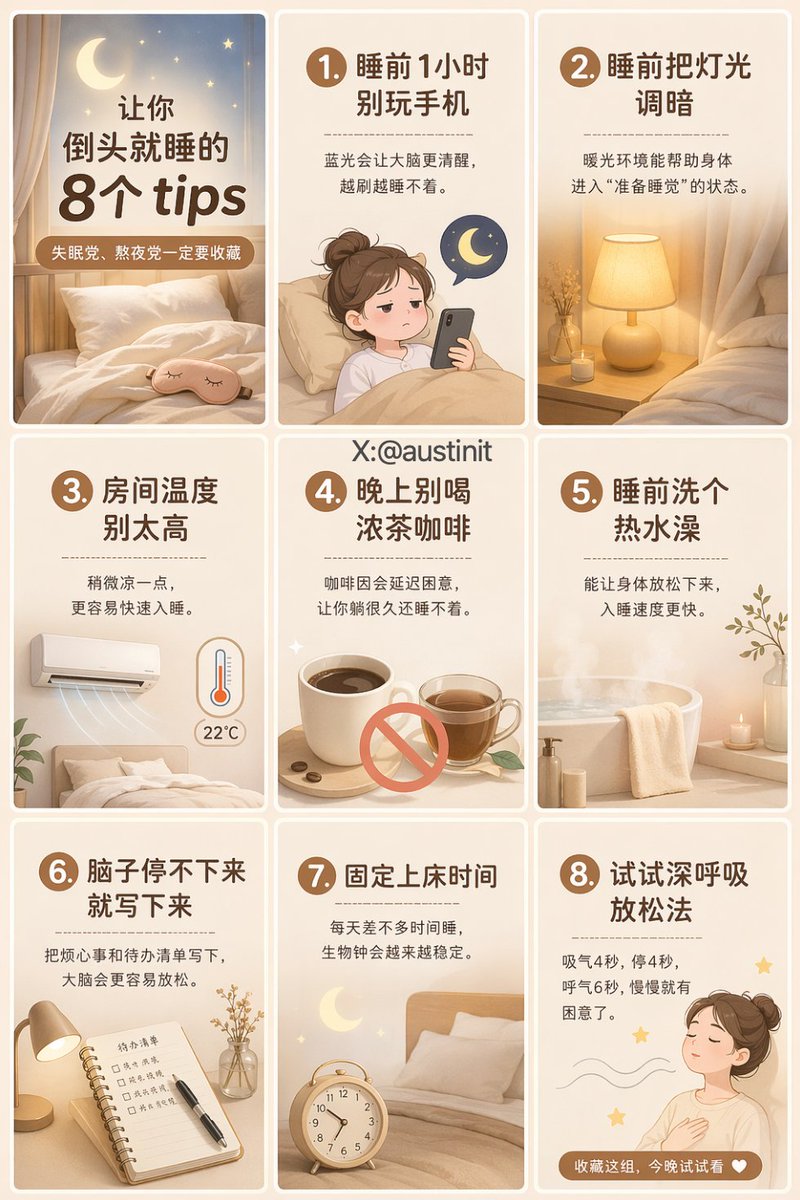
Cozy Sleep Aid Guide: Nine-Grid Layout
Generate a 3:4 vertical 9-grid poster suitable for publishing on Xiaohongshu, with an overall layout of 3 columns × 3 rows. The boundaries of the nine grids are clear, making it easy to directly cut into 9 single images for later publishing. The overall style is clean, premium, and unified, suitable for female-oriented healthy lifestyle content, possessing the vibe of a viral Xiaohongshu cover. Image requirements: clear information layout, large text, strong readability, comfortable white space, gentle and healing color palette.

Overall visual style:
Cream white, light beige, light oat color, and light caramel color as the main color tones, paired with a small amount of dark brown text. Ins style, healing sense, sleep therapy theme, minimalist layout, light skeuomorphic illustration embellishments. Elements such as pillows, moons, stars, hot milk, aromatherapy, books, eye masks, curtains, and beds can be added. The overall look should be like a professional new media design graphic, with neat fonts, suitable for a knowledge-based popular science Xiaohongshu 9-grid.

Layout requirements:
The entire image must be a standard 9-grid composition, and each grid can stand alone as an independent image after being cut.
The content of each grid should be completely centered; do not place titles or body text near the dividing lines.
Keep obvious gaps or thin borders between each grid to ensure that reading is not affected after cropping.
All text must use Chinese, be clear and readable, no garbled characters, no English.
Each grid should look like an independent Xiaohongshu image-and-text card, but the visual style must remain unified.
The image should be exquisite, realistic, and natural, without a cheap marketing feel, and not overly flashy.

Specific content of the 9-grid:

Grid 1 (Cover)
Main title: 8 tips to make you fall asleep instantly
Subtitle: Insomniacs and night owls must save this
The cover visuals should be the most eye-catching, suitable for the first image. Add healing sleep elements such as soft beds, moons, pillows, and eye masks. The title should be prominent with a premium layout.

Grid 2
Title: 1. Don't play with your phone 1 hour before bed
Body text: Blue light makes the brain more awake; the more you scroll, the harder it is to fall asleep.
Image elements: Mobile phone, moon, small illustration of a sleepy expression

Grid 3
Title: 2. Dim the lights before bed
Body text: A warm light environment can help the body enter a "ready to sleep" state.
Image elements: Bedside lamp, warm yellow light, curtains

Grid 4
Title: 3. Don't keep the room temperature too high
Body text: Keeping it a bit cooler makes it easier to fall asleep quickly.
Image elements: Air conditioner, thermometer, quilt

Grid 5
Title: 4. Don't drink strong tea or coffee at night
Body text: Caffeine delays sleepiness, making you lie in bed for a long time unable to sleep.
Image elements: Coffee cup, teacup, prohibition sign

Grid 6
Title: 5. Take a hot shower before bed
Body text: It can relax the body and help you fall asleep faster.
Image elements: Bathroom steam, towel, hot water

Grid 7
Title: 6. Write it down if your brain won't stop
Body text: Writing down your worries and to-do lists makes it easier for your brain to relax.
Image elements: Notebook, fountain pen, small desk lamp

Grid 8
Title: 7. Fix your bedtime
Body text: Going to bed at about the same time every day will make your biological clock increasingly stable.
Image elements: Clock, moon, bed

Grid 9
Title: 8. Try deep breathing relaxation
Body text: Inhale for 4 seconds, hold for 4 seconds, exhale for 6 seconds, and sleepiness will gradually come.
Bottom small text: Save this set and try it tonight
Image elements: Breathing lines, person with closed eyes, stars

Image quality requirements:
High definition, premium layout, magazine feel, realistically publishable, new media operation aesthetics, Xiaohongshu viral image-and-text style, neat text layout, suitable for direct image cutting.
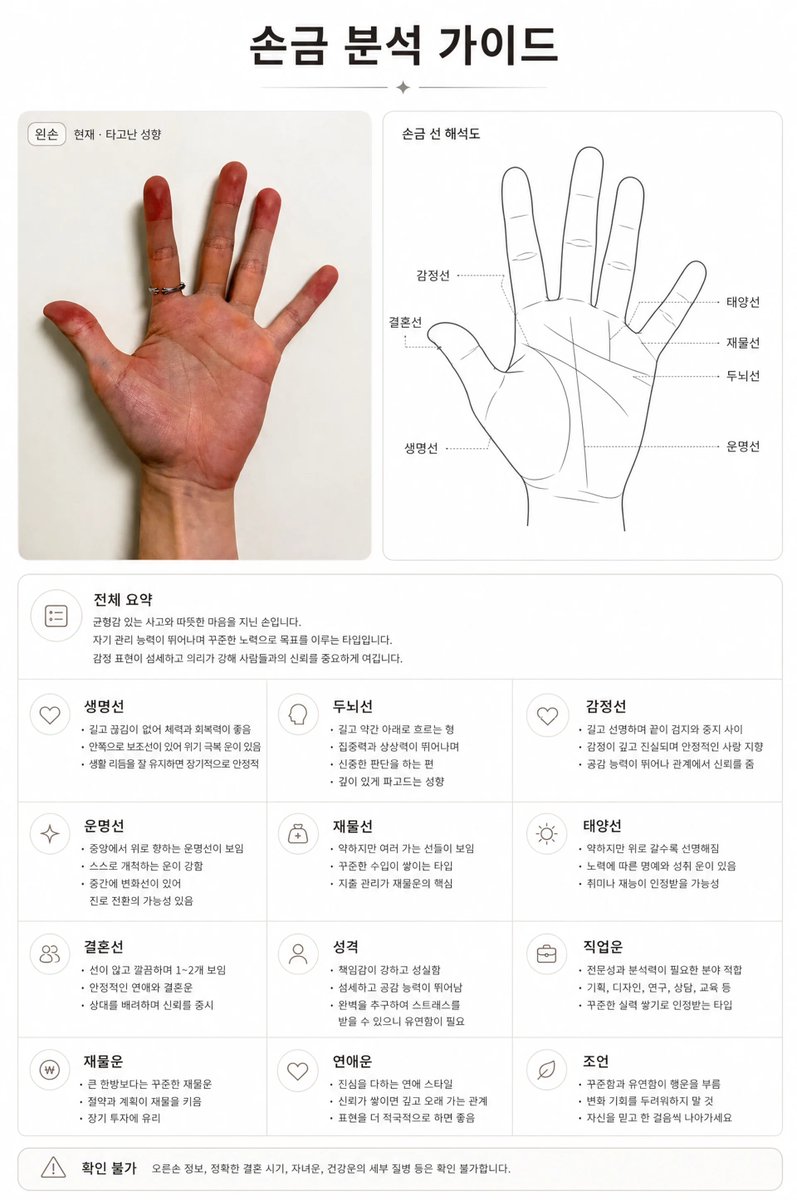
Infographic / Edu Visual - Premium Korean Palm Reading Guide
Create a premium Korean palm reading guide image based on the uploaded palm photo.

All visible text in the final image must be Korean only. Use clean Korean sans-serif typography. The title must be exactly “손금 분석 가이드”.

Create a refined two-panel layout:
Left panel: place the uploaded real palm photo inside a clean rounded card. Preserve the original hand shape, palm lines, skin texture, and natural details. Do not distort or redraw the hand.
Right panel: create a separate black-and-white palm contour interpretation diagram based on the same hand. Highlight the main palm lines with thin precise lines and label them in Korean.

Include Korean labels and sections:
“손금 분석 가이드”, “전체 요약”, “생명선”, “두뇌선”, “감정선”, “운명선”, “재물선”, “태양선”, “결혼선”, “성격”, “직업운”, “재물운”, “연애운”, “조언”, “확인 불가”.

Analyze palm shape, finger proportions, life line, head line, heart line, fate line, wealth line, sun line, marriage line, line depth, length, direction, breaks, branches, and overlaps. If something is unclear, write “확인 불가”. Keep the Korean interpretation short, realistic, calm, and advisory.

Design style:
1:1 square format, white background, black and warm dark gray text, thin hairline dividers, rounded cards, subtle shadows, large margins, generous negative space, precise grid, minimal line pictograms, luxury editorial report, high-end wellness analysis, elegant and expensive-looking.

No English text, no roman letters, no broken Korean, no random glyphs, no colorful decoration, no cartoon style, no occult symbols, no tarot imagery, no horror mood, no messy background, no watermark.
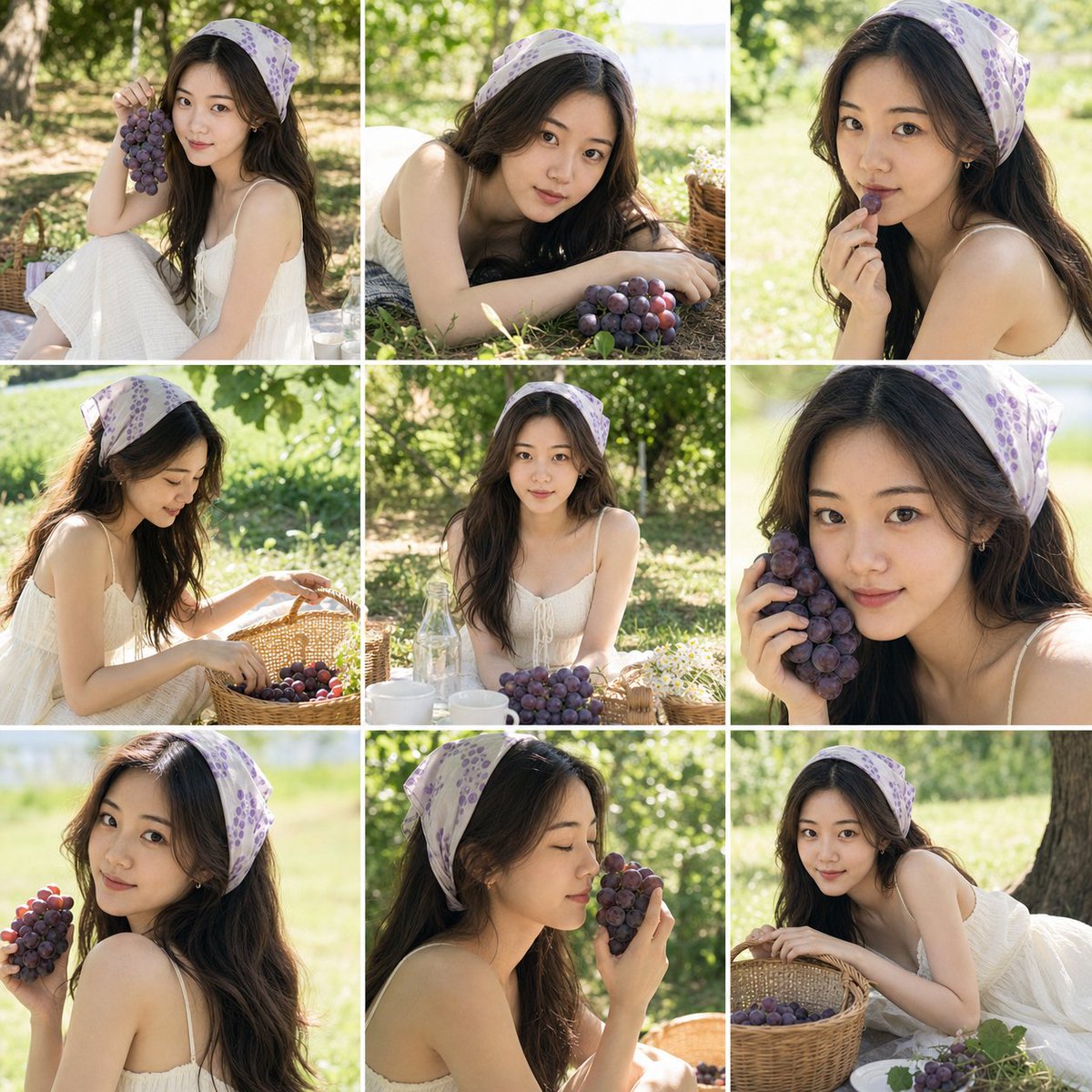
Profile / Avatar - Summer Grape Girl Photo Series
Based on 1-3 clear personal photos uploaded by the user, generate a 3x3 grid photo puzzle with the theme "{argument name="photo theme" default="Summer Grape Girl Photo Series"}".

Strictly preserve the subject's real identity characteristics, including face shape, facial proportions, eye/brow structure, nose, lips, skin tone, age, hairstyle features, and overall temperament. The person in all nine images must clearly look like the same real girl; she must not become a stranger, look Westernized, look like a generic influencer, be over-beautified, or have an AI-generated face.

The overall theme is a fresh and natural everyday girl's portrait. The character wears a {argument name="clothing description" default="creamy white or off-white soft dress / slip dress"} and a {argument name="accessory" default="purple vintage floral headscarf"}. The overall look is clean, natural, and daily, with a summer girl vibe. Accessories are simple, like small earrings, but not overly ornate.

Set the scene as a summer picnic portrait in an outdoor meadow, under tree shadows, or by a vineyard. Include elements like purple grapes, grape clusters, woven baskets, glass bottles, picnic blankets, and light-colored tableware to create a natural lifestyle feel. Sunlight filters through leaves, creating soft dappled shadows, with a naturally blurred background.

Design the final image as a 3x3 grid with white borders. All nine small photos must feature the same person, same outfit, and same scene, but each must be distinctly different: different expressions, different facial angles, different poses, different camera positions, and different compositions (wide vs. close-up). Do not just have nine slight variations of the same angle.

The nine photos can show: holding grapes and smiling, lying on the grass looking at the camera, holding a grape to the mouth, organizing the basket, sitting still facing forward, a close-up of a grape against the cheek, a candid turning shot, smelling the grapes with eyes closed, and lying on the grass holding the basket. Expressions should be varied, including quiet, playful, gentle, smiling with eyes closed, naturally daydreaming, and candid laughter.

The style is Fujifilm camera texture, Japanese film photography style, realistic shooting feel, soft natural light, shallow depth of field, slight film grain, and fresh natural tones. Purple grapes should be the visual focus. The image is clean, durable, and has a sense of life and youth.

Avoid: Western faces, influencer faces, over-beautification, plastic skin, fake faces, repetitive expressions, repetitive angles, hand deformities, distorted props, messy backgrounds, studio style, illustration style, or CG feel.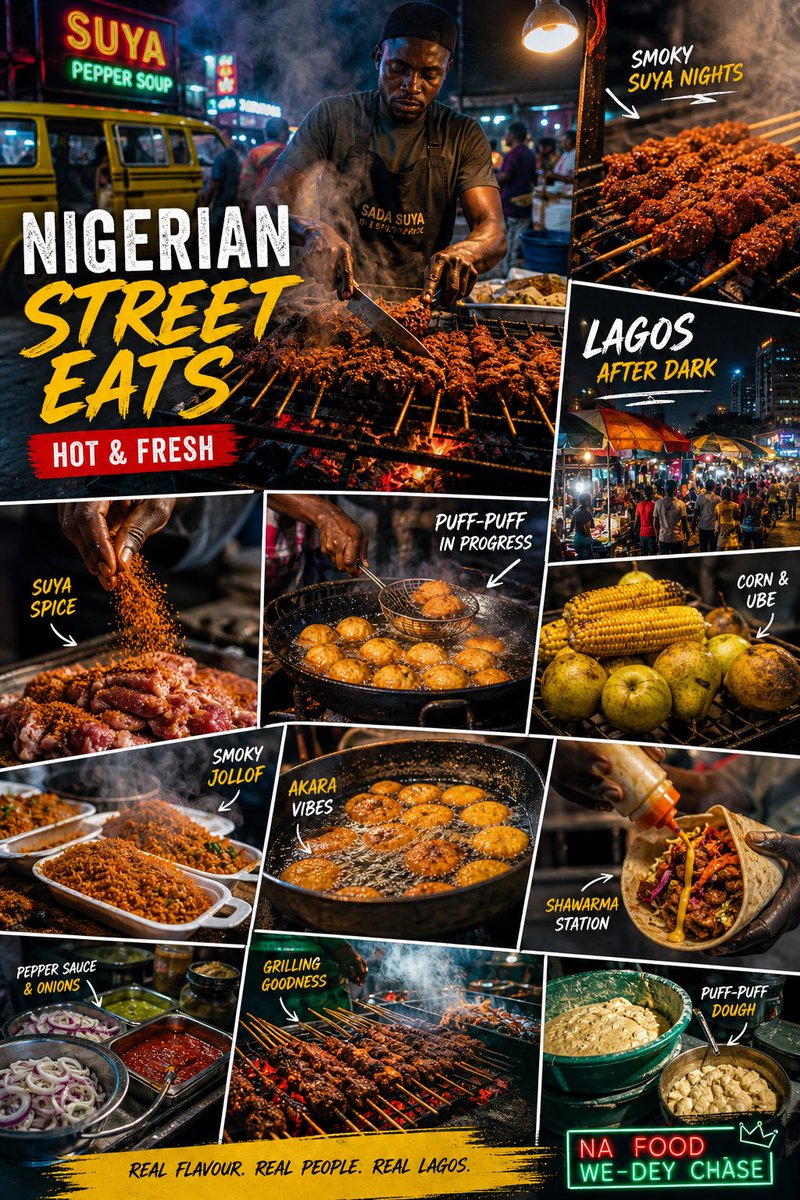
Infographic / Edu Visual - Nigerian Street Eats Collage
{"type":"vibrant Nigerian street food collage poster","format":"vertical editorial travel-food montage","style":"high-contrast cinematic night photography mixed with hand-painted street poster typography, smoky atmosphere, saturated neon colors, gritty documentary realism, white comic-panel borders, yellow brush lettering, handwritten annotation arrows","main_title":{"text":"{argument name=\"main title\" default=\"NIGERIAN STREET EATS\"}","position":"left-center over main grill scene","typography":"large distressed white block letters for first word, oversized yellow brush-script words below"},"subtitle":{"text":"{argument name=\"subtitle text\" default=\"HOT & FRESH\"}","position":"under main title on red paint-stroke banner","typography":"condensed white uppercase letters"},"scene":{"location":"busy Lagos night market street with food stalls, crowds, headlights, neon signs, smoke, open flames, and warm work lamps","mood":"energetic, smoky, late-night, authentic street-food adventure","lighting":"dramatic orange firelight and grill glow contrasted with blue-green neon and dark urban background"},"central_panel":{"position":"top-left and center, largest panel","description":"street vendor grilling many skewers of spicy suya over open charcoal flames; vendor wears dark cap, grey shirt, black apron, and black gloves; face obscured by shadow; smoke curls around the meat; yellow bus and neon food stall sign in background","visible_signs":["SUYA","PEPPER SOUP"],"apron_text":"SADA SUYA"},"panels":{"total_count":13,"items":[{"label":"main suya grill hero panel","position":"upper-left to center","content":"vendor tending rows of suya skewers over glowing charcoal, with the large poster title overlay"},{"label":"SMOKY SUYA NIGHTS","position":"top-right","content":"close-up of heavily seasoned suya skewers on a grill, smoke rising, handwritten white and yellow label with arrow"},{"label":"LAGOS AFTER DARK","position":"right-middle","content":"wide night street-market scene with umbrellas, food stalls, traffic lights, crowds, and city buildings"},{"label":"SUYA SPICE","position":"middle-left","content":"hands sprinkling orange-red spice over raw marinated meat, white arrow pointing to seasoning"},{"label":"PUFF-PUFF IN PROGRESS","position":"middle-center","content":"round golden puff-puff dough balls frying in bubbling oil, one lifted in a wire skimmer"},{"label":"CORN & UBE","position":"middle-right","content":"grilled yellow corn cobs beside round greenish-brown African pears, with arrow label"},{"label":"SMOKY JOLLOF","position":"lower-left","content":"foil trays filled with reddish jollof rice, steam and smoke drifting upward"},{"label":"AKARA VIBES","position":"lower-center","content":"golden bean cakes frying in a deep pan of hot oil, arrow label"},{"label":"SHAWARMA STATION","position":"lower-right","content":"gloved hands holding an open wrap stuffed with meat, cabbage, carrots, and sauces being drizzled from squeeze bottles"},{"label":"PEPPER SAUCE & ONIONS","position":"bottom-left","content":"metal trays of sliced red onions, bright red pepper sauce, and green sauce at a condiment station"},{"label":"GRILLING GOODNESS","position":"bottom-center","content":"many skewers grilling over flames and smoke, close-up of charred meat with orange fire glow"},{"label":"PUFF-PUFF DOUGH","position":"bottom-right","content":"large green bowl and smaller pot filled with pale dough pieces or batter, arrow pointing to dough"},{"label":"neon slogan sign","position":"bottom-right corner","content":"glowing red, green, and white neon sign with crown doodle reading NA FOOD WE-DEY CHASE"}]},"footer":{"text":"{argument name=\"footer slogan\" default=\"REAL FLAVOUR. REAL PEOPLE. REAL LAGOS.\"}","position":"bottom across yellow paint-stroke strip","typography":"black handwritten uppercase text"},"color_palette":"charcoal black, flame orange, spice red, neon green, electric cyan, warm yellow, smoky grey, white panel borders","composition":"dense magazine-cover collage with tilted rectangular panels separated by thick white borders; main hero image dominates, supporting food close-ups arranged around it; handwritten labels and arrows add street-guide energy","rendering_instructions":"make it look like a finished food-tour poster, not a flat infographic; include realistic steam, oil bubbles, smoke, glowing coals, busy market depth, gritty textures, and legible stylized English labels","negative_prompt":"no clean studio background, no empty panels, no minimalist layout, no washed-out colors, no generic Western fast food, no misspelled main title"}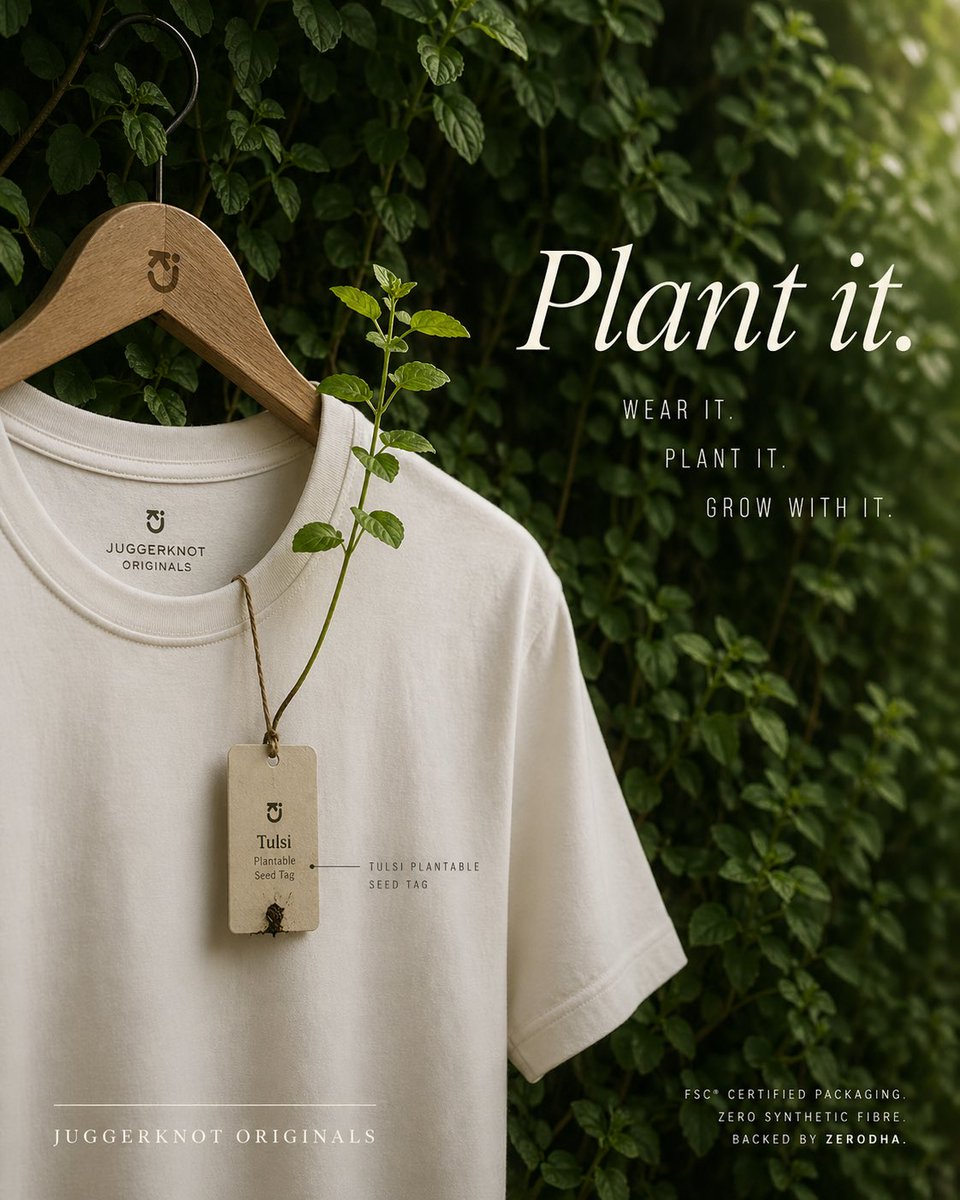
E-commerce Main Image - Sustainable T-Shirt Plantable Tag Ad
A premium eco-conscious fashion advertisement, shot as a refined editorial product photo. A single off-white or natural cream crew-neck T-shirt hangs on a smooth wooden hanger with a black metal hook, placed against a lush wall of dense green leaves and climbing vines. The hanger has a small minimalist brand monogram engraved near the neck. The shirt is shown from the upper torso down to part of the hem, slightly angled, with soft natural folds and high-quality cotton texture. Printed inside the collar is a minimalist brand mark and the text "JUGGERKNOT ORIGINALS". Hanging from the neckline is 1 rectangular recycled-paper seed tag tied with rustic brown twine; the tag reads "Tulsi" and "Plantable Seed Tag" with a tiny sprouting seed detail near the bottom. From the tag, 1 real tulsi plant stem grows upward across the front of the shirt, with several fresh green leaves, visually demonstrating that the tag is plantable. Add a small fine-label annotation near the tag reading "TULSI PLANTABLE SEED TAG". On the right side, large elegant white serif typography says {argument name="headline text" default="Plant it."}. Beneath it, place 3 stacked lines of narrow uppercase sans-serif copy: "WEAR IT.", "PLANT IT.", and "GROW WITH IT.". At the lower left, add the brand name in spaced uppercase serif text: {argument name="brand name" default="JUGGERKNOT ORIGINALS"}, with a thin horizontal line above it. At the lower right, add 3 lines of small uppercase sans-serif text: "FSC® CERTIFIED PACKAGING.", "ZERO SYNTHETIC FIBRE", and "BACKED BY ZERODHA.". Use soft diffused daylight, shallow depth of field, moody green-and-cream color grading, luxury sustainable-brand aesthetics, clean composition, vertical poster layout, subtle shadows, and a calm organic atmosphere. Keep the design minimal, premium, and photorealistic, with the shirt occupying the left half and the typography balanced on the right.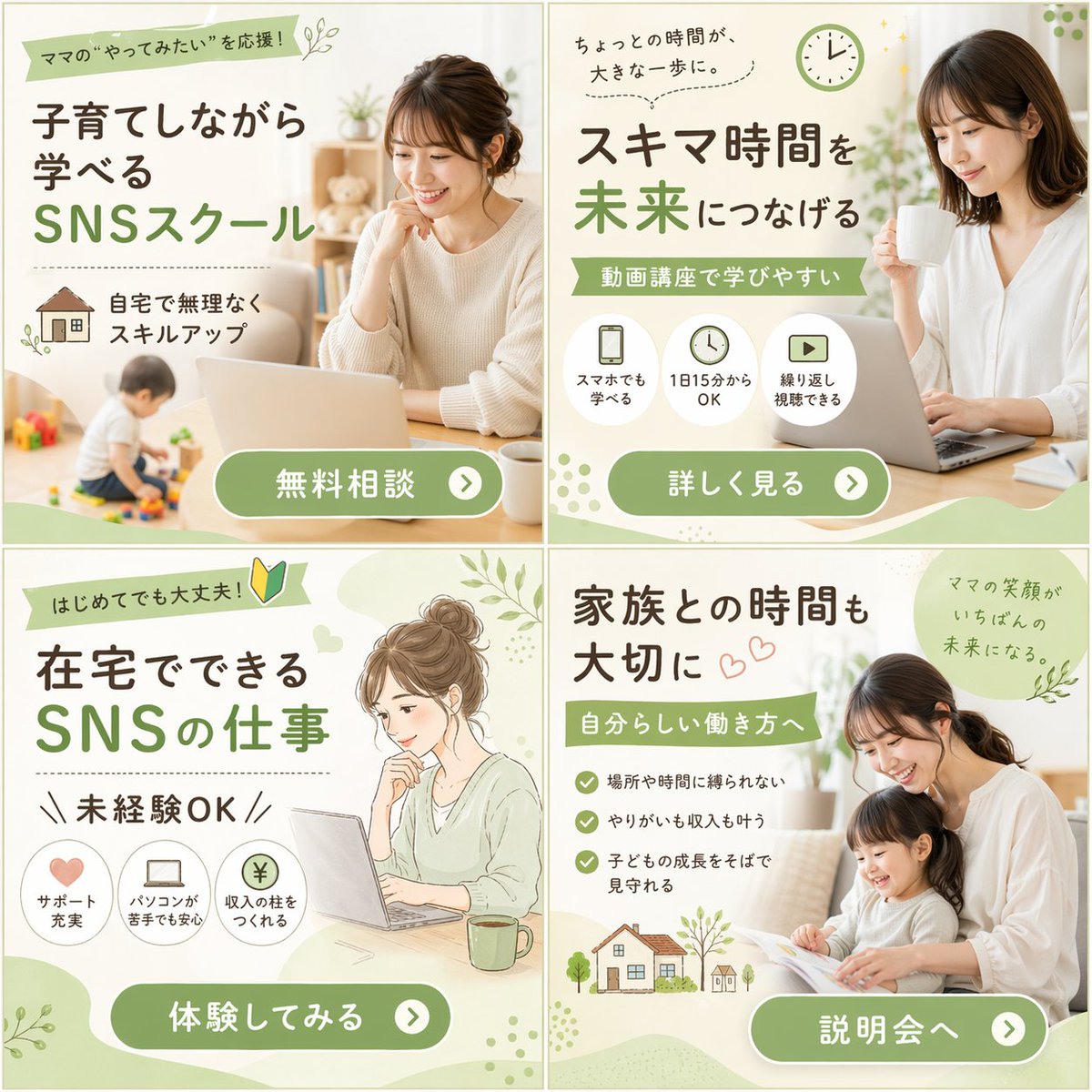
Illustration Art Style Creation
{
  "type": "2x2 grid of banner advertisements",
  "theme": "{argument name=\"main theme\" default=\"SNS School\"} for {argument name=\"target audience\" default=\"mothers\"}",
  "design_style": "soft, approachable, bright lighting, featuring {argument name=\"color palette\" default=\"soft green, white, and natural beige tones\"}",
  "layout": {
    "sections": [
      {
        "position": "top-left",
        "visual_style": "photography",
        "image_description": "Smiling woman working on a laptop at a table, a toddler playing with toys in the blurred background.",
        "headlines": ["Supporting mothers' 'I want to try!'", "Learn while raising children", "SNS School"],
        "features": {
          "count": 1,
          "type": "icon with text",
          "labels": ["Skill up comfortably at home (with house icon)"]
        },
        "call_to_action_button": "Free consultation"
      },
      {
        "position": "top-right",
        "visual_style": "photography",
        "image_description": "Smiling woman holding a white mug, looking at a laptop.",
        "headlines": ["A little time, a big step.", "Connect your spare time to your future", "Easy to learn with video courses"],
        "features": {
          "count": 3,
          "type": "circular icons with text below",
          "labels": ["Learnable on smartphone (smartphone icon)", "OK from 15 minutes a day (clock icon)", "Can be rewatched (play button icon)"]
        },
        "call_to_action_button": "Learn more"
      },
      {
        "position": "bottom-left",
        "visual_style": "watercolor illustration",
        "image_description": "Illustration of a woman with hair in a bun, smiling at a laptop with a green mug nearby.",
        "headlines": ["No problem even for beginners! (with beginner mark)", "SNS work you can do from home", "OK for inexperienced"],
        "features": {
          "count": 3,
          "type": "circular icons with text below",
          "labels": ["Full support (heart icon)", "Peace of mind even if you're not good with computers (laptop icon)", "Can create a pillar of income (yen coin icon)"]
        },
        "call_to_action_button": "Try it out"
      },
      {
        "position": "bottom-right",
        "visual_style": "photography",
        "image_description": "Smiling mother and young daughter sitting on a sofa reading a picture book together.",
        "headlines": ["Also cherish time with family", "Toward a work style that's true to yourself", "A mother's smile becomes the best future."],
        "features": {
          "count": 3,
          "type": "checkmark bullet points",
          "labels": ["Not bound by location or time", "Both fulfillment and income can be achieved", "Can watch over your child's growth by their side"]
        },
        "extra_graphics": "Small illustration of a house and trees at the bottom left.",
        "call_to_action_button": "To information session"
      }
    ],
    "common_elements": "All panels feature a {argument name=\"button style\" default=\"rounded green pill button with white text and a right-pointing arrow icon\"} at the bottom."
  }
}![[CORE TASK]
Transform the...](https://raw.githubusercontent.com/freestylefly/awesome-gpt-image-2/main/data/images/case78.jpg)
Image Generation Case Examples
[CORE TASK]
Transform the provided input image into a pose-and-light analysis sheet.

This is NOT a finished character illustration.
This is NOT a clothing sheet.
This is NOT a beauty-preserving redraw.

This is a white-line rough mannequin conversion.

[PRIMARY GOAL]
Extract and visualize only:
- pose structure
- body balance
- camera angle
- body line flow
- inferred light source placement
- illuminated areas and light intensity

[INPUT ROLE]
Use the provided image as the strict anchor for:
- pose
- camera angle
- body tilt
- weight distribution
- approximate lighting situation

Do NOT preserve:
- face rendering
- hairstyle rendering
- clothing detail
- accessories
- weapon detail
- background architecture
- character identity
- emotional expression

[FIGURE CONVERSION]
single rough mannequin-like human figure
white body contour lines
white internal construction lines
simple mannequin head
no face
no eyes
no mouth
no eyelashes
no personality
no individual identity

human figure should look like:
- rough pose mannequin
- anatomy proxy
- line-based body guide
- structural sketch
- white-line rough dummy

keep:
- pose readability
- silhouette flow
- head tilt
- torso direction
- pelvis direction
- limb placement

[BACKGROUND]
pure black background
negative-style dark field
no scenery
no props
no architecture
no environmental storytelling

[LINE STYLE]
rough white line drawing
clean but sketch-like
construction-line feeling
anatomy guide lines visible
joint flow visible
body contour emphasized
no polished illustration finish

[LIGHT ESTIMATION]
predict the likely light source positions from the input image
visualize the light sources and illuminated areas using green glow only

use green light intensity with variation:
- strongest green where the light directly hits
- medium green for wrap light
- soft green for reflected or fading light

mark the estimated light sources with labels and arrows such as:
- Main Light
- Rim Light
- Fill Light
- Floor Bounce
- Back Light
only if appropriate

IMPORTANT:
do not invent random lights
infer lighting from the original input image
if the lighting is ambiguous, keep the annotations simple and plausible

[GREEN LIGHT VISUALIZATION]
show green glow on:
- head / skull plane
- neck
- shoulders
- chest plane
- ribcage direction
- pelvis edge
- thigh planes
- knee contact points
- floor contact bounce if applicable

use green light not as decoration,
but as lighting analysis information

[POSE PRIORITY]
1. preserve pose structure
2. preserve camera angle
3. preserve body balance
4. preserve head-torso relationship
5. visualize likely light direction
6. show illuminated areas with readable green intensity variation

[NEGATIVE]
finished person,
cute girl,
detailed face,
hair rendering,
clothing rendering,
weapon emphasis,
beautiful anatomy
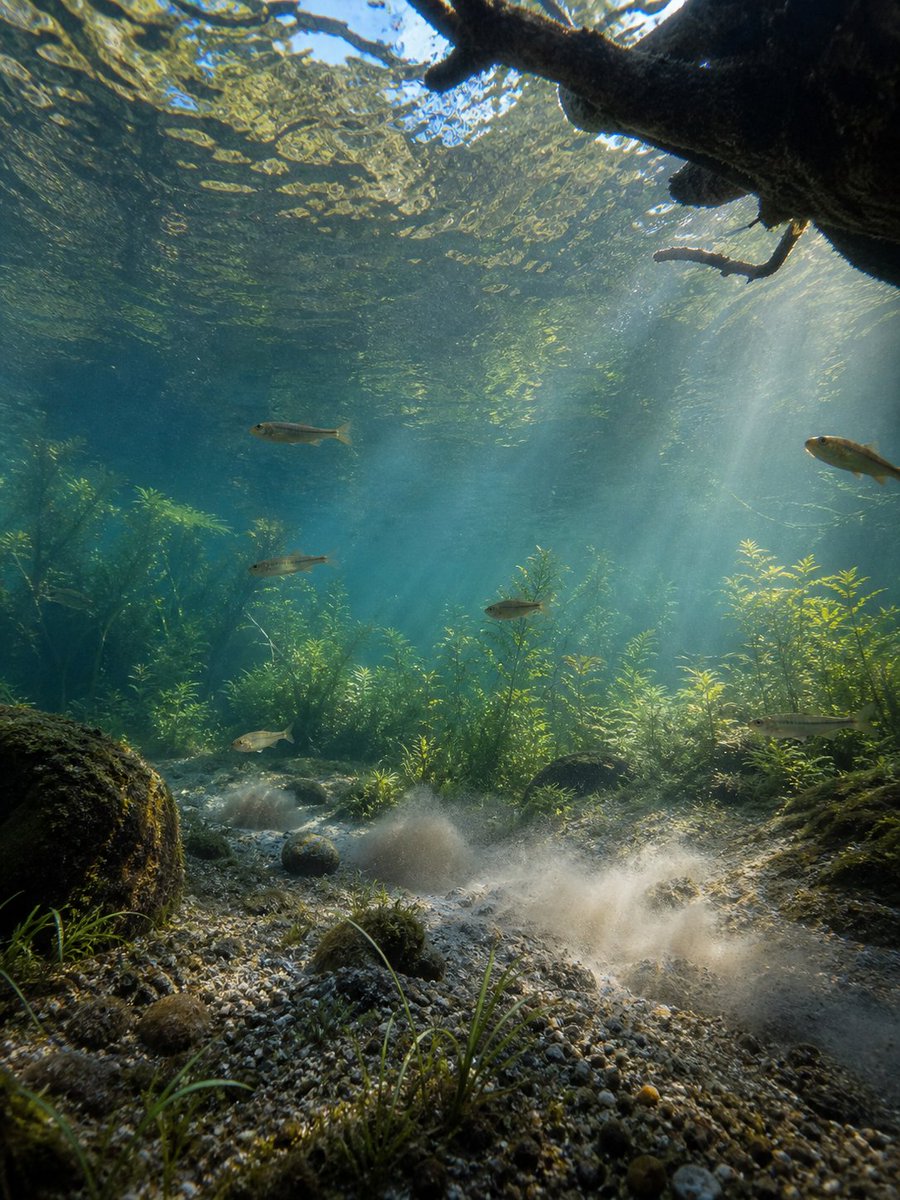
Infographic / Edu Visual - Underwater Forest Stream Photography
Shot with a high-definition underwater camera, this prompt captures real underwater natural scenery in a {argument name="environment description" default="clear shallow stream next to a tropical primeval forest"}.

Vertical composition, 3:4 aspect ratio, medium-to-long shot. The lens is slightly below the water surface, showing the shimmering bottom of the water surface above with realistic water wave refraction and natural reflections.

Sunlight shines diagonally into the water from the top right, forming soft beams and underwater spots. Dark reflections and shadows of large tree branches occupy part of the composition in the upper right.

In the middle is clear and quiet stream water with slight suspended particles and {argument name="number of fish" default="5-8"} native freshwater small fish swimming naturally, mainly gray-silver and light brown, varying in size and distance, not forming an organized school. On the stream bed, deep green, yellow-green, and brownish-green water plants grow naturally, swaying gently with the current, distributed naturally unlike an artificial aquarium.

The bottom consists of gray-brown fine sand, gravel, pebbles, and several naturally shaped stones with slight algae marks and signs of water erosion. Multiple springs at the bottom show fine sand billowing slowly from small holes, creating light sand clouds and local water disturbances, not white smoke, steam, or large bubbles.

Natural landscape live-action photography, high-end natural documentary feel, close to National Geographic ecological photography. Features transparent water, natural lighting, restrained colors, realistic underwater optical effects, slight graininess, natural depth of field, and high-definition details.

No people, no buildings, no artificial traces, no text, no borders, no LOGO. Avoid CG feel, aquarium look, seabed coral, exaggerated fish schools, oversaturated greens, dreamy lighting effects, or plastic water plants.Related prompt guides and libraries
FAQ about AI Image Prompting Guide
How do I use AI Image Prompting Guide prompts from gptimages.dev?
Start with the examples that match your visual job, then copy the prompt structure rather than copying every adjective. Replace the subject, scene, channel, aspect ratio, and constraints with your own details. If the first result is close, keep the successful parts fixed and change one variable at a time. This makes the page useful as a prompt library, not just a keyword page.
What is the best prompt format for AI Image Prompting Guide?
A dependable format is brief first, details second, checks last: describe the image goal, then the subject, scene, composition, style, reference rules, and output constraints. For models such as GPT-IMAGE-2, Nano Banana 2, Stable Diffusion, Midjourney, or Jimeng AI, keep the core prompt portable and add tool-specific settings only when the interface supports them.
Can I reuse these prompts across different AI image models?
Yes, but reuse the structure more than the exact syntax. A prompt that works in one generator may need different wording, reference strength, aspect ratio settings, or negative prompts in another. The safest workflow is to preserve the creative brief, then adapt only the model-specific layer after you inspect the first output.
How should I collect the best AI image prompts?
Save prompts with the final image, model or tool name, aspect ratio, reference images, and a short note explaining why the result worked. Group them by use case such as product photography, character consistency, UI mockups, posters, logos, or text-in-image prompts. That collection becomes much more useful than a flat list of attractive phrases.
Why do AI Image Prompting Guide prompts fail?
Common causes include unclear subject hierarchy, too many styles in one prompt, vague quality words, unsupported text requirements, missing reference rules, and uncontrolled iteration. Fix the prompt by naming the production goal, protecting the details that cannot change, and testing one adjustment per generation instead of rewriting the whole prompt every time.
Are these prompt examples enough for commercial work?
They are a starting point, not legal or brand clearance. For commercial work, check the terms of the model or generator, review rights for reference images, verify text and logos manually, and keep a record of the prompt, source assets, and final edits. The page helps with prompt quality, while usage rights still depend on your workflow and provider terms.