
Poster Design Prompts
Poster Design Prompts connects find poster design AI image prompts to a curated English SEO page with model notes, prompt patterns, FAQ coverage, real examples, and related internal links.
Editorially reviewed by GPT Images for prompt usefulness, internal links, FAQ coverage, and source-aware model context.
What this use-case library covers
Poster Design Prompts is designed for people trying to make a specific type of image for a product, brand, story, interface, or campaign. It targets the intent to find poster design AI image prompts, but the page avoids thin keyword stuffing by connecting the topic to prompt structure, real prompt examples, internal links, and FAQ answers.
The practical goal is simple: help someone understand what to write next. The page explains how Poster Design prompts should define subject, constraints, references, style, and output checks before a model or generator is blamed for a weak result.
- Use this use-case library when the search intent is "find poster design AI image prompts" and the visitor needs examples before writing from scratch.
- Choose it when Poster Design work requires visible constraints such as subject, angle, lighting, composition, text, aspect ratio, or editing target.
- Use the real prompt examples below to see how other prompts structure the same problem, then adapt one variable at a time.
- Keep it as an internal link target for related prompt collections so users can move from broad discovery into specific prompt pages.
Recommended Poster Design workflow
turn a visual job into reusable prompt recipes and examples. A good workflow should be repeatable, inspectable, and easy to adapt across tools. The same prompt can behave differently in GPT-IMAGE-2, Nano Banana 2, Stable Diffusion, Midjourney, Jimeng AI, or a local ComfyUI setup, so this page keeps the reusable structure separate from tool-specific adjustments.
- Start by defining the job: what the image must communicate, where it will be used, and what failure would make the result unusable.
- Translate the job into a prompt skeleton for Poster Design: subject, scene, medium, camera or composition, style constraints, and output constraints.
- Pick one example prompt from this page and copy only the structure that matches the job; avoid copying decorative phrases that do not serve the image.
- Run a first generation, then change one variable at a time: framing, lighting, color palette, reference strength, text content, or background density.
- Save the winning prompt with notes about model, tool, aspect ratio, and any reference images so the pattern can be reused later.
- define output constraints, choose references, specify scene details, and review production quality
Quality checks before publishing
Before using a generated image in production, review the output against the original job. The best prompt is not the longest prompt; it is the prompt that makes the model spend attention on the details that matter.
- Poster Design should have a clear subject and a visible hierarchy; if the prompt gives equal weight to every detail, the image often becomes noisy.
- The prompt should separate content from style, especially when moving between GPT-IMAGE-2, Nano Banana 2, Stable Diffusion, Midjourney, or other image models.
- If the output needs readable text, keep the phrase short, quote it exactly, and verify the final image rather than assuming the model handled typography perfectly.
- If the output must match a brand, character, room, product, or reference image, name the fixed traits and describe what is allowed to change.
- Avoid stacking too many model-specific shortcuts on a reusable prompt page; keep the main prompt portable, then add model notes as a final layer.
- Review whether the page sends visitors to deeper prompt examples, related use cases, and FAQ answers instead of trapping them in a generic SEO article.
Common mistakes to avoid
Most failed image generations are not caused by a missing magic word. They usually come from unclear hierarchy, mixed intent, unsupported text requirements, or a prompt that asks for too many changes at once.
- Writing a Poster Design prompt as a pile of keywords without a production goal.
- Changing model, tool, aspect ratio, and reference image at the same time, which makes it impossible to learn what improved the output.
- Using vague quality words such as beautiful or professional without defining the visible evidence of quality.
- Ignoring downstream use, such as ecommerce crop safety, ad text legibility, app store screenshots, or poster readability.
- Treating Poster Design Prompts as a final answer instead of a starting point connected to prompt examples and iteration notes.
Poster Design prompt patterns
Production brief prompt
Create a Poster Design image for [audience] that communicates [message]. Main subject: [subject]. Scene: [setting]. Composition: [camera angle, crop, spacing]. Style: [medium, lighting, color direction]. Constraints: [aspect ratio, readable text, brand colors, negative space]. Avoid: [visual mistakes, clutter, wrong mood].
It separates the job, subject, scene, style, and constraints, which makes the prompt easier to test across different image models.
Reference-aware prompt
Using the reference as the fixed source of truth, generate a Poster Design variation. Preserve [identity traits, product shape, logo placement, character features, room layout]. Change only [background, lighting, camera angle, outfit, color palette]. Keep the output consistent with [use case] and do not invent extra objects.
It tells the model what is fixed and what can change, which is critical for image editing, character consistency, product shots, and brand work.
Iteration prompt
Revise the previous Poster Design result by improving [one problem]. Keep [successful elements] unchanged. Adjust [single variable] to [specific direction]. The final image should feel [desired mood] and remain suitable for [placement or channel]. Do not change [protected details].
It controls iteration by changing one variable at a time, so you can learn which instruction improved or damaged the output.
Model transfer prompt
Rewrite this Poster Design prompt for [target model or tool]. Keep the core subject, composition, and constraints. Convert unsupported syntax into natural language. Add model-specific notes only at the end: [aspect ratio, style strength, reference strength, negative prompt, seed, or typography instruction].
It preserves the creative brief while allowing each model or tool to receive the instructions in a format it can use.
Prompt examples for Poster Design
These examples are selected from the current English prompt catalog so the page links visitors into real prompt detail pages instead of stopping at generic advice.
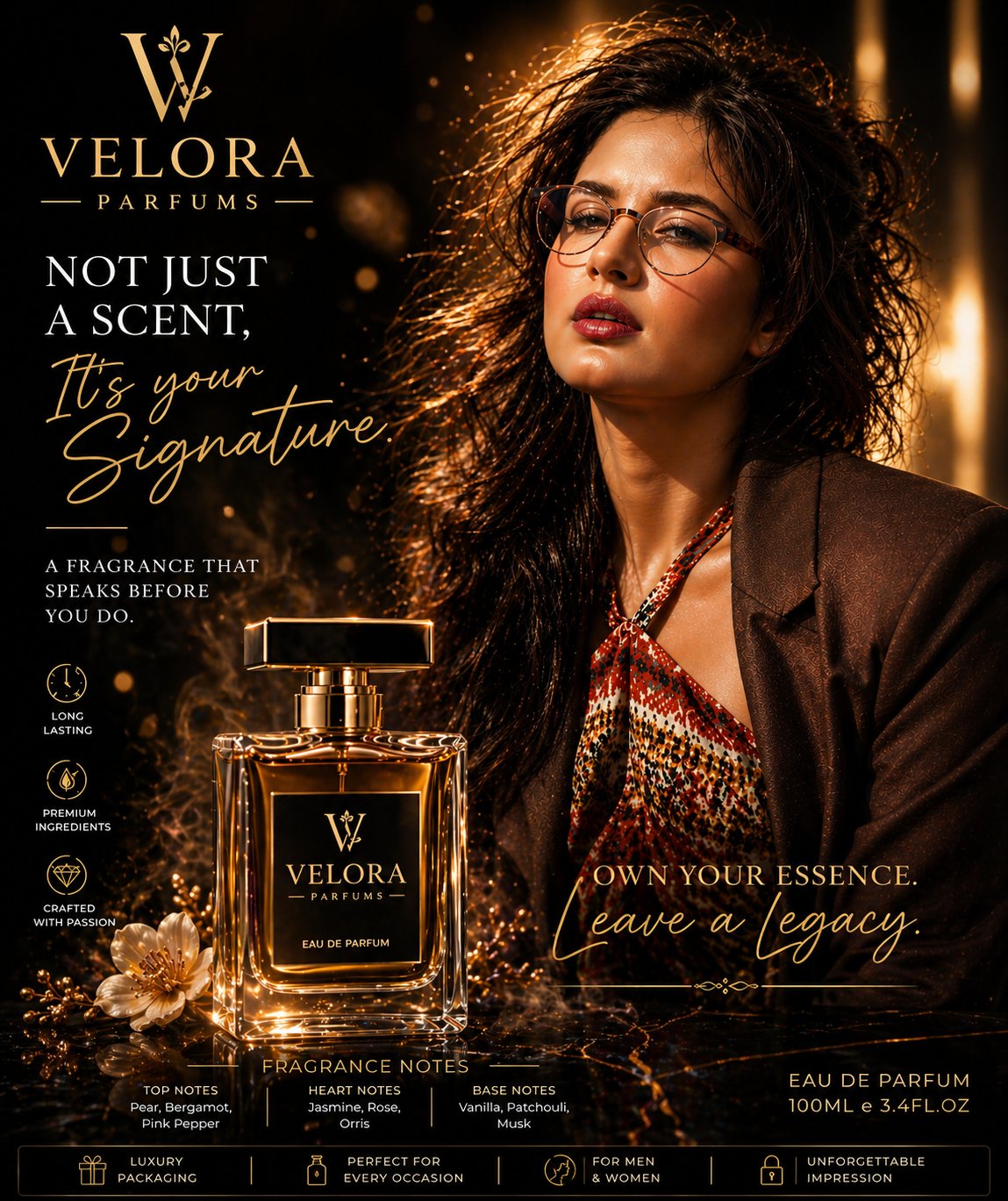
VELORA Luxury Perfume Advertisement Poster
{
  "image_type": "luxury perfume advertisement poster",
  "resolution": "4K ultra HD (4096x5120)",
  "aspect_ratio": "portrait (4:5)",
  "style": {
    "aesthetic": "high-end fragrance campaign (Tom Ford, Dior inspired)",
    "tone": "dark luxury, sensual, elegant, powerful",
    "color_grading": "deep black shadows with rich golden highlights and warm amber glow",
    "lighting": "cinematic spotlight + golden rim light + soft fill light, dramatic shadows",
    "contrast": "high cinematic contrast",
    "depth_of_field": "shallow, sharp focus on face and perfume bottle"
  },
  "camera": {
    "type": "85mm portrait lens",
    "aperture": "f/1.6",
    "angle": "slightly low angle, premium perspective",
    "framing": "model upper body + product foreground"
  },
  "subject": {
    "gender": "female",
    "age_appearance": "young adult",
    "expression": "confident, sensual, calm",
    "styling": {
      "hair": "voluminous, slightly messy, glossy strands with golden highlights",
      "makeup": "soft glam, glowing skin, bold lips",
      "outfit": "brown tailored blazer with patterned silk scarf",
      "accessory": "thin transparent eyeglasses"
    }
  },
  "product": {
    "type": "luxury perfume bottle",
    "brand": "VELORA PARFUMS",
    "label": "EAU DE PARFUM",
    "design": "clear crystal glass bottle, golden liquid inside, metallic gold cap",
    "placement": "bottom center foreground on glossy black marble surface",
    "effects": "strong reflections, golden glow, subtle condensation, cinematic shine"
  },
  "environment": {
    "background": "dark blurred luxury interior with warm golden light streaks",
    "surface": "black marble with reflections",
    "extra_elements": "small flowers near bottle, golden particles, soft smoke"
  },
  "typography": {
    "logo": "V monogram + VELORA PARFUMS",
    "headline": "Not just a scent, It's your Signature.",
    "tagline": "A fragrance that speaks before you do.",
    "secondary": "Own your essence. Leave a legacy.",
    "features": [
      "Long Lasting",
      "Premium Ingredients",
      "Crafted with Passion"
    ],
    "notes": [
      "Top: Pear, Bergamot, Pink Pepper",
      "Heart: Jasmine, Rose, Orris",
      "Base: Vanilla, Patchouli, Musk"
    ],
    "font_style": "luxury serif + elegant handwritten script",
    "color": "gold metallic",
    "placement": "top left + mid left + bottom balanced layout"
  },
  "post_processing": {
    "sharpness": "ultra sharp on face and bottle",
    "glow": "golden cinematic glow",
    "retouch": "high-end editorial finish",
    "vignette": "subtle dark vignette"
  },
  "mood": "premium luxury perfume campaign, cinematic, bold brand identity",
  "quality": "hyper-realistic, 4K ultra HD, commercial grade, award-winning fragrance ad"
}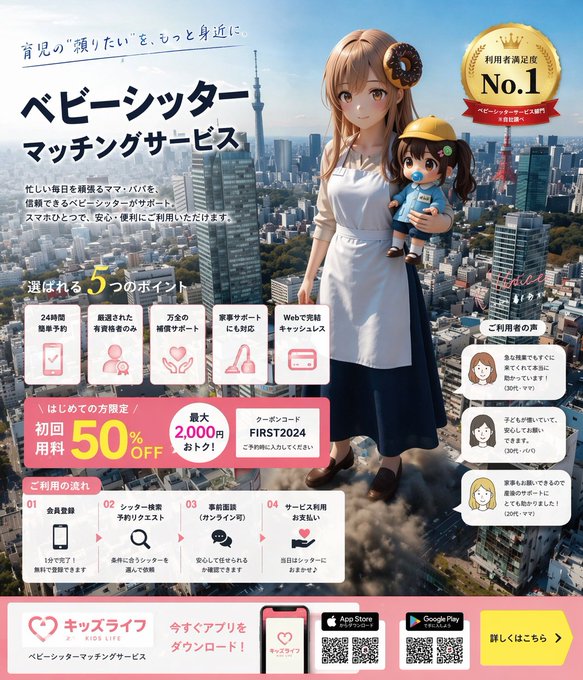
Perfect match poster advertisement image
Generate an advertising image that perfectly matches this image. There should be a lot of information.
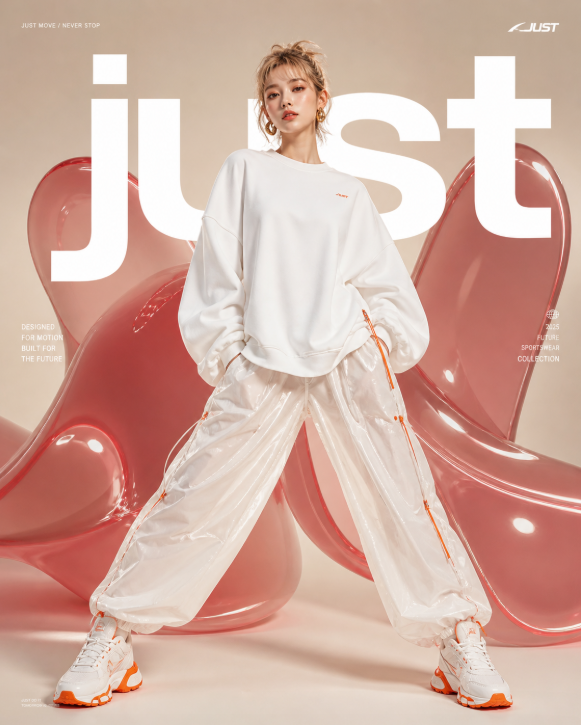
Futuristic Sportswear Editorial Poster
GPT image 2 on @SocialSight Prompt: High-fashion futuristic sportswear editorial poster, full-body female model in dynamic wide-leg stance, oversized white minimalist sweatshirt with voluminous sleeves, glossy translucent parachute pants, chunky white-orange athletic sneakers, sleek messy updo hairstyle, gold statement earrings, soft natural makeup, confident editorial expression, studio fashion photography, centered composition, smooth neutral beige gradient background with large abstract glossy red-pink organic 3D inflatable blob shapes behind model, bold oversized white typography “just” partially behind subject, premium athletic brand campaign aesthetic, ultra-clean lighting, soft diffused studio shadows, luxury streetwear advertisement, contemporary magazine cover design, minimalist layout, subtle futuristic graphic microtext, highly polished commercial fashion retouching, sharp focus, cinematic soft contrast, photorealistic, high detail, 8k
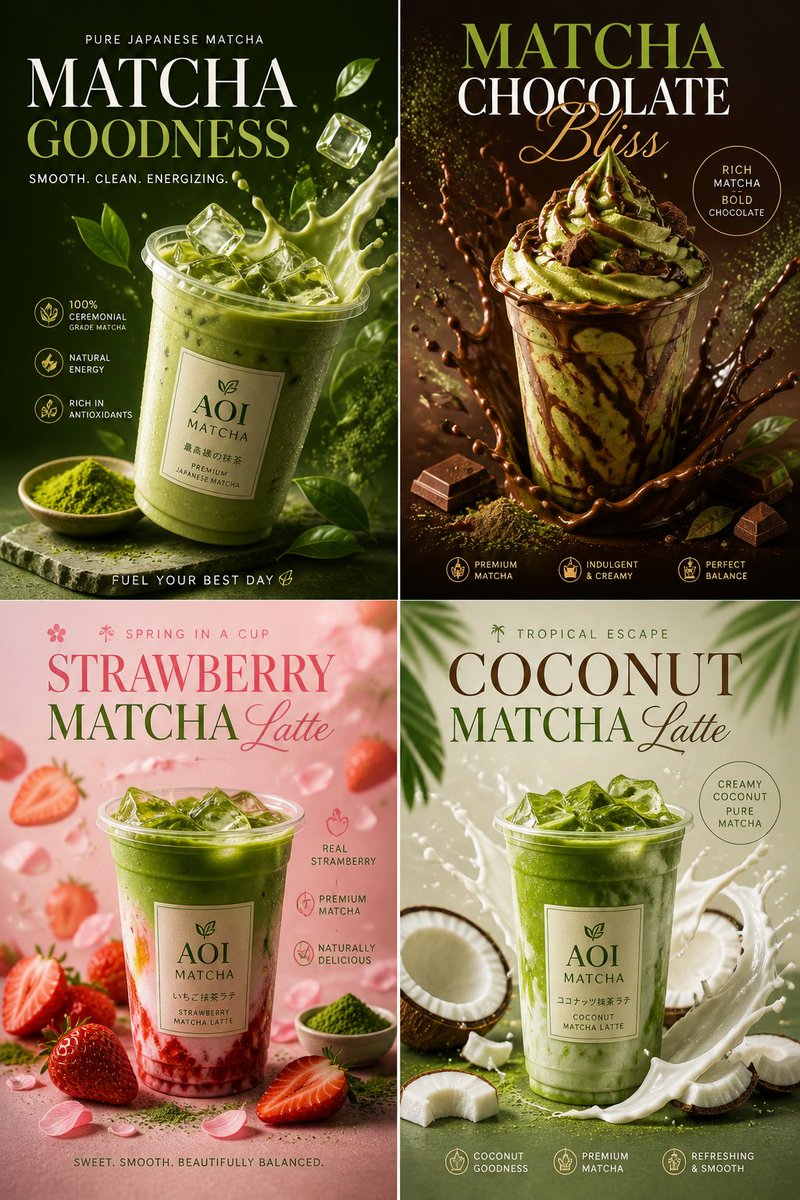
Luxury Food Poster Template
GPT Image 2 on ChatGPT App Create a hyper-realistic vertical commercial food photography poster for a premium [PRODUCT TYPE], designed in a refined luxury advertisement style, 2:3 aspect ratio. Place [MAIN PRODUCT] as the central hero subject, positioned [COMPOSITION / ANGLE], with premium realistic details such as [TEXTURE DETAILS], [SURFACE FINISH], and [FOOD-SPECIFIC FEATURES]. Surround the product with [FLOATING INGREDIENTS / MOTION ELEMENTS], arranged dynamically but cleanly to create movement, depth, and visual balance. Add [LIQUID / SPLASH / DRIP / POWDER EFFECT] interacting with the product in a natural high-speed freeze-frame style, showing realistic viscosity, droplets, suspended particles, soft shadows, and crisp highlights. Use a [BACKGROUND STYLE] with a cohesive color palette of [COLOR PALETTE], keeping the composition clean, appetizing, and premium. Lighting should be [LIGHTING STYLE], emphasizing gloss, creaminess, texture, and material contrast. Include [TYPOGRAPHY / BRANDING DETAILS] if required, placed with elegant spacing and modern commercial balance. Ultra-detailed textures, photorealistic rendering, high-end dessert or beverage advertisement aesthetic, sharp focus on the hero product, slight depth falloff on outer elements, clean studio composition, luxurious, fresh, indulgent, 8K resolution. Cheat Sheet [PRODUCT TYPE]: matcha drink, ice cream bar, pistachio cone, dessert poster [MAIN PRODUCT]: cup, bar, cone, packaged dessert [COMPOSITION / ANGLE]: overhead flat-lay, centered vertical, mid-air diagonal [TEXTURE DETAILS]: crumbs, powder, nuts, cream ridges, ice cubes [SURFACE FINISH]: glossy chocolate, matte powder, creamy swirl, transparent plastic [FLOATING INGREDIENTS]: almonds, tea leaves, pistachios, cherry pieces [MOTION EFFECT]: splash, drip, swirl, powder burst, frozen particles [BACKGROUND STYLE]: soft gradient, textured powder surface, clean studio backdrop [COLOR PALETTE]: matcha green, chocolate brown, cherry pink, pistachio sage [TYPOGRAPHY]: brand name, product title, tagline, offer badge, CTA button
Streetwear Headphones Ad Poster
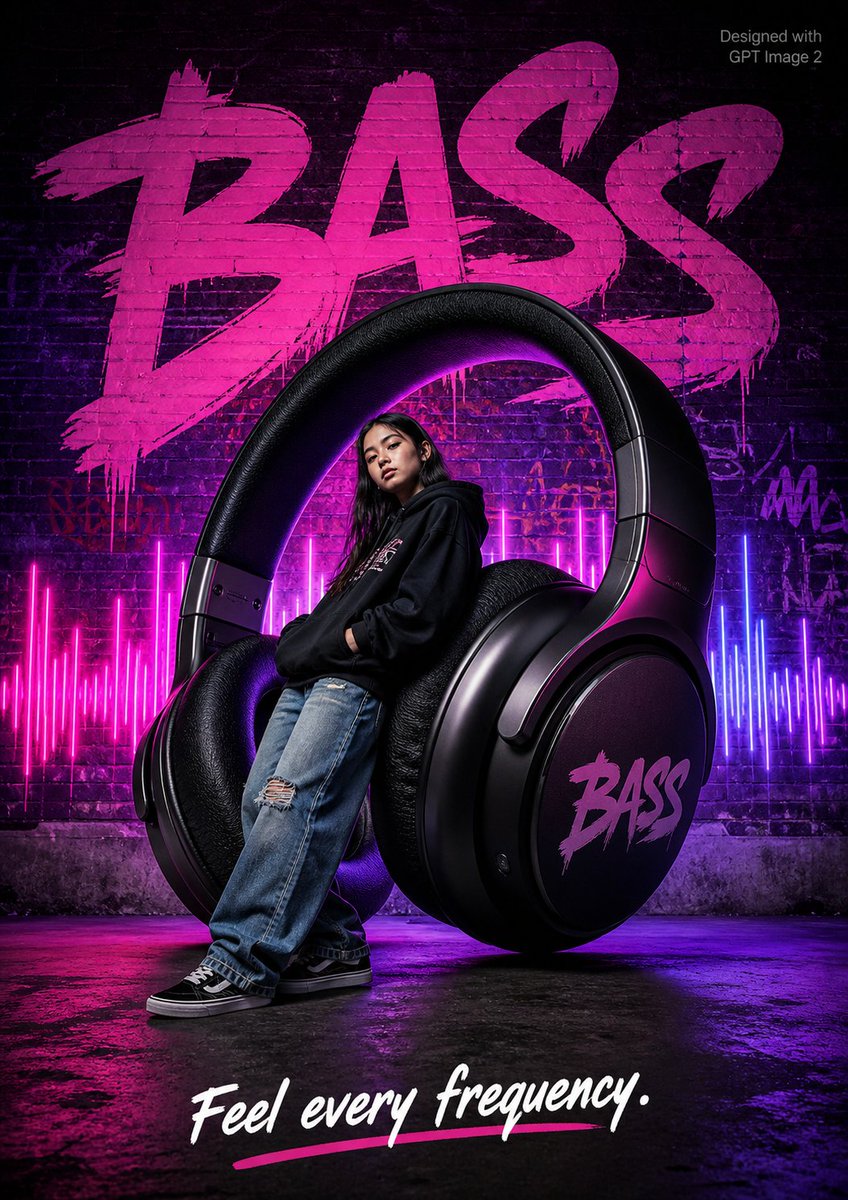
GPT image 2 on ChatGPT 📱 Prompt: A streetwear advertisement poster. A cool teenage girl in oversized hoodie and baggy jeans leans against a giant pair of floating wireless headphones 2x her height with "BASS" logo on earcups, colorful sound wave visualizer glowing behind. Dark urban brick wall background with purple and pink gradient neon lighting. Bold graffiti-style typography "BASS" in background. Tagline bottom: "Feel every frequency." Small text top-right corner reads "Designed with GPT Image 2" in grey. Photorealistic, street culture editorial style.
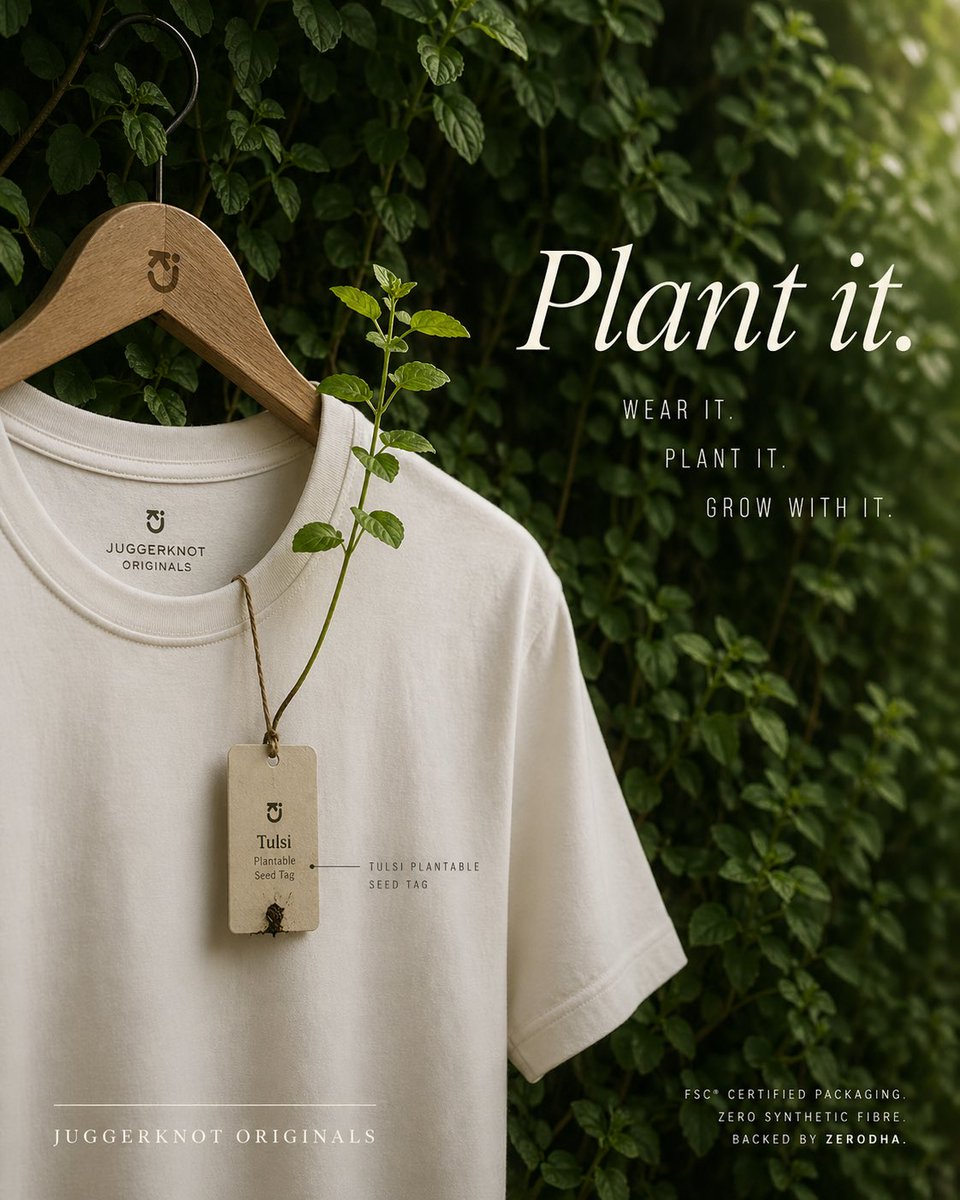
E-commerce Main Image - Sustainable T-Shirt Plantable Tag Ad
A premium eco-conscious fashion advertisement, shot as a refined editorial product photo. A single off-white or natural cream crew-neck T-shirt hangs on a smooth wooden hanger with a black metal hook, placed against a lush wall of dense green leaves and climbing vines. The hanger has a small minimalist brand monogram engraved near the neck. The shirt is shown from the upper torso down to part of the hem, slightly angled, with soft natural folds and high-quality cotton texture. Printed inside the collar is a minimalist brand mark and the text "JUGGERKNOT ORIGINALS". Hanging from the neckline is 1 rectangular recycled-paper seed tag tied with rustic brown twine; the tag reads "Tulsi" and "Plantable Seed Tag" with a tiny sprouting seed detail near the bottom. From the tag, 1 real tulsi plant stem grows upward across the front of the shirt, with several fresh green leaves, visually demonstrating that the tag is plantable. Add a small fine-label annotation near the tag reading "TULSI PLANTABLE SEED TAG". On the right side, large elegant white serif typography says {argument name="headline text" default="Plant it."}. Beneath it, place 3 stacked lines of narrow uppercase sans-serif copy: "WEAR IT.", "PLANT IT.", and "GROW WITH IT.". At the lower left, add the brand name in spaced uppercase serif text: {argument name="brand name" default="JUGGERKNOT ORIGINALS"}, with a thin horizontal line above it. At the lower right, add 3 lines of small uppercase sans-serif text: "FSC® CERTIFIED PACKAGING.", "ZERO SYNTHETIC FIBRE", and "BACKED BY ZERODHA.". Use soft diffused daylight, shallow depth of field, moody green-and-cream color grading, luxury sustainable-brand aesthetics, clean composition, vertical poster layout, subtle shadows, and a calm organic atmosphere. Keep the design minimal, premium, and photorealistic, with the shirt occupying the left half and the typography balanced on the right.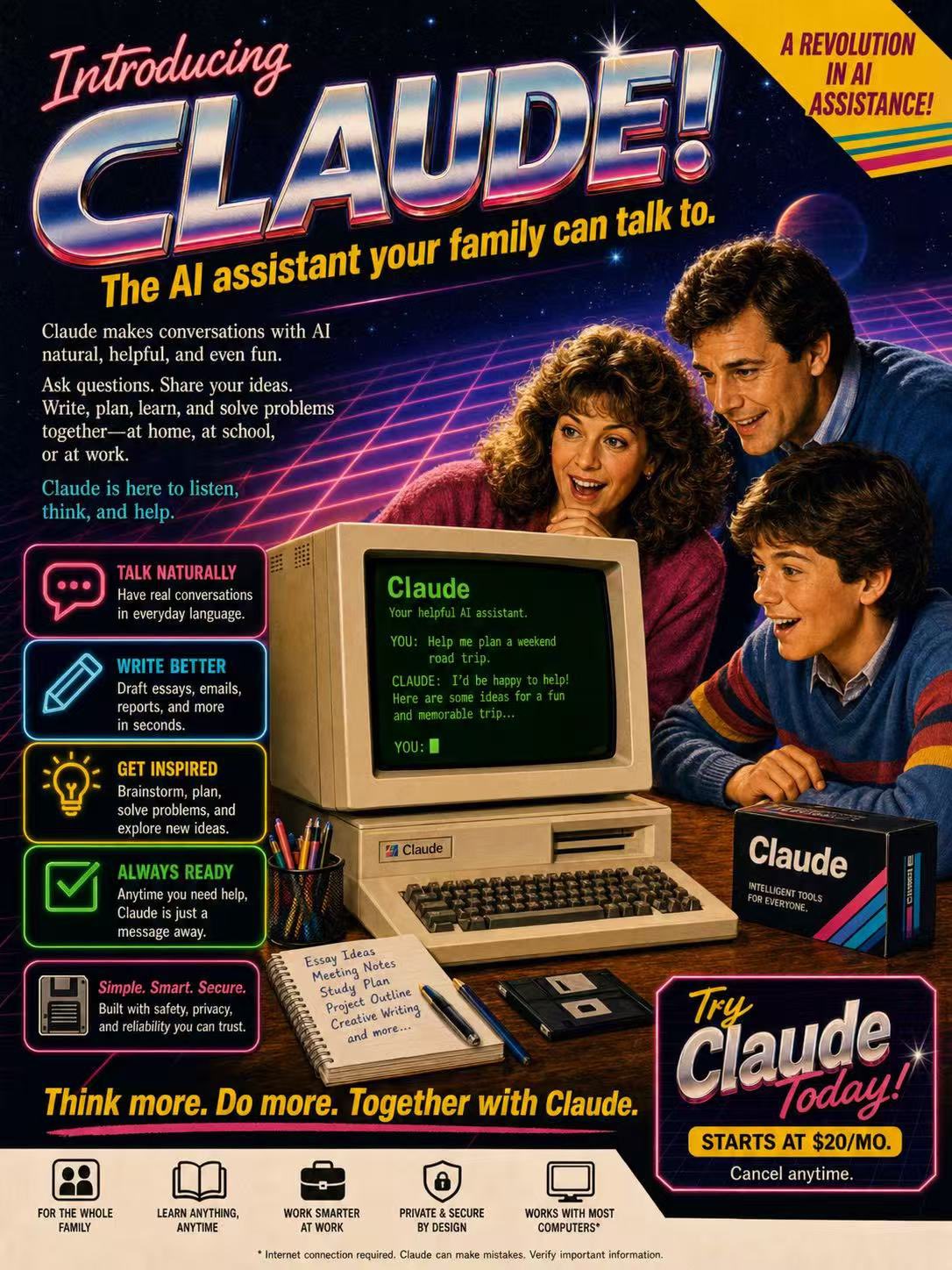
1980s Claude retro magazine advertisement
A fictional 1980s magazine advertisement poster introducing "Claude" as a revolutionary home AI assistant, retro commercial print ad style, bold headline at the top reading "Introducing Claude!", large chrome metallic 3D typography with pink and blue reflections, yellow italic tagline underneath: "The AI assistant that talks back."

Center composition: a beige 1980s CRT home computer with chunky keyboard on a wooden desk, green monochrome terminal screen glowing, readable text on screen: "Claude", subtitle: "The helpful AI assistant." On the screen, a retro terminal-style conversation reads:
"YOU: How can you help me today?"
"CLAUDE: I can answer questions, help you write, summarize information, brainstorm ideas, and explain topics clearly."
"YOU:"

A cheerful 1980s family of three gathers around the computer: father in a blue sweater, mother with curly hair in a pink sweater, young boy in a striped sweater, all looking amazed, delighted, and fascinated, warm nostalgic expressions, classic family technology advertising mood.

Background: dark starry night sky, purple and blue neon perspective grid, retro sci-fi glow, subtle palm silhouettes, sparkling highlights, lens flares, dramatic yet friendly atmosphere.

Poster layout: left side contains stacked retro feature boxes with glowing neon icons, including a question mark, pencil, light bulb, and clock. Each feature box includes short retro advertising copy:
"ANSWERS QUESTIONS" — Get helpful, clear answers in everyday language.
"HELPS YOU WRITE" — Draft ideas, notes, letters, and more with ease.
"GENERATES IDEAS" — Brainstorm, create, and think bigger.
"AVAILABLE WHENEVER YOU NEED IT" — Day or night, Claude is ready to help.

Add a small retro text block describing Claude:
"For the first time, an AI assistant you can have a conversation with. Ask questions. Get answers. Share ideas. Write drafts, notes, and reports. Explore topics, organize thoughts, and solve problems. Claude understands natural language and responds in a clear, helpful way."

Add a short highlighted copy block:
"It's helpful. It's thoughtful.
It's always by your side."

Bottom area includes a large "Claude" brand wordmark with colorful diagonal retro stripes, and the slogan:
"A smarter way to think, write, and explore."

Bottom right has a white promotional price sticker area with bold pink text:
"Free!!"
Smaller text underneath:
"Available now for curious minds everywhere."

Top right has a bright yellow starburst badge saying:
"A REVOLUTION IN AI ASSISTANCE!"

Include a retro product box on the desk labeled "Claude" with small text:
"SMARTER SOFTWARE FOR MODERN THINKERS."

Include a mug or accessory on the desk branded "Claude".

Visual style: 1985 consumer computer advertisement, airbrushed illustration, glossy print texture, halftone details, nostalgic retro futurism, high saturation, cinematic product lighting, authentic 1980s typography and layout, readable ad composition, detailed vintage commercial poster, highly polished, warm family-friendly mood, retro tech fantasy, vertical poster.

Negative prompts:
modern laptop, smartphone, flat design, minimalism, futuristic 2020s interface, cyberpunk overload, messy layout, unreadable typography, distorted text, misspelled words, deformed hands, extra fingers, bad anatomy, duplicate people, plastic skin, overexposed lighting, low resolution, blurry image, warped computer, broken keyboard, cluttered composition, inconsistent vintage style, random symbols, ugly poster design, poor hierarchy, incorrect perspective
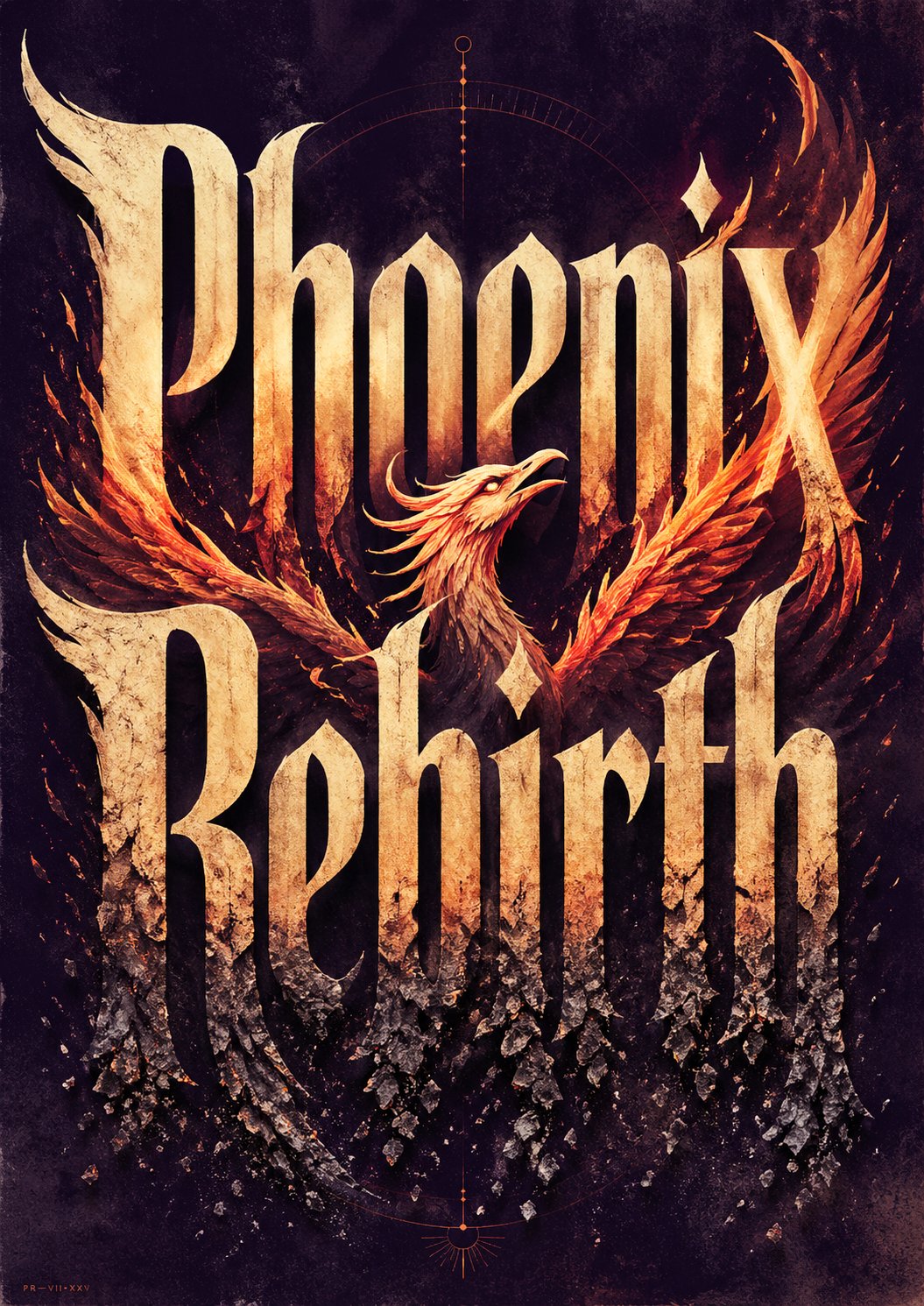
Concept Font Poster Prompt
Create ONE finished premium conceptual typography poster for the exact title:

"[INPUT_TEXT]"

Single poster only. No moodboard, grid, presentation board, mockup, captions, prompt text, process sheet, or sample labels.

The title "[INPUT_TEXT]" must be the dominant visual structure of the poster: huge, readable, powerful, and spelled exactly. Do not translate, shorten, replace, or misspell it. Do not add other large readable text. Optional micro catalog text is allowed only if it stays subtle and secondary.

Silently interpret the title's meaning, mood, cultural aura, symbolic associations, psychological tension, and visual rhythm. Turn that interpretation into one strong visual metaphor.

Typography is the hero. Design custom-looking letterforms whose weight, width, contrast, spacing, rhythm, distortion, negative space, edge quality, and ink texture express the temperament of the title. The type should feel intentionally designed, not like a default font.

If "[INPUT_TEXT]" refers to a widely known person, make a large editorial portrait or full / half-body figure a major visual presence, occupying roughly 40–70% of the composition. The figure should feel recognizable through aura, posture, styling, era, expression, lighting, and symbolic atmosphere, but should not copy a specific existing photograph, official poster, campaign image, logo, slogan, or copyrighted composition. The portrait must interact with the typography: overlapping the letters, emerging from them, being framed by them, casting shadows on them, breaking through them, or being partially hidden behind them.

For all other titles, use a human figure, landscape, object, or atmospheric setting only when it strengthens the meaning. It must interact with the typography and deepen the concept, not decorate it.

Use a rich but restrained 4–6 color system matched to the theme: dominant background color, primary typography color, figure / landscape tone, emotional accent color, muted support color, and subtle paper / ink texture tone. Avoid flat black-white-red defaults unless conceptually necessary.

Composition style: high-end editorial poster, museum-quality graphic design, dramatic scale, strong hierarchy, few elements, intelligent whitespace, bold flat color areas, sharp cropping, silkscreen / lithograph / risograph grain, paper fibers, subtle ink imperfections, refined visual tension.

The final image should feel like a complete visual sentence: the title, the figure or setting, the color, and the typography explain each other.

Avoid generic word art, glossy 3D lettering, random icons, stock-photo realism, cluttered collage, excessive grunge, tourist clichés, official logos, copied slogans, copied campaign aesthetics, unrelated text, and misspelled typography.

-----

INPUT_TEXT: Phoenix Rebirth
Related prompt guides and libraries
FAQ about Poster Design
How do I use Poster Design prompts from gptimages.dev?
Start with the examples that match your visual job, then copy the prompt structure rather than copying every adjective. Replace the subject, scene, channel, aspect ratio, and constraints with your own details. If the first result is close, keep the successful parts fixed and change one variable at a time. This makes the page useful as a prompt library, not just a keyword page.
What is the best prompt format for Poster Design?
A dependable format is brief first, details second, checks last: describe the image goal, then the subject, scene, composition, style, reference rules, and output constraints. For models such as GPT-IMAGE-2, Nano Banana 2, Stable Diffusion, Midjourney, or Jimeng AI, keep the core prompt portable and add tool-specific settings only when the interface supports them.
Can I reuse these prompts across different AI image models?
Yes, but reuse the structure more than the exact syntax. A prompt that works in one generator may need different wording, reference strength, aspect ratio settings, or negative prompts in another. The safest workflow is to preserve the creative brief, then adapt only the model-specific layer after you inspect the first output.
How should I collect the best AI image prompts?
Save prompts with the final image, model or tool name, aspect ratio, reference images, and a short note explaining why the result worked. Group them by use case such as product photography, character consistency, UI mockups, posters, logos, or text-in-image prompts. That collection becomes much more useful than a flat list of attractive phrases.
Why do Poster Design prompts fail?
Common causes include unclear subject hierarchy, too many styles in one prompt, vague quality words, unsupported text requirements, missing reference rules, and uncontrolled iteration. Fix the prompt by naming the production goal, protecting the details that cannot change, and testing one adjustment per generation instead of rewriting the whole prompt every time.
Are these prompt examples enough for commercial work?
They are a starting point, not legal or brand clearance. For commercial work, check the terms of the model or generator, review rights for reference images, verify text and logos manually, and keep a record of the prompt, source assets, and final edits. The page helps with prompt quality, while usage rights still depend on your workflow and provider terms.