
Ecommerce Product Image Prompts
Ecommerce Product Image Prompts connects find ecommerce product image prompts to a curated English SEO page with model notes, prompt patterns, FAQ coverage, real examples, and related internal links.
Editorially reviewed by GPT Images for prompt usefulness, internal links, FAQ coverage, and source-aware model context.
What this use-case library covers
Ecommerce Product Image Prompts is designed for people trying to make a specific type of image for a product, brand, story, interface, or campaign. It targets the intent to find ecommerce product image prompts, but the page avoids thin keyword stuffing by connecting the topic to prompt structure, real prompt examples, internal links, and FAQ answers.
The practical goal is simple: help someone understand what to write next. The page explains how Ecommerce Product Image prompts should define subject, constraints, references, style, and output checks before a model or generator is blamed for a weak result.
- Use this use-case library when the search intent is "find ecommerce product image prompts" and the visitor needs examples before writing from scratch.
- Choose it when Ecommerce Product Image work requires visible constraints such as subject, angle, lighting, composition, text, aspect ratio, or editing target.
- Use the real prompt examples below to see how other prompts structure the same problem, then adapt one variable at a time.
- Keep it as an internal link target for related prompt collections so users can move from broad discovery into specific prompt pages.
Recommended Ecommerce Product Image workflow
turn a visual job into reusable prompt recipes and examples. A good workflow should be repeatable, inspectable, and easy to adapt across tools. The same prompt can behave differently in GPT-IMAGE-2, Nano Banana 2, Stable Diffusion, Midjourney, Jimeng AI, or a local ComfyUI setup, so this page keeps the reusable structure separate from tool-specific adjustments.
- Start by defining the job: what the image must communicate, where it will be used, and what failure would make the result unusable.
- Translate the job into a prompt skeleton for Ecommerce Product Image: subject, scene, medium, camera or composition, style constraints, and output constraints.
- Pick one example prompt from this page and copy only the structure that matches the job; avoid copying decorative phrases that do not serve the image.
- Run a first generation, then change one variable at a time: framing, lighting, color palette, reference strength, text content, or background density.
- Save the winning prompt with notes about model, tool, aspect ratio, and any reference images so the pattern can be reused later.
- define output constraints, choose references, specify scene details, and review production quality
Quality checks before publishing
Before using a generated image in production, review the output against the original job. The best prompt is not the longest prompt; it is the prompt that makes the model spend attention on the details that matter.
- Ecommerce Product Image should have a clear subject and a visible hierarchy; if the prompt gives equal weight to every detail, the image often becomes noisy.
- The prompt should separate content from style, especially when moving between GPT-IMAGE-2, Nano Banana 2, Stable Diffusion, Midjourney, or other image models.
- If the output needs readable text, keep the phrase short, quote it exactly, and verify the final image rather than assuming the model handled typography perfectly.
- If the output must match a brand, character, room, product, or reference image, name the fixed traits and describe what is allowed to change.
- Avoid stacking too many model-specific shortcuts on a reusable prompt page; keep the main prompt portable, then add model notes as a final layer.
- Review whether the page sends visitors to deeper prompt examples, related use cases, and FAQ answers instead of trapping them in a generic SEO article.
Common mistakes to avoid
Most failed image generations are not caused by a missing magic word. They usually come from unclear hierarchy, mixed intent, unsupported text requirements, or a prompt that asks for too many changes at once.
- Writing a Ecommerce Product Image prompt as a pile of keywords without a production goal.
- Changing model, tool, aspect ratio, and reference image at the same time, which makes it impossible to learn what improved the output.
- Using vague quality words such as beautiful or professional without defining the visible evidence of quality.
- Ignoring downstream use, such as ecommerce crop safety, ad text legibility, app store screenshots, or poster readability.
- Treating Ecommerce Product Image Prompts as a final answer instead of a starting point connected to prompt examples and iteration notes.
Ecommerce Product Image prompt patterns
Production brief prompt
Create a Ecommerce Product Image image for [audience] that communicates [message]. Main subject: [subject]. Scene: [setting]. Composition: [camera angle, crop, spacing]. Style: [medium, lighting, color direction]. Constraints: [aspect ratio, readable text, brand colors, negative space]. Avoid: [visual mistakes, clutter, wrong mood].
It separates the job, subject, scene, style, and constraints, which makes the prompt easier to test across different image models.
Reference-aware prompt
Using the reference as the fixed source of truth, generate a Ecommerce Product Image variation. Preserve [identity traits, product shape, logo placement, character features, room layout]. Change only [background, lighting, camera angle, outfit, color palette]. Keep the output consistent with [use case] and do not invent extra objects.
It tells the model what is fixed and what can change, which is critical for image editing, character consistency, product shots, and brand work.
Iteration prompt
Revise the previous Ecommerce Product Image result by improving [one problem]. Keep [successful elements] unchanged. Adjust [single variable] to [specific direction]. The final image should feel [desired mood] and remain suitable for [placement or channel]. Do not change [protected details].
It controls iteration by changing one variable at a time, so you can learn which instruction improved or damaged the output.
Model transfer prompt
Rewrite this Ecommerce Product Image prompt for [target model or tool]. Keep the core subject, composition, and constraints. Convert unsupported syntax into natural language. Add model-specific notes only at the end: [aspect ratio, style strength, reference strength, negative prompt, seed, or typography instruction].
It preserves the creative brief while allowing each model or tool to receive the instructions in a format it can use.
Prompt examples for Ecommerce Product Image
These examples are selected from the current English prompt catalog so the page links visitors into real prompt detail pages instead of stopping at generic advice.
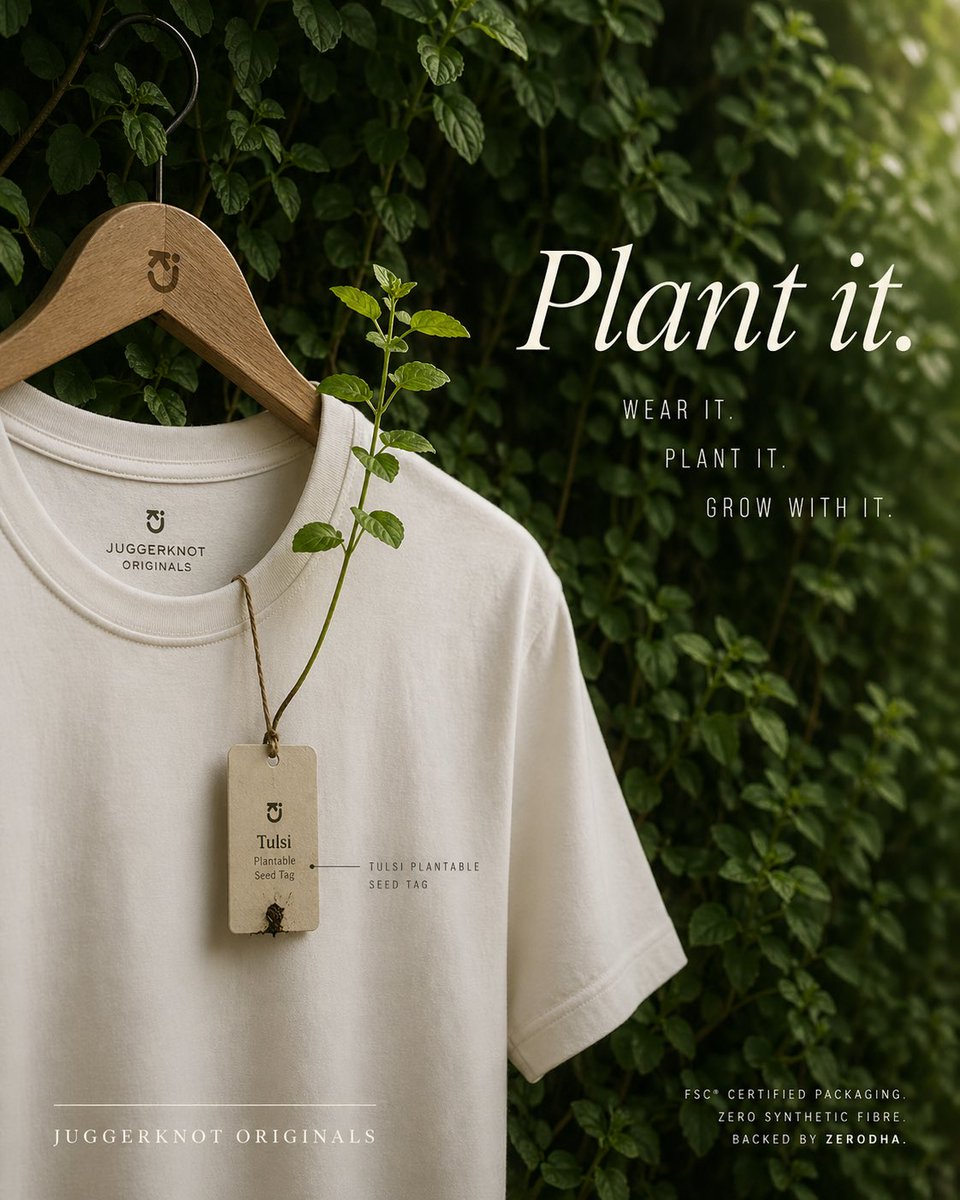
E-commerce Main Image - Sustainable T-Shirt Plantable Tag Ad
A premium eco-conscious fashion advertisement, shot as a refined editorial product photo. A single off-white or natural cream crew-neck T-shirt hangs on a smooth wooden hanger with a black metal hook, placed against a lush wall of dense green leaves and climbing vines. The hanger has a small minimalist brand monogram engraved near the neck. The shirt is shown from the upper torso down to part of the hem, slightly angled, with soft natural folds and high-quality cotton texture. Printed inside the collar is a minimalist brand mark and the text "JUGGERKNOT ORIGINALS". Hanging from the neckline is 1 rectangular recycled-paper seed tag tied with rustic brown twine; the tag reads "Tulsi" and "Plantable Seed Tag" with a tiny sprouting seed detail near the bottom. From the tag, 1 real tulsi plant stem grows upward across the front of the shirt, with several fresh green leaves, visually demonstrating that the tag is plantable. Add a small fine-label annotation near the tag reading "TULSI PLANTABLE SEED TAG". On the right side, large elegant white serif typography says {argument name="headline text" default="Plant it."}. Beneath it, place 3 stacked lines of narrow uppercase sans-serif copy: "WEAR IT.", "PLANT IT.", and "GROW WITH IT.". At the lower left, add the brand name in spaced uppercase serif text: {argument name="brand name" default="JUGGERKNOT ORIGINALS"}, with a thin horizontal line above it. At the lower right, add 3 lines of small uppercase sans-serif text: "FSC® CERTIFIED PACKAGING.", "ZERO SYNTHETIC FIBRE", and "BACKED BY ZERODHA.". Use soft diffused daylight, shallow depth of field, moody green-and-cream color grading, luxury sustainable-brand aesthetics, clean composition, vertical poster layout, subtle shadows, and a calm organic atmosphere. Keep the design minimal, premium, and photorealistic, with the shirt occupying the left half and the typography balanced on the right.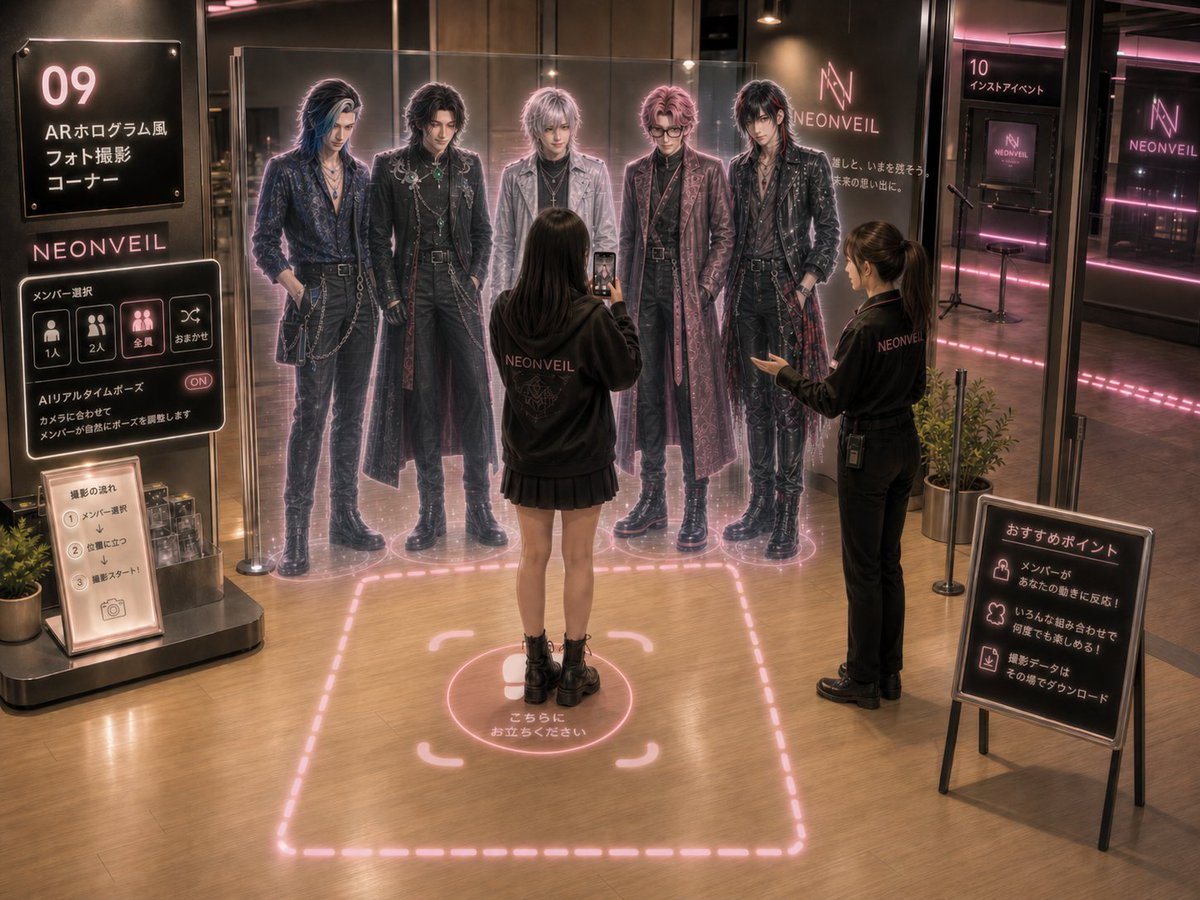
Product Marketing - NEONVEIL AR Photo Zone
{"type":"cinematic concept art of a futuristic idol group AR photo zone inside a permanent pop-up shop","brand":"{argument name=\"brand name\" default=\"NEONVEIL\"}","scene":"A warmly lit indoor retail/event space with polished wood floors, black glass walls, pink neon accents, and a dark luxury rock-idol aesthetic. The viewpoint is a slightly elevated wide angle, showing the full photo booth area and surrounding signage. The atmosphere is immersive, premium, and realistic, like a rendered event proposal visual.","main_attraction":{"description":"A life-size AR photo shooting corner where a visitor can stand with virtual full-scale band members instead of physical cardboard panels.","AR_members":{"count":5,"appearance":"five tall, faceless or softly blurred male idol silhouettes standing in a row behind a transparent glass-like AR barrier, each outlined with glowing pink holographic rim light","fashion":"dark visual-kei rock outfits with layered long coats, leather pants, boots, belts, chains, necklaces, metallic details, lace and brocade textures","poses":"all five stand in slightly different confident poses, hands in pockets or relaxed at sides, creating the feeling of randomized one-time photo-session poses","glow":"subtle semi-transparent hologram effect, pink aura around bodies, faint scanline/sparkle particles at their feet"}},"people":{"count":2,"visitor":"a young female visitor seen from behind, standing in the marked photo position, wearing a black {argument name=\"staff hoodie logo\" default=\"NEONVEIL\"} hoodie, short black pleated skirt, chunky black ankle boots, holding up a smartphone to photograph the AR members","staff":"a female shop attendant on the right wearing black staff uniform with {argument name=\"staff hoodie logo\" default=\"NEONVEIL\"} on the back, ponytail, lanyard and radio, gesturing politely toward the AR members"},"floor_graphics":{"count":2,"items":[{"description":"large dashed square photo-zone boundary made of glowing pink neon strips on the wood floor"},{"description":"central circular standing marker with bracket corners and footprints, glowing pink, labeled \"こちらにお立ちください\""}]},"layout":{"sections":[{"title":"main left wall sign","position":"upper left","count":1,"visible_text":["09","ARホログラム風","フォト撮影","コーナー"]},{"title":"interactive member selection UI panel","position":"left side below the logo","count":4,"visible_buttons":["1人","2人","全員","おまかせ"],"extra_text":["メンバー選択","AIリアルタイムポーズ","ON","カメラに合わせてメンバーが自然にポーズを調整します"]},{"title":"photo instructions sign","position":"lower left on a small stand","count":3,"numbered_steps":["1 メンバー選択","2 位置に立つ","3 撮影スタート"]},{"title":"recommendation sign","position":"right foreground on black easel board","count":3,"items":["メンバーがあなたの動きに反応!","いろんな組み合わせで何度でも楽しめる!","撮影データはその場でダウンロード"]},{"title":"background event area","position":"back right behind glass door","count":1,"visible_text":["10","インストアイベント"]}],"brand_marks":{"count":4,"locations":["left UI area logo","large wall logo behind AR members","back-right monitor logo","far-right glass wall logo"],"text":"NEONVEIL"}},"lighting_and_materials":"moody boutique lighting with overhead spotlights, black metal fixtures, reflective glass partitions, pink LED strips along walls and floor, soft haze, realistic reflections, high detail, premium Japanese event-shop design","camera":"wide 4:3 composition, eye-level to slightly overhead, all signage readable, full bodies visible, center visitor aligned with AR members","style":"photorealistic cinematic render, detailed environmental concept art, sharp signage, soft bloom on neon, warm brown and black palette with magenta highlights","avoid":"do not create anime flat illustration; avoid cluttered unreadable text; avoid extra band members beyond five; avoid changing the numbered corner from 09"}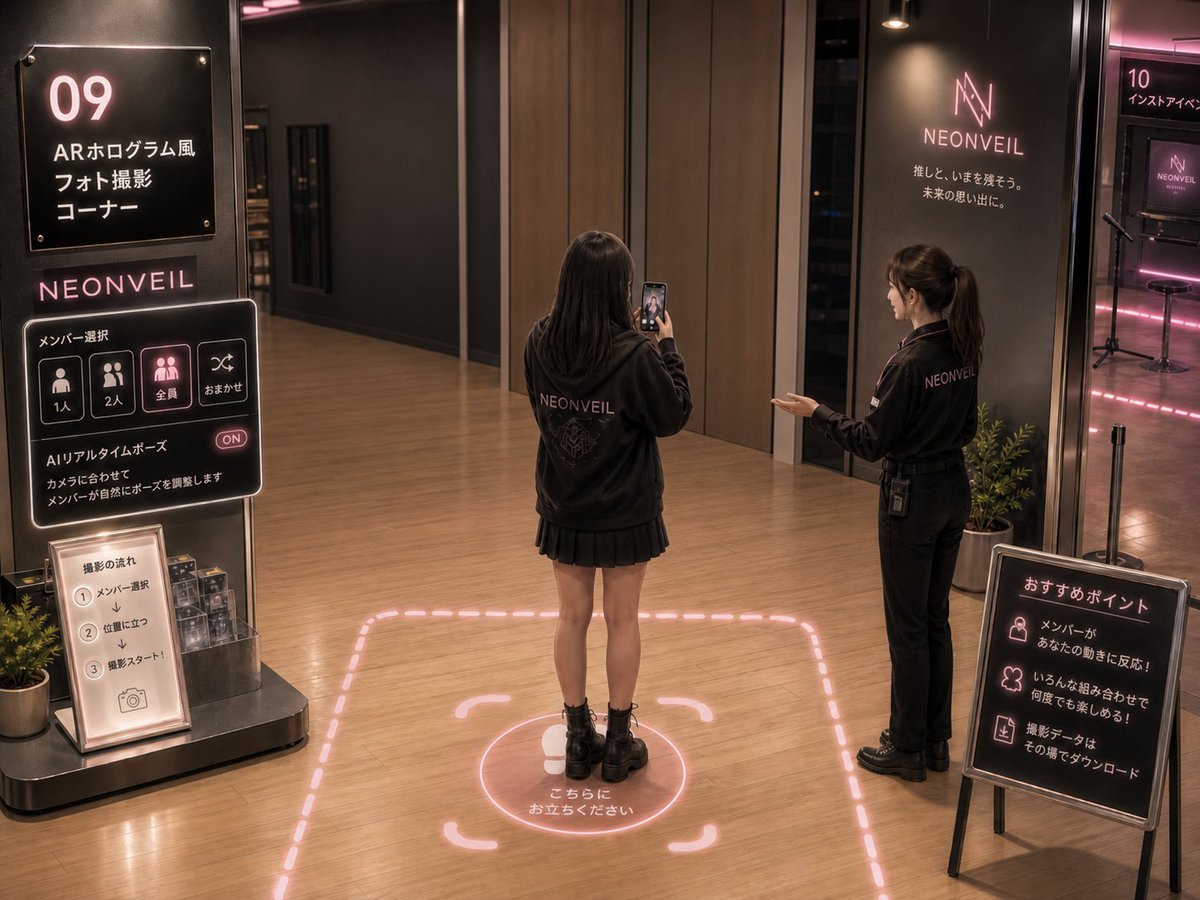
Product Marketing - NEONVEIL AR Photo Zone
{"type":"photorealistic futuristic idol pop-up shop concept render","scene":"A warm, upscale indoor retail event space for a fictional idol group AR photo zone, shot from a slightly elevated wide angle with realistic lighting, wood flooring, dark charcoal walls, glass partitions, pink neon accents, and polished commercial interior design.","brand":{"name":"{argument name=\"brand name\" default=\"NEONVEIL\"}","style":"minimal luxury idol fandom branding, glowing pink-white neon logo, black signage, subtle cyber aesthetic"},"main_subjects":{"count":2,"people":["one female visitor seen from behind standing inside the AR photo zone, wearing an oversized black NEONVEIL hoodie, black pleated mini skirt, black ankle boots, holding a smartphone vertically to take a photo","one female staff member on the right wearing a black NEONVEIL work jacket and black pants with a radio clipped at the waist, gesturing toward the photo zone; face softly anonymized" ]},"layout":{"left_installation":{"position":"left foreground","count":3,"items":[{"description":"large black vertical sign with glowing white and pink text","visible_text":["09","ARホログラム風","フォト撮影","コーナー"]},{"description":"interactive black neon control panel branded NEONVEIL","visible_text":["NEONVEIL","メンバー選択","1人","2人","全員","おまかせ","AIリアルタイムポーズ","ON","カメラに合わせてメンバーを撮影します","メンバーが自然にポーズを提案します"],"button_count":4,"buttons":["1人","2人","全員","おまかせ"]},{"description":"small illuminated instruction stand below the panel","visible_text":["撮影の流れ","1 メンバー選択","2 位置に立つ","3 撮影スタート!"],"step_count":3,"steps":["select a member","stand in position","start shooting"]}]},"floor_ar_zone":{"position":"center foreground","description":"pink neon dashed rectangular boundary projected on the wooden floor, with rounded AR corner brackets, a circular standing marker under the visitor, a simple foot icon, and Japanese instruction text","visible_text":"こちらにお立ちください"},"right_signage":{"position":"right foreground","count":1,"description":"freestanding black recommendation sign with pink neon icons and white Japanese text","visible_text":["おすすめポイント","メンバーがあなたの動きに反応!","いろんな組み合わせで何度でも楽しめる!","撮影データはその場でダウンロード"],"point_count":3,"points":["member reacts to your movements","enjoy many combinations repeatedly","download shooting data on the spot"]},"background":{"count":2,"areas":[{"description":"dark back wall with glowing NEONVEIL logo and tagline","visible_text":["NEONVEIL","推しと、いまを残そう。","未来の思い出に。"]},{"description":"adjacent room entrance on the far right labeled as another experience booth with pink neon lighting, monitor, stool, and microphone stands","visible_text":["10","インストアイベント"]}]}},"visual_style":{"rendering":"highly realistic architectural visualization, cinematic event photography, not anime, not illustration","lighting":"soft overhead spotlights mixed with pink neon glow reflected on the floor","colors":"black, charcoal gray, warm wood brown, muted pink neon, soft white text","camera":"wide 4:3 composition, eye-level to slightly high vantage, 24mm lens feel, deep focus","mood":"premium, immersive, fan-event technology showcase"},"customization":{"zone number":"{argument name=\"zone number\" default=\"09\"}","main sign title":"{argument name=\"main sign title\" default=\"ARホログラム風 フォト撮影 コーナー\"}","floor instruction":"{argument name=\"floor instruction\" default=\"こちらにお立ちください\"}","tagline":"{argument name=\"tagline\" default=\"推しと、いまを残そう。未来の思い出に。\"}"},"negative_prompt":"avoid cartoon style, avoid cluttered crowds, avoid low-resolution text, avoid messy unreadable signage, avoid exaggerated sci-fi, avoid empty sterile showroom"}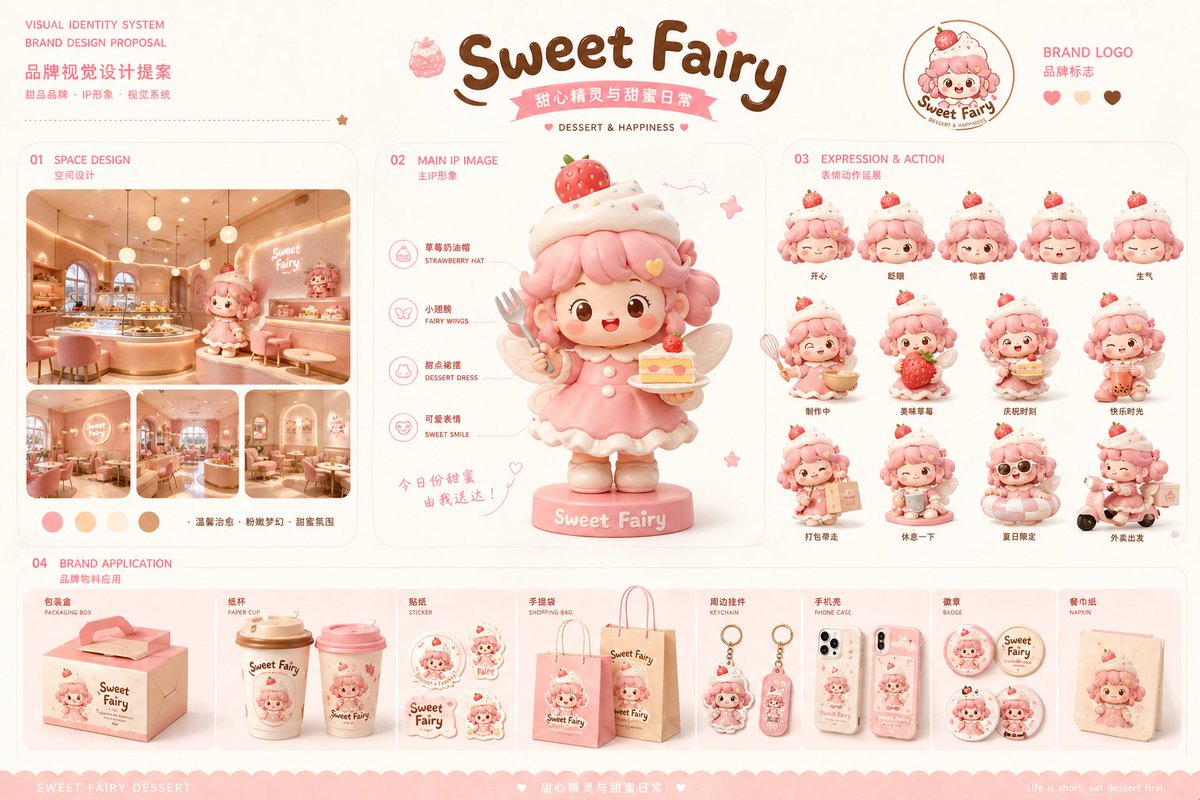
Product Marketing - Dessert Brand Visual Identity Proposal Board
A visual design proposal board for a dessert brand in a {argument name="brand style" default="youthful IP style"}, with a horizontal layout and clear modular structure. The main visual features a {argument name="main character" default="cartoon IP (cake elf/dessert character)"} in the center. The right side shows the character with various expressions and actions, the left side shows store interior design (ins-style with soft lighting), and the bottom features brand collateral: boxes, cups, stickers, bags, and merchandise. Color palette: {argument name="color scheme" default="cream white, pink, light brown, and soft tones"}. Style: flat illustration combined with light 3D and a soft, cute texture.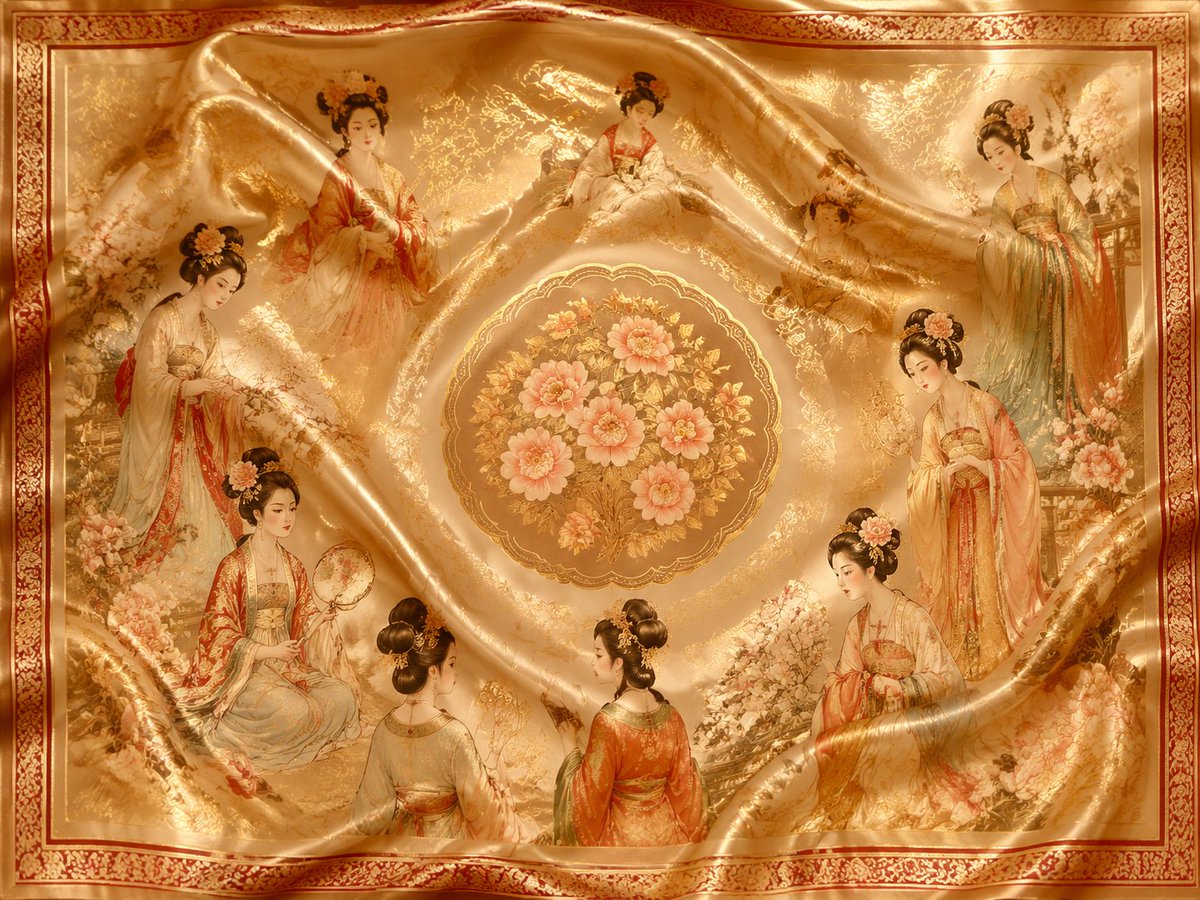
E-commerce Main Image - Chinese Traditional Luxury Product Design
Silk shawl with 'Court Ladies Wearing Floral Headdresses' pattern from the Tang Dynasty, featuring {argument name="pattern design" default="Zhou Fang's court ladies surrounding pattern"}, crabapple floral gold weaving, glossy satin texture, palace luxury style.

Song Dynasty Ru-ware sky-blue glazed tea set, delicate ice-crackle glaze, 'blue as the sky after rain' color, minimalist Song Dynasty style setting, museum-grade still life studio photography.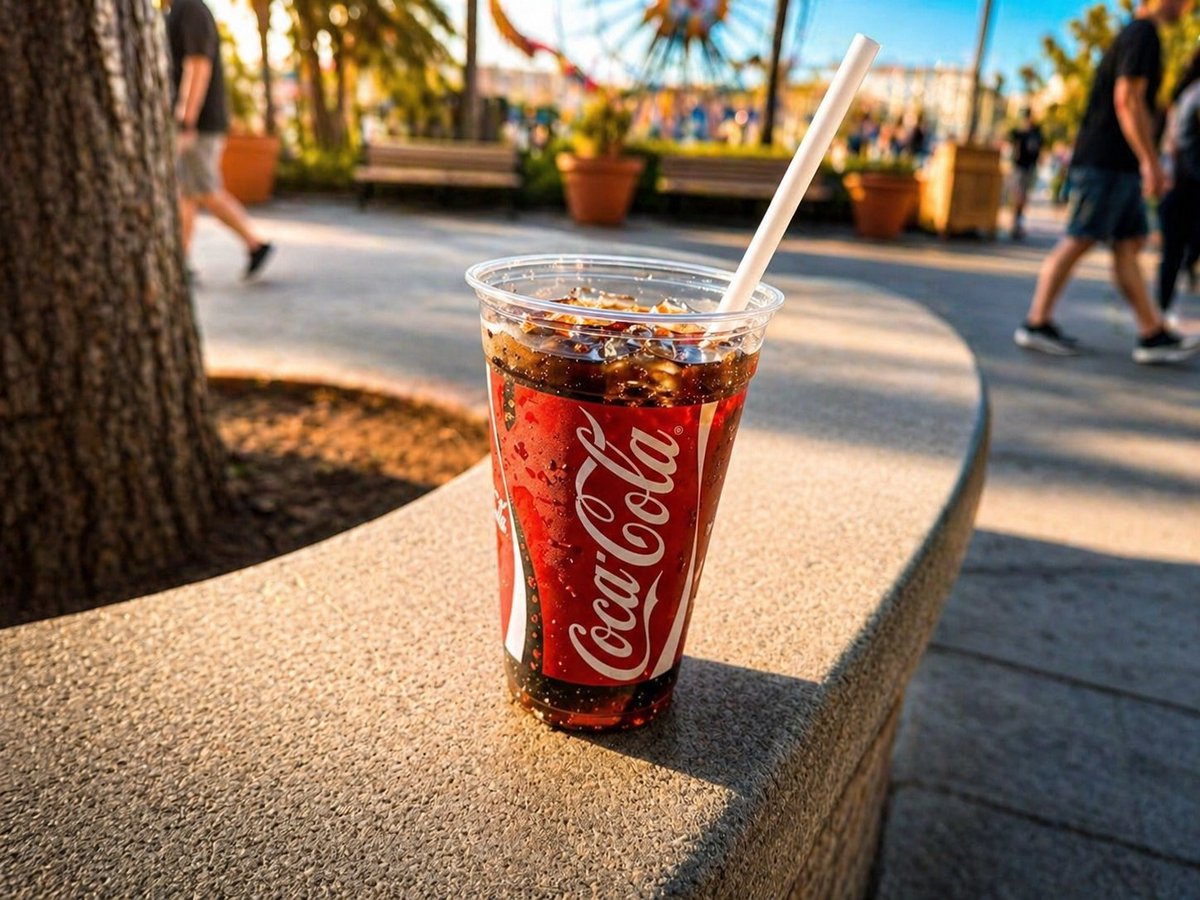
E-commerce Main Image - Professional Drink Photo Enhancement
Using the provided reference image, turn this casual phone snapshot of the drink into a polished professional beverage photo while keeping the same cup, soda, straw, outdoor theme-park setting, and general composition. Reframe and clean it up so the drink is the clear hero subject, make the cup sharper and more detailed with crisp condensation and sparkling ice, and enhance the Coca-Cola red tones and overall contrast. Apply warm golden-hour commercial lighting with richer highlights and a more cinematic color grade. Increase background blur for a shallow depth-of-field look, simplify visual distractions, and make the people in the background feel more incidental and softly out of focus while preserving the tree, benches, planters, and ferris wheel context. Keep it realistic, like a high-end advertisement shot taken by a professional product photographer.
Visually Stunning Deep Red Studio Wide Angle Beauty Photoshoot
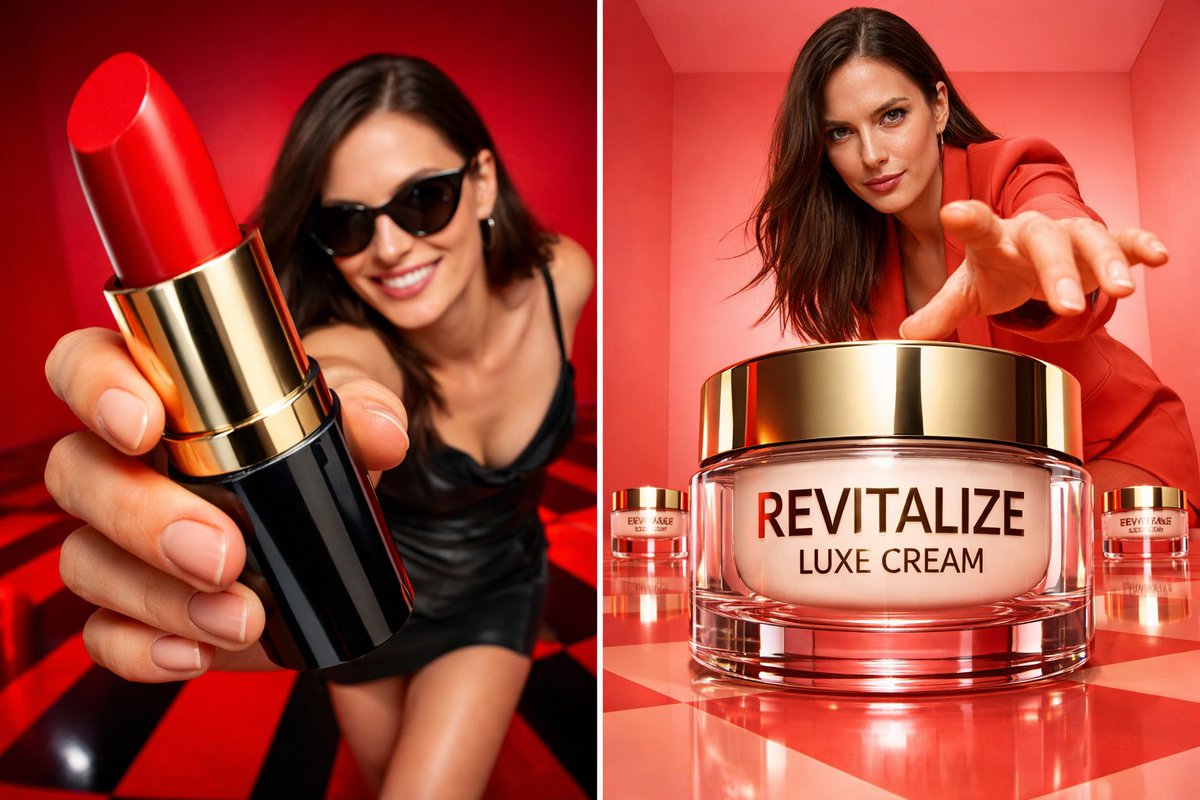
Photorealistic bold beauty campaign using uploaded model as exact identity reference. No facial changes, no smoothing.
Scene: deep red saturated studio environment with high-contrast floor pattern or glossy surface.
Product: the product held or positioned extremely close to the lens, appearing large due to perspective.
Model pose: playful or confident smile, arm fully extended toward camera, fingers slightly distorted by wide lens. Strong eye contact through sunglasses or natural gaze.
Camera: ultra-wide 20–28mm aesthetic, dynamic foreground exaggeration, shallow-to-medium depth of field.
Lighting: punchy commercial lighting with defined highlights and reflections, crisp packaging edges, vibrant color grading. Hyper-detailed skin texture and fabric realism.
Product Marketing - Fashion Product Collage Template
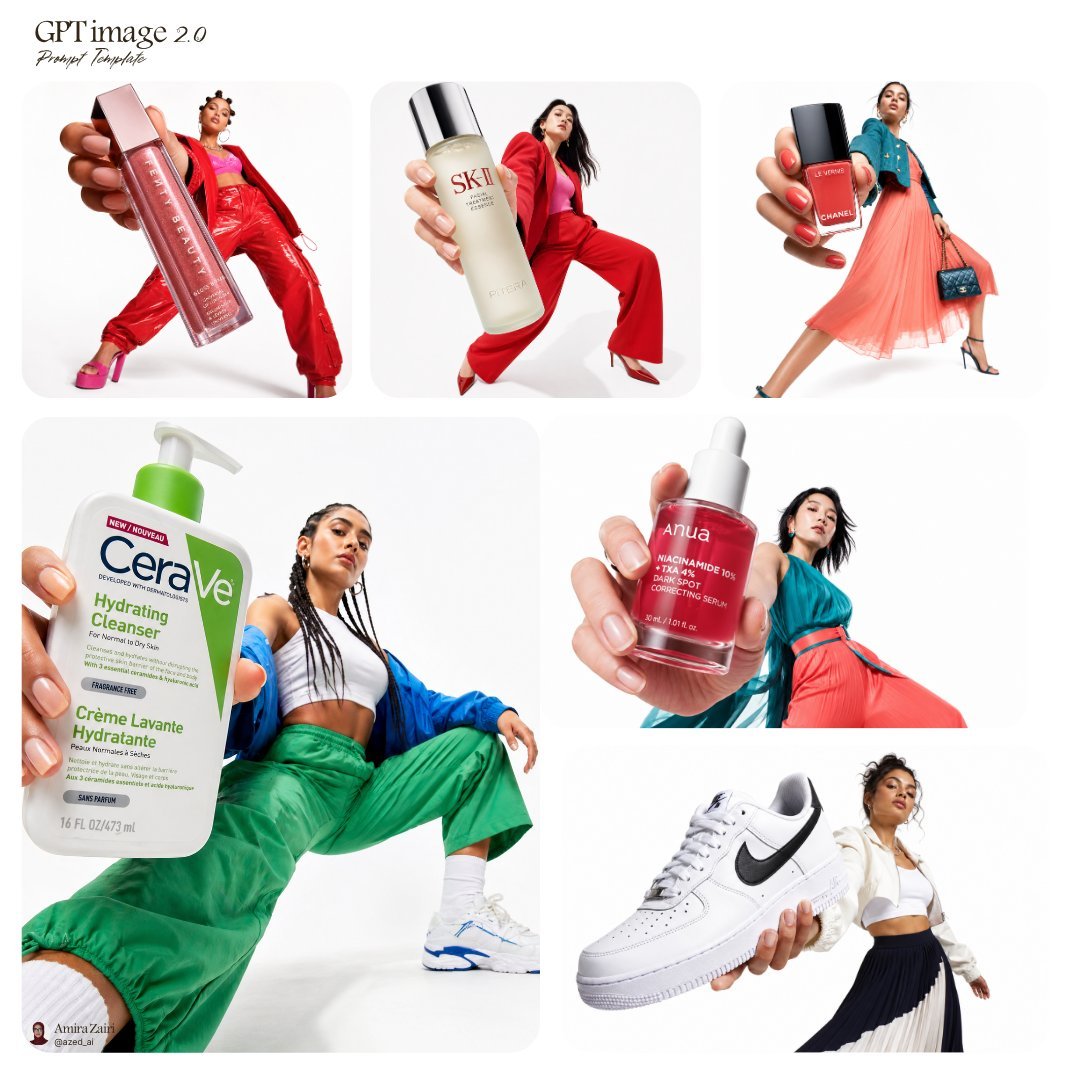
{"type":"editorial product prompt template collage for GPT image 2.0","canvas":"square 1:1 white studio background with soft rounded rectangular image panels, clean luxury fashion advertising layout, lots of white space","header":{"text":"{argument name=\"headline text\" default=\"GPT image 2.0\"}","subtext":"{argument name=\"subtitle text\" default=\"Prompt Template\"}","position":"top left","style":"elegant black serif headline with small handwritten italic subtitle"},"concept":"Create a high-fashion studio collage where oversized cosmetic and lifestyle products are held close to the camera by a hand, with stylish full-body fashion models posed behind or beside them. Faces should be intentionally obscured or softly blurred for privacy. Use realistic photography, crisp product text rendering, dramatic wide-angle perspective, glossy commercial lighting, and playful dynamic poses.","layout":{"total_panels":6,"panels":[{"position":"top left","shape":"rounded rectangle","product":"large transparent pink lip gloss tube held toward camera","model":"woman in glossy red cargo jumpsuit and pink top, low angle pose, pink platform heels, red jacket draped open","mood":"bold beauty editorial"},{"position":"top center","shape":"rounded rectangle","product":"frosted glass SK-II skincare bottle with silver cap held close to lens","model":"woman in hot pink top and red wide-leg pants stepping sideways in red heels","mood":"premium skincare fashion"},{"position":"top right","shape":"rounded rectangle","product":"red Chanel nail polish bottle held in manicured hand with coral nails","model":"woman in teal cropped jacket, coral tulle skirt, black heels, carrying a small dark handbag","mood":"chic cosmetics street-style editorial"},{"position":"bottom left large","shape":"large rounded rectangle spanning lower left","product":"oversized CeraVe Hydrating Cleanser pump bottle held close to lens, readable green and blue label","model":"woman seated in relaxed pose wearing white crop top, bright blue jacket, green loose pants, white sneakers","mood":"fresh clean skincare campaign"},{"position":"middle right","shape":"rounded rectangle","product":"red Anua niacinamide serum dropper bottle held close to lens","model":"woman in teal flowing blouse and coral skirt leaning dynamically behind product","mood":"glowing serum beauty ad"},{"position":"bottom right","shape":"rounded rectangle","product":"white Nike Air Force 1 sneaker with black swoosh held forward","model":"woman wearing cream cropped jacket, white crop top, black-and-cream pleated skirt","mood":"sport-luxury fashion product shot"}]},"product_customization":{"primary product brand":"{argument name=\"primary product brand\" default=\"CeraVe\"}","fashion palette":"{argument name=\"fashion color palette\" default=\"red, coral, teal, green, white, black\"}","model style":"{argument name=\"model style\" default=\"diverse high-fashion female models with blurred faces\"}"},"visual_style":"hyper-realistic commercial product photography, studio flash, clean white seamless background, sharp products, slightly motion-filled model poses, wide-angle close-up hands, editorial magazine collage, rounded cards, subtle shadows, accurate readable packaging typography, premium social media template aesthetic","quality":"ultra detailed, photorealistic, high resolution, polished advertising composition"}Related prompt guides and libraries
FAQ about Ecommerce Product Image
How do I use Ecommerce Product Image prompts from gptimages.dev?
Start with the examples that match your visual job, then copy the prompt structure rather than copying every adjective. Replace the subject, scene, channel, aspect ratio, and constraints with your own details. If the first result is close, keep the successful parts fixed and change one variable at a time. This makes the page useful as a prompt library, not just a keyword page.
What is the best prompt format for Ecommerce Product Image?
A dependable format is brief first, details second, checks last: describe the image goal, then the subject, scene, composition, style, reference rules, and output constraints. For models such as GPT-IMAGE-2, Nano Banana 2, Stable Diffusion, Midjourney, or Jimeng AI, keep the core prompt portable and add tool-specific settings only when the interface supports them.
Can I reuse these prompts across different AI image models?
Yes, but reuse the structure more than the exact syntax. A prompt that works in one generator may need different wording, reference strength, aspect ratio settings, or negative prompts in another. The safest workflow is to preserve the creative brief, then adapt only the model-specific layer after you inspect the first output.
How should I collect the best AI image prompts?
Save prompts with the final image, model or tool name, aspect ratio, reference images, and a short note explaining why the result worked. Group them by use case such as product photography, character consistency, UI mockups, posters, logos, or text-in-image prompts. That collection becomes much more useful than a flat list of attractive phrases.
Why do Ecommerce Product Image prompts fail?
Common causes include unclear subject hierarchy, too many styles in one prompt, vague quality words, unsupported text requirements, missing reference rules, and uncontrolled iteration. Fix the prompt by naming the production goal, protecting the details that cannot change, and testing one adjustment per generation instead of rewriting the whole prompt every time.
Are these prompt examples enough for commercial work?
They are a starting point, not legal or brand clearance. For commercial work, check the terms of the model or generator, review rights for reference images, verify text and logos manually, and keep a record of the prompt, source assets, and final edits. The page helps with prompt quality, while usage rights still depend on your workflow and provider terms.