
Food Photography Prompts
Food Photography Prompts connects find food photography prompts to a curated English SEO page with model notes, prompt patterns, FAQ coverage, real examples, and related internal links.
Editorially reviewed by GPT Images for prompt usefulness, internal links, FAQ coverage, and source-aware model context.
What this use-case library covers
Food Photography Prompts is designed for people trying to make a specific type of image for a product, brand, story, interface, or campaign. It targets the intent to find food photography prompts, but the page avoids thin keyword stuffing by connecting the topic to prompt structure, real prompt examples, internal links, and FAQ answers.
The practical goal is simple: help someone understand what to write next. The page explains how Food Photography prompts should define subject, constraints, references, style, and output checks before a model or generator is blamed for a weak result.
- Use this use-case library when the search intent is "find food photography prompts" and the visitor needs examples before writing from scratch.
- Choose it when Food Photography work requires visible constraints such as subject, angle, lighting, composition, text, aspect ratio, or editing target.
- Use the real prompt examples below to see how other prompts structure the same problem, then adapt one variable at a time.
- Keep it as an internal link target for related prompt collections so users can move from broad discovery into specific prompt pages.
Recommended Food Photography workflow
turn a visual job into reusable prompt recipes and examples. A good workflow should be repeatable, inspectable, and easy to adapt across tools. The same prompt can behave differently in GPT-IMAGE-2, Nano Banana 2, Stable Diffusion, Midjourney, Jimeng AI, or a local ComfyUI setup, so this page keeps the reusable structure separate from tool-specific adjustments.
- Start by defining the job: what the image must communicate, where it will be used, and what failure would make the result unusable.
- Translate the job into a prompt skeleton for Food Photography: subject, scene, medium, camera or composition, style constraints, and output constraints.
- Pick one example prompt from this page and copy only the structure that matches the job; avoid copying decorative phrases that do not serve the image.
- Run a first generation, then change one variable at a time: framing, lighting, color palette, reference strength, text content, or background density.
- Save the winning prompt with notes about model, tool, aspect ratio, and any reference images so the pattern can be reused later.
- define output constraints, choose references, specify scene details, and review production quality
Quality checks before publishing
Before using a generated image in production, review the output against the original job. The best prompt is not the longest prompt; it is the prompt that makes the model spend attention on the details that matter.
- Food Photography should have a clear subject and a visible hierarchy; if the prompt gives equal weight to every detail, the image often becomes noisy.
- The prompt should separate content from style, especially when moving between GPT-IMAGE-2, Nano Banana 2, Stable Diffusion, Midjourney, or other image models.
- If the output needs readable text, keep the phrase short, quote it exactly, and verify the final image rather than assuming the model handled typography perfectly.
- If the output must match a brand, character, room, product, or reference image, name the fixed traits and describe what is allowed to change.
- Avoid stacking too many model-specific shortcuts on a reusable prompt page; keep the main prompt portable, then add model notes as a final layer.
- Review whether the page sends visitors to deeper prompt examples, related use cases, and FAQ answers instead of trapping them in a generic SEO article.
Common mistakes to avoid
Most failed image generations are not caused by a missing magic word. They usually come from unclear hierarchy, mixed intent, unsupported text requirements, or a prompt that asks for too many changes at once.
- Writing a Food Photography prompt as a pile of keywords without a production goal.
- Changing model, tool, aspect ratio, and reference image at the same time, which makes it impossible to learn what improved the output.
- Using vague quality words such as beautiful or professional without defining the visible evidence of quality.
- Ignoring downstream use, such as ecommerce crop safety, ad text legibility, app store screenshots, or poster readability.
- Treating Food Photography Prompts as a final answer instead of a starting point connected to prompt examples and iteration notes.
Food Photography prompt patterns
Production brief prompt
Create a Food Photography image for [audience] that communicates [message]. Main subject: [subject]. Scene: [setting]. Composition: [camera angle, crop, spacing]. Style: [medium, lighting, color direction]. Constraints: [aspect ratio, readable text, brand colors, negative space]. Avoid: [visual mistakes, clutter, wrong mood].
It separates the job, subject, scene, style, and constraints, which makes the prompt easier to test across different image models.
Reference-aware prompt
Using the reference as the fixed source of truth, generate a Food Photography variation. Preserve [identity traits, product shape, logo placement, character features, room layout]. Change only [background, lighting, camera angle, outfit, color palette]. Keep the output consistent with [use case] and do not invent extra objects.
It tells the model what is fixed and what can change, which is critical for image editing, character consistency, product shots, and brand work.
Iteration prompt
Revise the previous Food Photography result by improving [one problem]. Keep [successful elements] unchanged. Adjust [single variable] to [specific direction]. The final image should feel [desired mood] and remain suitable for [placement or channel]. Do not change [protected details].
It controls iteration by changing one variable at a time, so you can learn which instruction improved or damaged the output.
Model transfer prompt
Rewrite this Food Photography prompt for [target model or tool]. Keep the core subject, composition, and constraints. Convert unsupported syntax into natural language. Add model-specific notes only at the end: [aspect ratio, style strength, reference strength, negative prompt, seed, or typography instruction].
It preserves the creative brief while allowing each model or tool to receive the instructions in a format it can use.
Prompt examples for Food Photography
These examples are selected from the current English prompt catalog so the page links visitors into real prompt detail pages instead of stopping at generic advice.
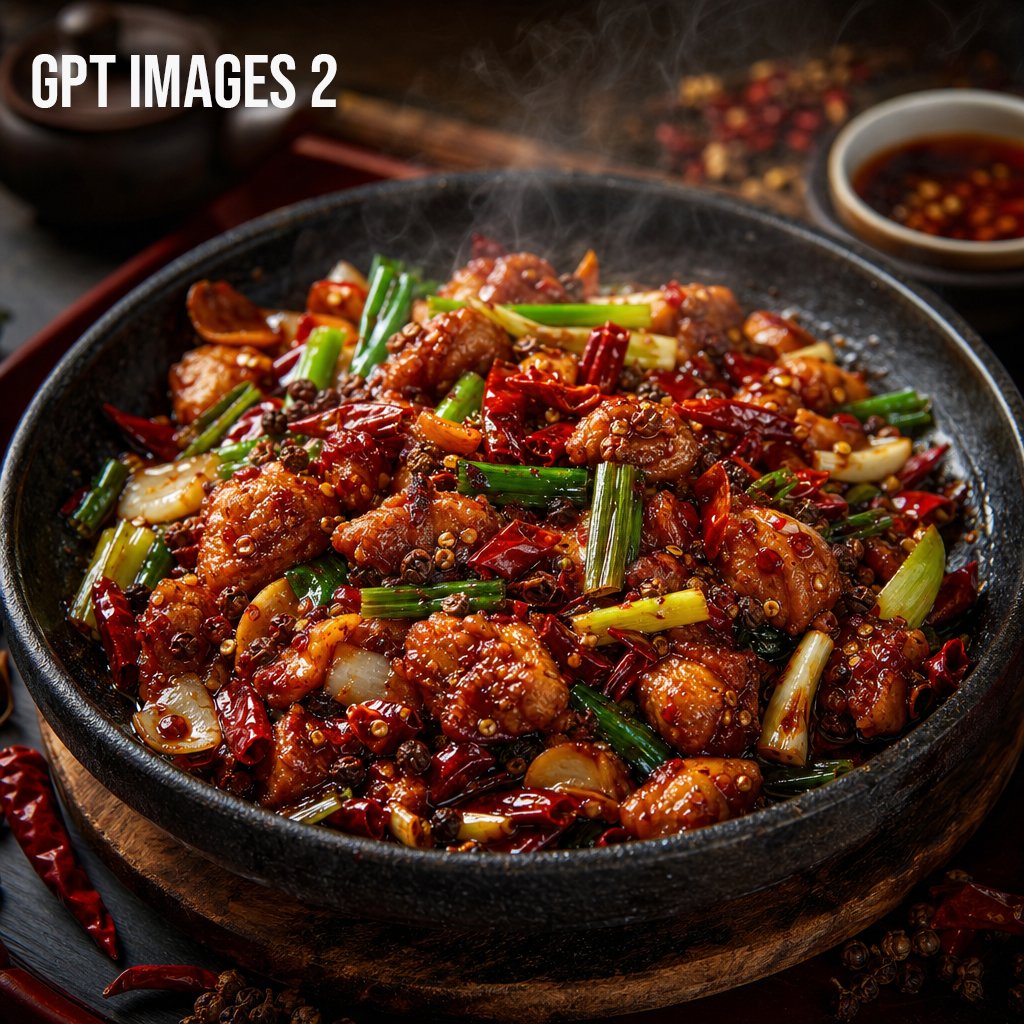
Premium food photography template
Create a square [ASPECT RATIO] premium food photography image of a steaming [FOOD] served in a dark black stone bowl or cast-iron skillet on a wooden board. The dish should look hot, glossy, spicy, and freshly served, with bite-sized pieces of browned protein, dried red chilies, green scallions, white onion, garlic, chili flakes, and visible Sichuan peppercorns coated in a deep red, oily Szechuan sauce. Use a slightly elevated close-up camera angle with shallow depth of field. Make the food the clear hero of the image, centered and richly detailed. Add visible steam rising naturally from the dish. Surround the bowl with subtle restaurant-style props like a dark red tray, scattered dried chilies, peppercorns, a small sauce bowl, or a blurred teapot in the background. Lighting should feel warm, moody, and editorial, like a high-end restaurant food shoot. Emphasize realistic textures and keep the image appetizing, realistic, cinematic, and polished. Avoid text, logos, hands, people, utensils covering the food, cartoon styling, fake plastic textures, excessive symmetry, or an overly clean stock-photo look.
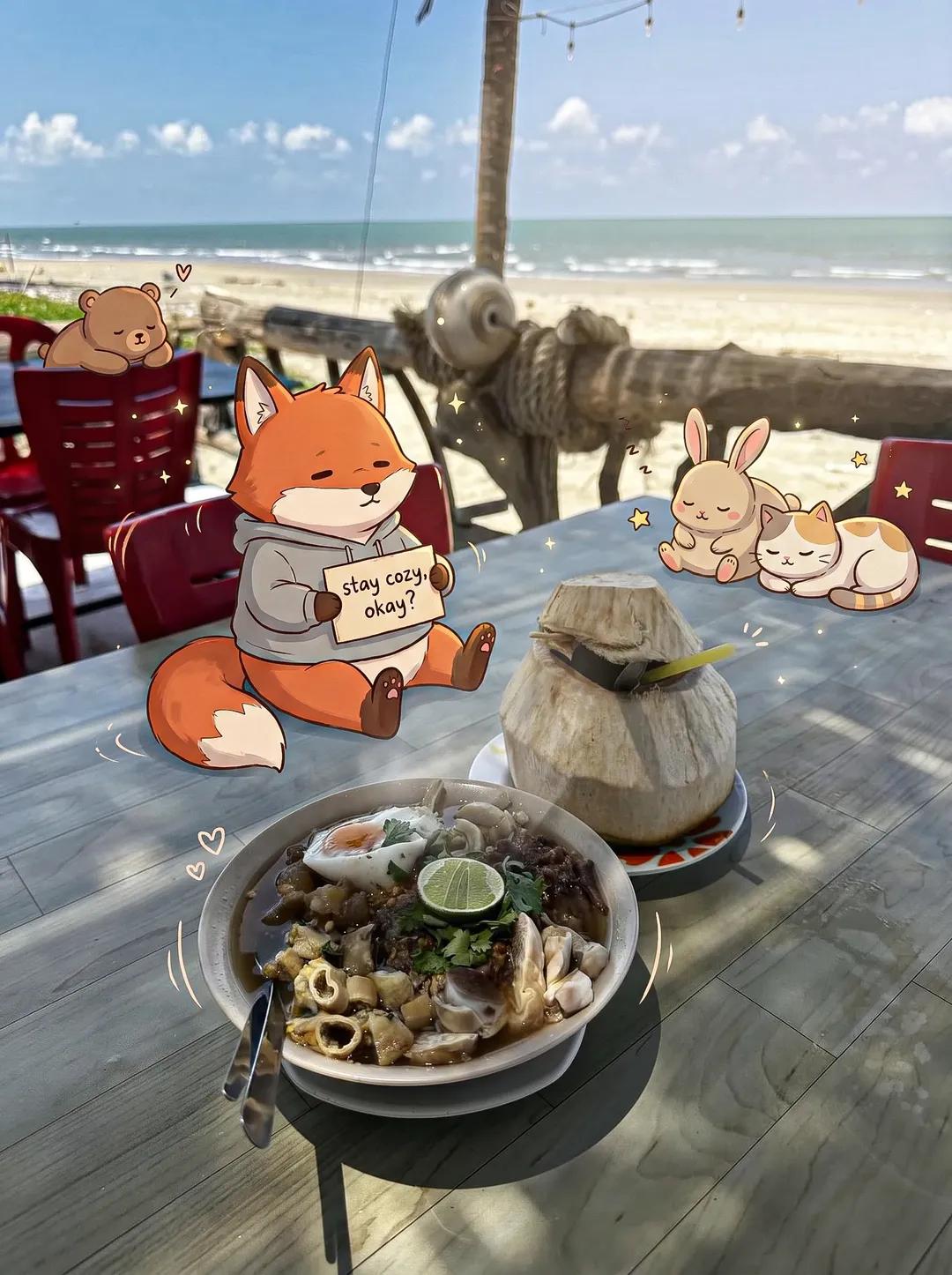
Food Photography with Doodle Characters
Aesthetic beachside café scene with a wooden table overlooking the ocean, bright daylight, soft shadows, tropical vibe. A delicious bowl of food and a coconut drink placed on the table. Add cute illustrated cartoon characters (fox, bunny, cat) sitting and relaxing around the food, with tiny hand-drawn doodles (hearts, sparkles, motion lines). Cozy wholesome mood, playful storytelling, mix of real photography and 2D illustration overlay, soft warm color grading, shallow depth of field, ultra-realistic food details, 4K.
Restaurant POV Change Comparison
A side-by-side comparison graphic on a black background demonstrating a camera-angle change in the same restaurant scene. At the top, large white sans-serif text reads: "Show me the POV from someone standing behind the bar looking out over this crowded restaurant. Change NOTHING in the scene other than the pov". Below, place 2 stacked rectangular photos centered vertically: the top image labeled "Source" in large white text on the left, and the bottom image labeled "Output" in large white text on the left. The top photo shows a warmly lit, upscale, crowded restaurant interior seen from the dining room side, facing a tall back bar filled with many illuminated liquor bottles on wall-to-wall shelves, with bartenders and guests in front, amber lighting, globe pendant lights, wood ceiling, beige columns, and tightly packed seated diners in the foreground. The bottom photo shows the exact same restaurant, same crowd density, same warm lighting, same decor, same bar shelving, same globe pendant lights, and same overall composition elements, but now from the point of view of someone standing behind the bar and looking outward across the crowded restaurant; the foreground includes the bar counter with glassware, metal bar tools, bottles, and a point-of-sale screen visible at the lower left, while guests and staff fill the middle ground and the dining room extends into the background. Preserve the sense that only the camera position changed between the 2 images, with no other scene alterations.
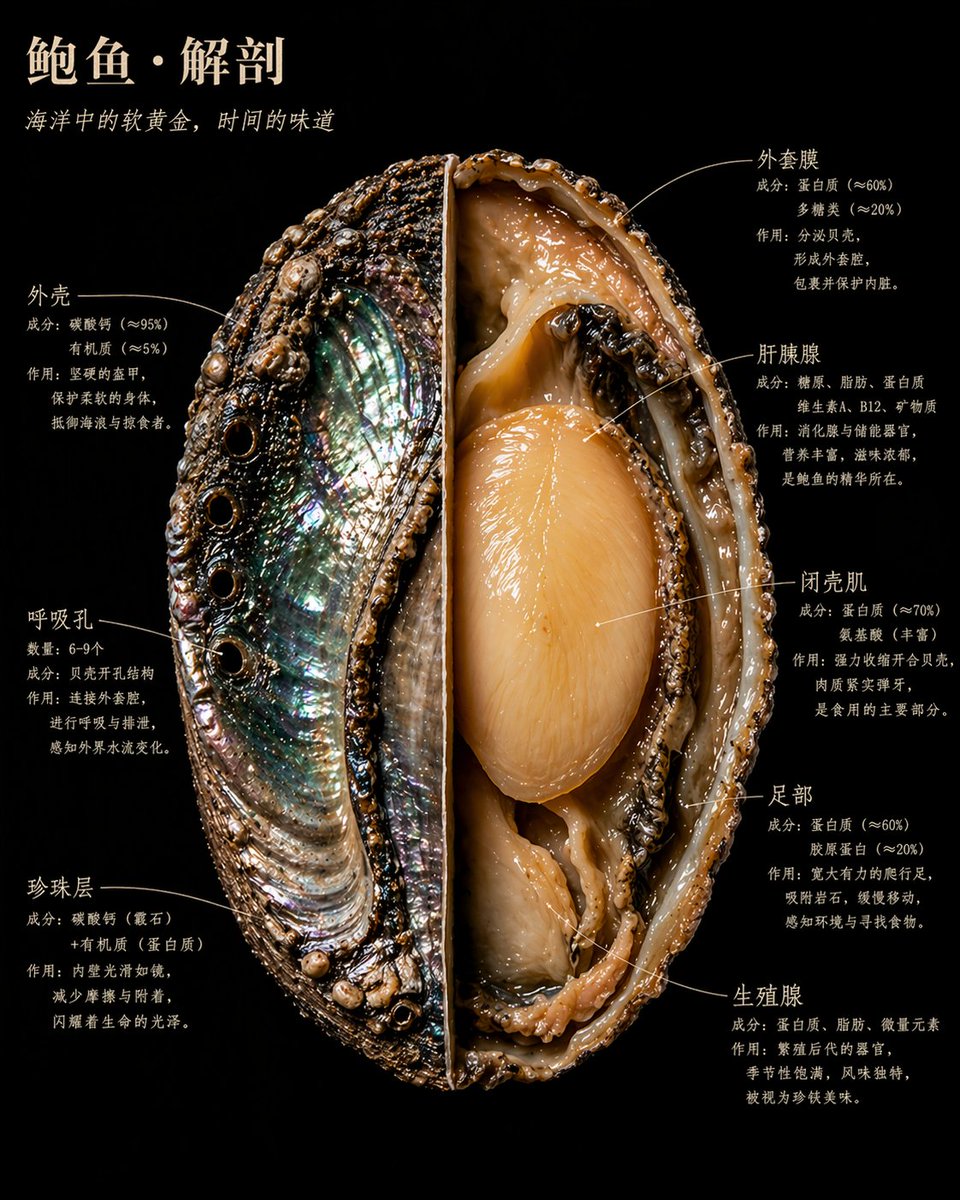
Naturalist-Style Food Specimen Cross-Section
一颗/一块/一枚【食物名称】,以博物学大师发现野外标本的方式解剖。
剖开、展开、固定——如同博物馆的珍贵藏品,
却以卡拉瓦乔为《国家地理》掌镜时的光线照亮。
每一个内部结构都以自身的材质真相发光。
截面锋利得近乎暴力。内部美丽得近乎神圣。
画面中呈现完整标本:
一半保持原状,展示【外表面描述:质感/颜色/纹理】;
另一半剖开至核心,【内部核心结构描述:最重要的1—2个内部视觉特征】清晰可见。
【补充1—2句该食物最具视觉张力的横截面细节描述】
背景:纯粹的黑丝绒。
【食物名称】悬浮其中,如同某件珍贵而危险的事物。
标注文字紧贴结构边缘,手写感衬线字体,绝不悬空飘浮。
画面包含以下标注,每处标注三行:第一行结构名称,第二行成分数据,第三行一句人话:
【结构01名称】
【成分/数据说明】
【这个结构在做什么,为什么重要】

【结构02名称】
【成分/数据说明】
【这个结构在做什么,为什么重要】
【结构03名称】
【成分/数据说明】
【这个结构在做什么,为什么重要】
【结构04名称】
【成分/数据说明】
【这个结构在做什么,为什么重要】
【结构05名称】
【成分/数据说明】
【这个结构在做什么,为什么重要】

【结构06名称】
【成分/数据说明】
【这个结构在做什么,为什么重要】
省略其他如果有继续保持这个格式
主标题,左上角,暖象牙白大写字体:
【食物名称】·解剖

斜体副标题紧随其下:
【一句揭示这种食物本质的话,不超过15字】

整体气质:奥杜邦博物插画×卡拉瓦乔光影×有史以来最美的科学摄影。
4K精度,标本照明,极致内部细节。
没有任何临床感,一切都鲜活。
写实风格,非示意图,非卡通,非简化图解。
每一种材质都有真实的物理质感:
粗糙的、光滑的、湿润的、干燥的、致密的、疏松的。
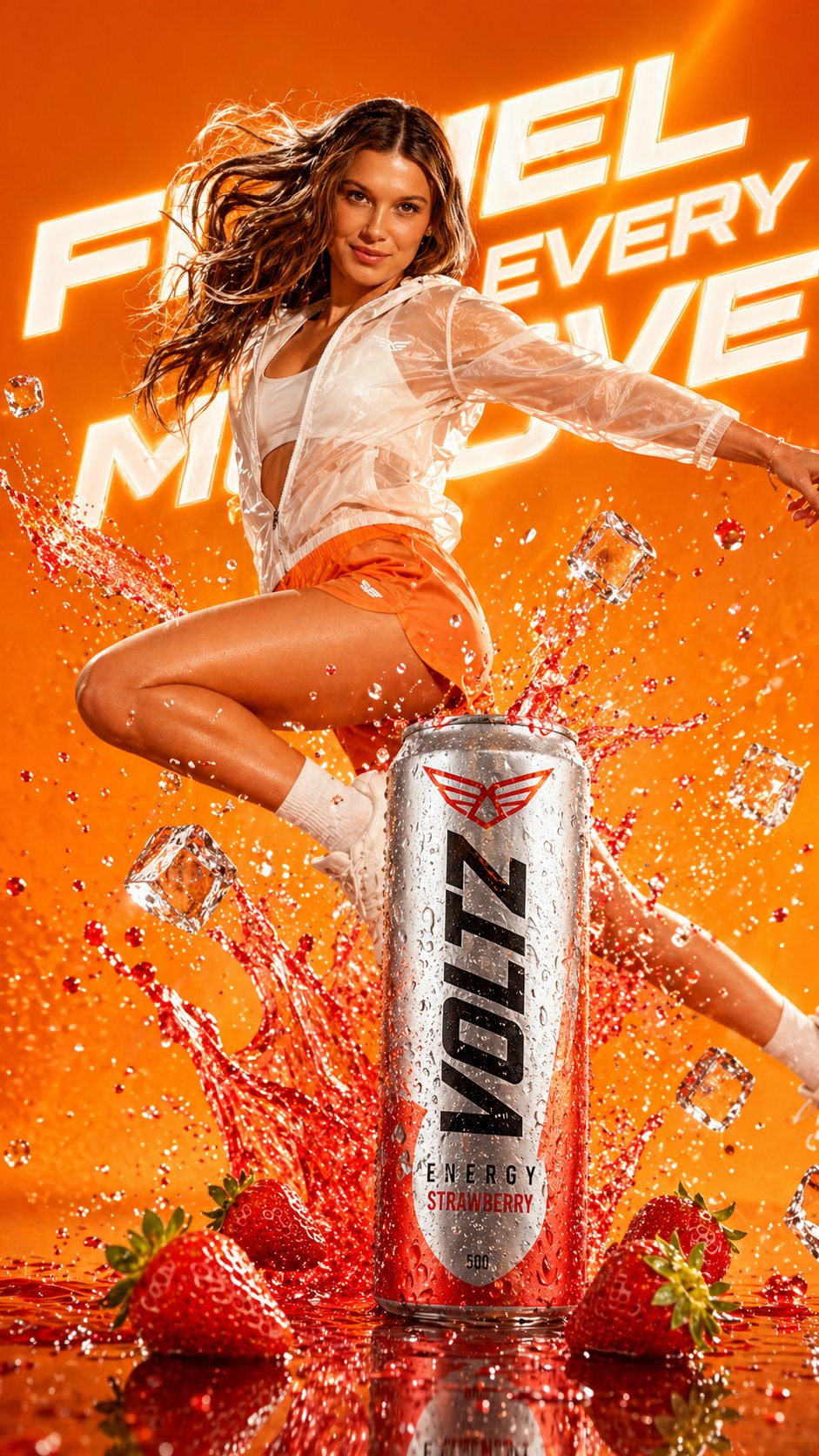
Strawberry energy drink commercial advertisement
A hyper-realistic commercial advertisement blending energy drink and sports branding. A dynamic athletic woman mid-air jump, wearing modern sportswear (light translucent jacket, orange shorts, white sneakers), surrounded by explosive splashes of red strawberry liquid and flying ice cubes. A cold metallic energy drink can (strawberry flavor) bursting with droplets sits in the foreground, covered in condensation. Fresh strawberries scattered on a glossy reflective surface.

Bright cinematic lighting with dramatic highlights and motion effects. Vibrant orange gradient background with bold glowing typography behind the subject. Ultra-detailed, high contrast, sharp focus, commercial product photography style, 8K resolution, advertising poster aesthetic, energetic, powerful, refreshing mood.
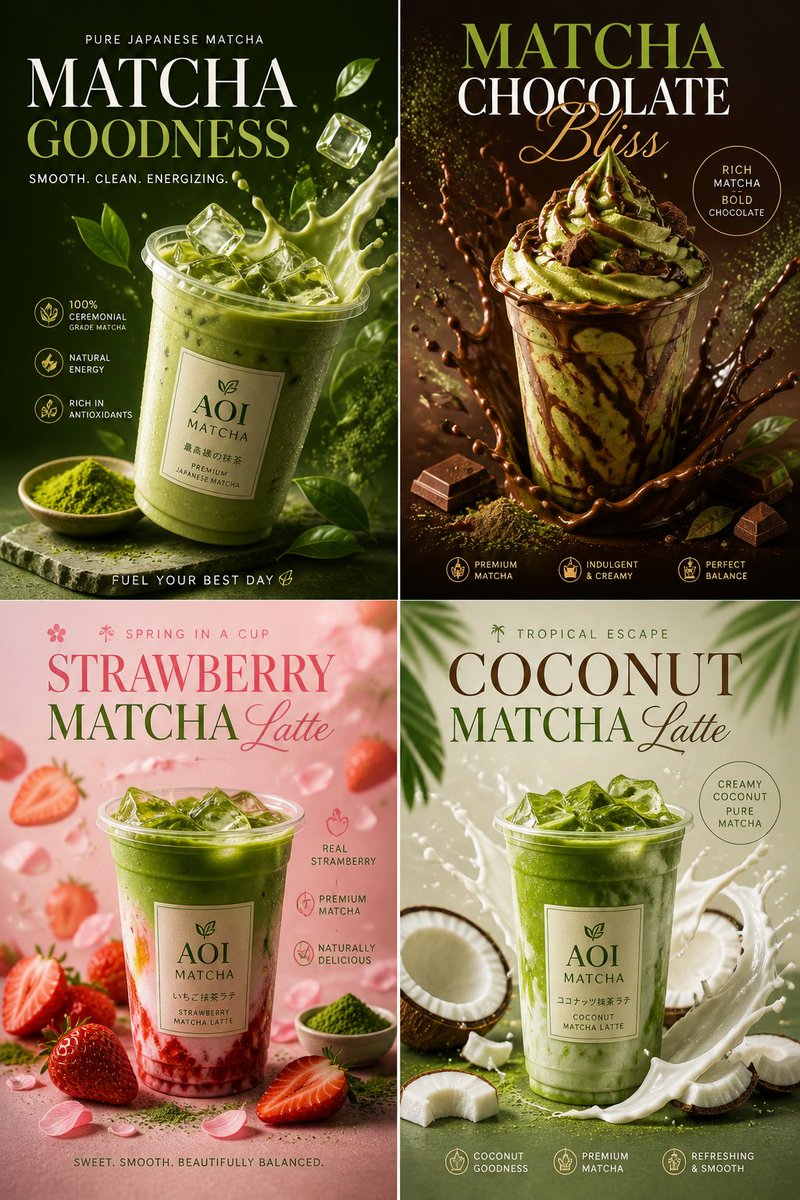
Luxury Food Poster Template
GPT Image 2 on ChatGPT App Create a hyper-realistic vertical commercial food photography poster for a premium [PRODUCT TYPE], designed in a refined luxury advertisement style, 2:3 aspect ratio. Place [MAIN PRODUCT] as the central hero subject, positioned [COMPOSITION / ANGLE], with premium realistic details such as [TEXTURE DETAILS], [SURFACE FINISH], and [FOOD-SPECIFIC FEATURES]. Surround the product with [FLOATING INGREDIENTS / MOTION ELEMENTS], arranged dynamically but cleanly to create movement, depth, and visual balance. Add [LIQUID / SPLASH / DRIP / POWDER EFFECT] interacting with the product in a natural high-speed freeze-frame style, showing realistic viscosity, droplets, suspended particles, soft shadows, and crisp highlights. Use a [BACKGROUND STYLE] with a cohesive color palette of [COLOR PALETTE], keeping the composition clean, appetizing, and premium. Lighting should be [LIGHTING STYLE], emphasizing gloss, creaminess, texture, and material contrast. Include [TYPOGRAPHY / BRANDING DETAILS] if required, placed with elegant spacing and modern commercial balance. Ultra-detailed textures, photorealistic rendering, high-end dessert or beverage advertisement aesthetic, sharp focus on the hero product, slight depth falloff on outer elements, clean studio composition, luxurious, fresh, indulgent, 8K resolution. Cheat Sheet [PRODUCT TYPE]: matcha drink, ice cream bar, pistachio cone, dessert poster [MAIN PRODUCT]: cup, bar, cone, packaged dessert [COMPOSITION / ANGLE]: overhead flat-lay, centered vertical, mid-air diagonal [TEXTURE DETAILS]: crumbs, powder, nuts, cream ridges, ice cubes [SURFACE FINISH]: glossy chocolate, matte powder, creamy swirl, transparent plastic [FLOATING INGREDIENTS]: almonds, tea leaves, pistachios, cherry pieces [MOTION EFFECT]: splash, drip, swirl, powder burst, frozen particles [BACKGROUND STYLE]: soft gradient, textured powder surface, clean studio backdrop [COLOR PALETTE]: matcha green, chocolate brown, cherry pink, pistachio sage [TYPOGRAPHY]: brand name, product title, tagline, offer badge, CTA button
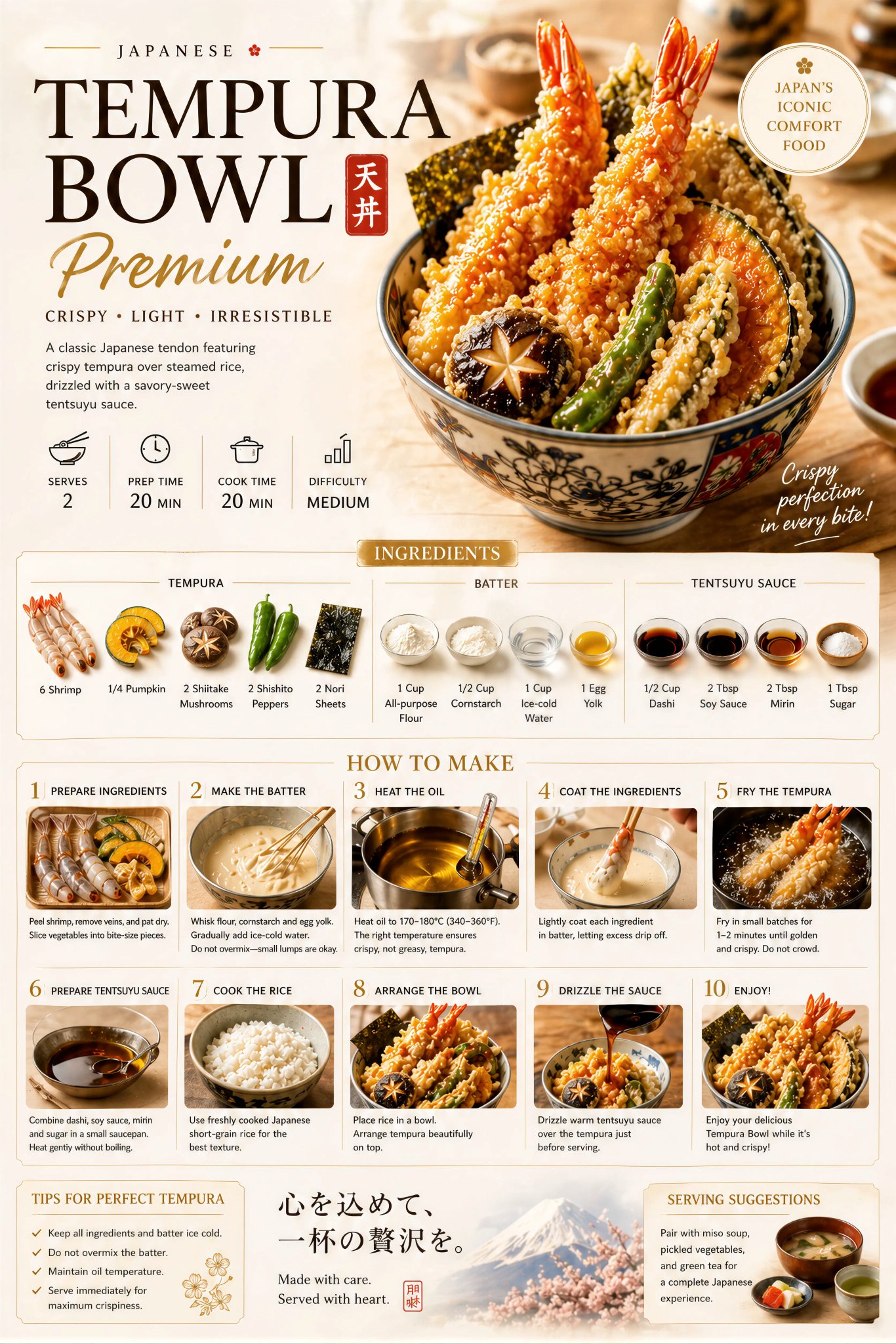
Premium Food Recipe Poster Elegant Layout
Create a premium food preparation poster for
 [ DISH NAME ], with a beautiful hero dish, warm natural lighting, cream background, elegant step-by-step recipe layout, ingredients, cooking process, premium food photography, refined English typography, luxury restaurant advertisement style, clean design, rich colors, highly detailed, visually irresistible, cinematic masterpiece.
Taiwanese Food Blog Spread
A cozy restaurant table filled with a vibrant Taiwanese meal, shot in warm natural lighting. A large bowl of braised beef noodle soup with wide noodles, tender beef chunks, bok choy, and green onions sits in the foreground. Surrounding dishes include a bowl of rice topped with raw egg yolk, seaweed, kimchi, and chopped vegetables; a plate of Taiwanese fried chicken and tofu with greens; stir-fried water spinach with garlic; and a small dish of marinated vegetables. A tall elegant glass dessert with shrimp salad layered inside stands in the center. Wooden table surface, ceramic bowls, and a teapot in the background create a homely aesthetic. Handwritten-style Chinese text annotations and doodles are scattered around the dishes, adding a playful, lifestyle-blog feel. Soft depth of field, warm tones, high detail, food photography style.
Related prompt guides and libraries
FAQ about Food Photography
How do I use Food Photography prompts from gptimages.dev?
Start with the examples that match your visual job, then copy the prompt structure rather than copying every adjective. Replace the subject, scene, channel, aspect ratio, and constraints with your own details. If the first result is close, keep the successful parts fixed and change one variable at a time. This makes the page useful as a prompt library, not just a keyword page.
What is the best prompt format for Food Photography?
A dependable format is brief first, details second, checks last: describe the image goal, then the subject, scene, composition, style, reference rules, and output constraints. For models such as GPT-IMAGE-2, Nano Banana 2, Stable Diffusion, Midjourney, or Jimeng AI, keep the core prompt portable and add tool-specific settings only when the interface supports them.
Can I reuse these prompts across different AI image models?
Yes, but reuse the structure more than the exact syntax. A prompt that works in one generator may need different wording, reference strength, aspect ratio settings, or negative prompts in another. The safest workflow is to preserve the creative brief, then adapt only the model-specific layer after you inspect the first output.
How should I collect the best AI image prompts?
Save prompts with the final image, model or tool name, aspect ratio, reference images, and a short note explaining why the result worked. Group them by use case such as product photography, character consistency, UI mockups, posters, logos, or text-in-image prompts. That collection becomes much more useful than a flat list of attractive phrases.
Why do Food Photography prompts fail?
Common causes include unclear subject hierarchy, too many styles in one prompt, vague quality words, unsupported text requirements, missing reference rules, and uncontrolled iteration. Fix the prompt by naming the production goal, protecting the details that cannot change, and testing one adjustment per generation instead of rewriting the whole prompt every time.
Are these prompt examples enough for commercial work?
They are a starting point, not legal or brand clearance. For commercial work, check the terms of the model or generator, review rights for reference images, verify text and logos manually, and keep a record of the prompt, source assets, and final edits. The page helps with prompt quality, while usage rights still depend on your workflow and provider terms.