
ComfyUI Workflow
ComfyUI Workflow connects use ComfyUI for AI image prompting to a curated English SEO page with model notes, prompt patterns, FAQ coverage, real examples, and related internal links.
Editorially reviewed by GPT Images for prompt usefulness, internal links, FAQ coverage, and source-aware model context.
What this workflow covers
ComfyUI Workflow is designed for users deciding where to run image prompts and how to adapt them inside a specific tool. It targets the intent to use ComfyUI for AI image prompting, but the page avoids thin keyword stuffing by connecting the topic to prompt structure, real prompt examples, internal links, and FAQ answers.
The practical goal is simple: help someone understand what to write next. The page explains how ComfyUI prompts should define subject, constraints, references, style, and output checks before a model or generator is blamed for a weak result.
- Use this workflow when the search intent is "use ComfyUI for AI image prompting" and the visitor needs examples before writing from scratch.
- Choose it when ComfyUI work requires visible constraints such as subject, angle, lighting, composition, text, aspect ratio, or editing target.
- Use the real prompt examples below to see how other prompts structure the same problem, then adapt one variable at a time.
- Keep it as an internal link target for related prompt collections so users can move from broad discovery into specific prompt pages.
Recommended ComfyUI workflow
show how to prepare prompts for the tool interface while keeping the reusable prompt library as the source of truth. A good workflow should be repeatable, inspectable, and easy to adapt across tools. The same prompt can behave differently in GPT-IMAGE-2, Nano Banana 2, Stable Diffusion, Midjourney, Jimeng AI, or a local ComfyUI setup, so this page keeps the reusable structure separate from tool-specific adjustments.
- Start by defining the job: what the image must communicate, where it will be used, and what failure would make the result unusable.
- Translate the job into a prompt skeleton for ComfyUI: subject, scene, medium, camera or composition, style constraints, and output constraints.
- Pick one example prompt from this page and copy only the structure that matches the job; avoid copying decorative phrases that do not serve the image.
- Run a first generation, then change one variable at a time: framing, lighting, color palette, reference strength, text content, or background density.
- Save the winning prompt with notes about model, tool, aspect ratio, and any reference images so the pattern can be reused later.
- prepare inputs, choose prompt examples, run controlled variations, and save winning structures
Quality checks before publishing
Before using a generated image in production, review the output against the original job. The best prompt is not the longest prompt; it is the prompt that makes the model spend attention on the details that matter.
- ComfyUI should have a clear subject and a visible hierarchy; if the prompt gives equal weight to every detail, the image often becomes noisy.
- The prompt should separate content from style, especially when moving between GPT-IMAGE-2, Nano Banana 2, Stable Diffusion, Midjourney, or other image models.
- If the output needs readable text, keep the phrase short, quote it exactly, and verify the final image rather than assuming the model handled typography perfectly.
- If the output must match a brand, character, room, product, or reference image, name the fixed traits and describe what is allowed to change.
- Avoid stacking too many model-specific shortcuts on a reusable prompt page; keep the main prompt portable, then add model notes as a final layer.
- Review whether the page sends visitors to deeper prompt examples, related use cases, and FAQ answers instead of trapping them in a generic SEO article.
Common mistakes to avoid
Most failed image generations are not caused by a missing magic word. They usually come from unclear hierarchy, mixed intent, unsupported text requirements, or a prompt that asks for too many changes at once.
- Writing a ComfyUI prompt as a pile of keywords without a production goal.
- Changing model, tool, aspect ratio, and reference image at the same time, which makes it impossible to learn what improved the output.
- Using vague quality words such as beautiful or professional without defining the visible evidence of quality.
- Ignoring downstream use, such as ecommerce crop safety, ad text legibility, app store screenshots, or poster readability.
- Treating ComfyUI Workflow as a final answer instead of a starting point connected to prompt examples and iteration notes.
ComfyUI prompt patterns
Production brief prompt
Create a ComfyUI image for [audience] that communicates [message]. Main subject: [subject]. Scene: [setting]. Composition: [camera angle, crop, spacing]. Style: [medium, lighting, color direction]. Constraints: [aspect ratio, readable text, brand colors, negative space]. Avoid: [visual mistakes, clutter, wrong mood].
It separates the job, subject, scene, style, and constraints, which makes the prompt easier to test across different image models.
Reference-aware prompt
Using the reference as the fixed source of truth, generate a ComfyUI variation. Preserve [identity traits, product shape, logo placement, character features, room layout]. Change only [background, lighting, camera angle, outfit, color palette]. Keep the output consistent with [use case] and do not invent extra objects.
It tells the model what is fixed and what can change, which is critical for image editing, character consistency, product shots, and brand work.
Iteration prompt
Revise the previous ComfyUI result by improving [one problem]. Keep [successful elements] unchanged. Adjust [single variable] to [specific direction]. The final image should feel [desired mood] and remain suitable for [placement or channel]. Do not change [protected details].
It controls iteration by changing one variable at a time, so you can learn which instruction improved or damaged the output.
Model transfer prompt
Rewrite this ComfyUI prompt for [target model or tool]. Keep the core subject, composition, and constraints. Convert unsupported syntax into natural language. Add model-specific notes only at the end: [aspect ratio, style strength, reference strength, negative prompt, seed, or typography instruction].
It preserves the creative brief while allowing each model or tool to receive the instructions in a format it can use.
Prompt examples for ComfyUI
These examples are selected from the current English prompt catalog so the page links visitors into real prompt detail pages instead of stopping at generic advice.
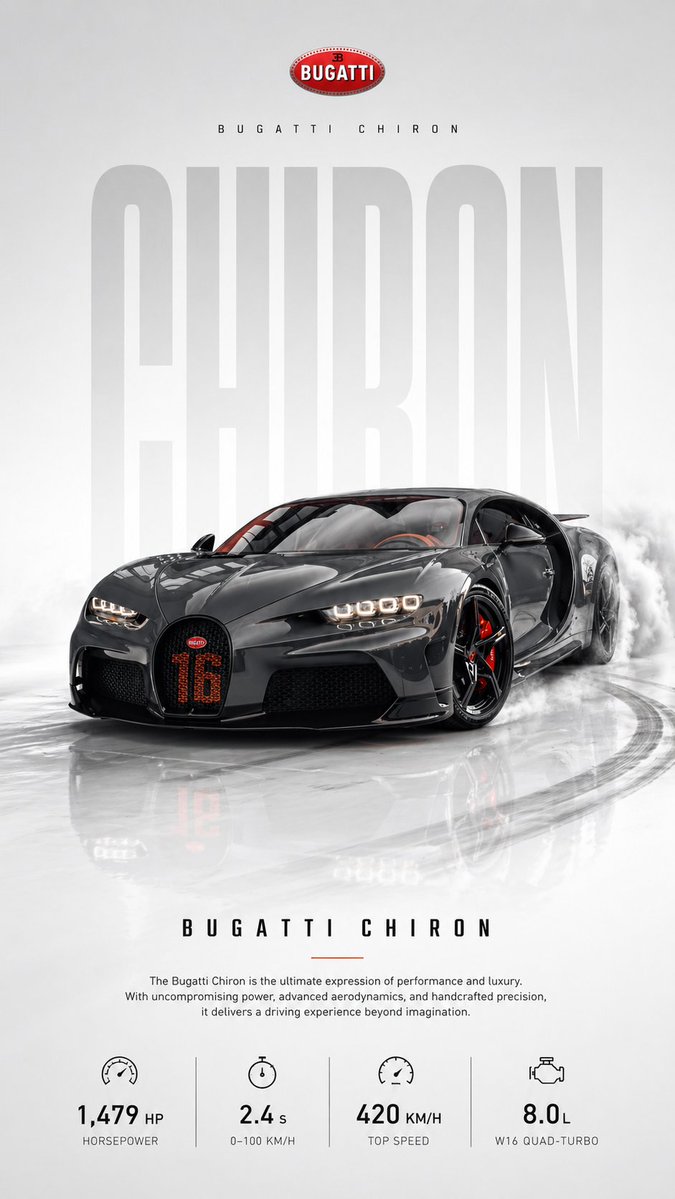
Infographic / Edu Visual - Automotive poster transformation prompt
Ultra-clean automotive poster featuring the exact same car as the photo that will be provided later. The AI must replicate the car from the uploaded photo with identical body shape, proportions, stance, color, trims, wheels, and all visible exterior details.
The car is presented in a front three-quarter angle facing right, matching the perspective of the original reference layout, but now depicted in a subtle {argument name="action" default="drifting action"}. The drift is expressed through realistic weight transfer, slight body lift, controlled smoke plumes from the rear tires, and faint curved tire marks behind the vehicle, without distorting the original car’s geometry.
Headlights follow the exact style from the reference photo of the car, with optional warm fog lights glowing if the provided car has them. All decals, emblems, plates, and window tints must match the car from the uploaded photo.
The car drifts on a glossy white reflective studio-like floor that maintains soft reflections and realistic shadows, enhanced with light drift skid reflections and directional smudges.
Background remains a clean white-to-light-gray gradient with a giant semi-transparent bold typography of the car model name (auto-extracted from the uploaded photo) vertically dominating the background.
At the very top: clean branding text “{argument name="brand name" default="CAR COMPANY NAME"}” (or the brand detected from the uploaded car photo). Under it, spaced-out stylized tracking text containing the same brand and model name.
Below the car: centered title of the exact model name from the uploaded photo.
Under that, a short descriptive paragraph about the car’s character (efficiency, style, reliability).
Bottom section shows a clean grid layout of specifications. If real specs are known from the detected car model, generate accurate values; if not, generate placeholders in the same layout style (4 columns: horsepower, 0–100 km/h, top speed, engine displacement/fuel type).
Entire poster is minimalist, editorial, high-key studio lighting with ultra-sharp reflections, crisp shadows, modern typography, and 4K believability, blending clean design with dynamic drifting energy, Ratio 9:16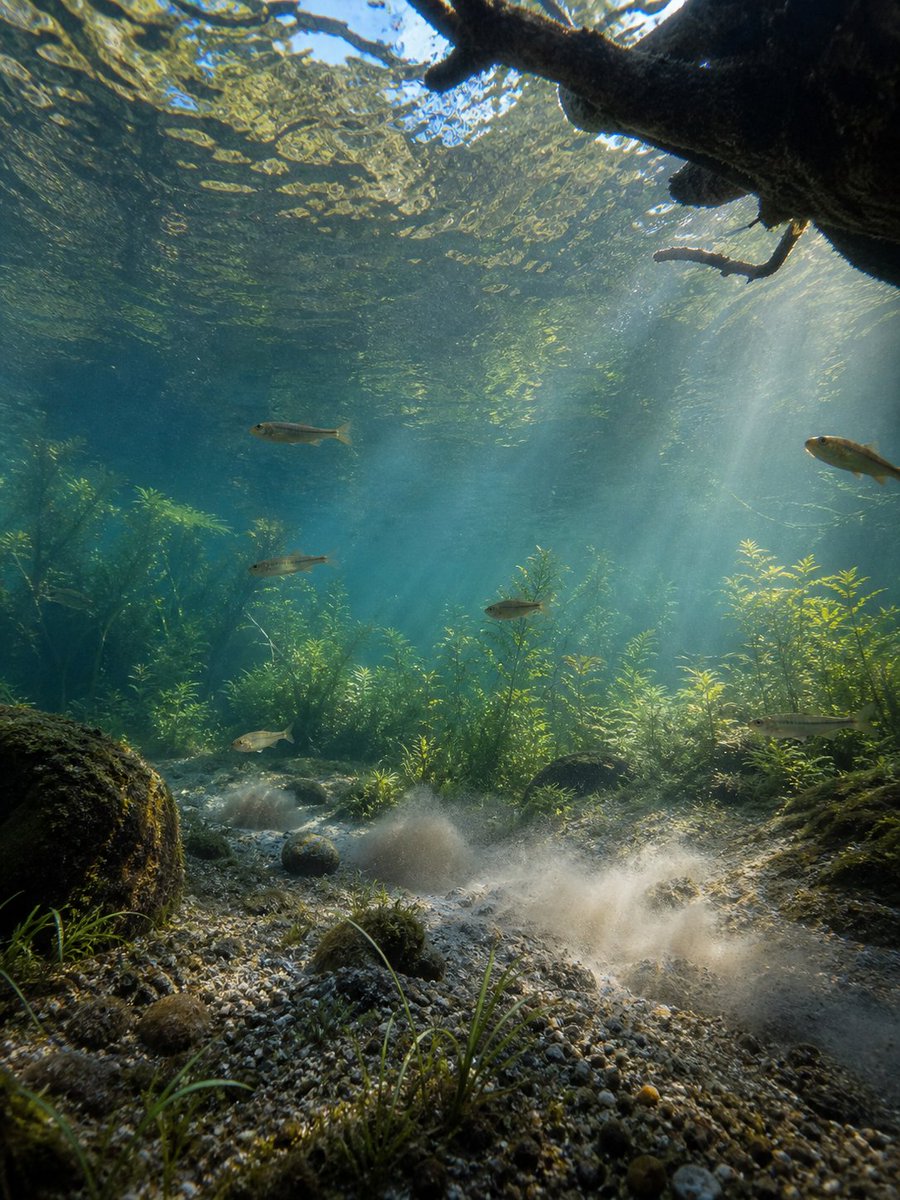
Infographic / Edu Visual - Underwater Forest Stream Photography
Shot with a high-definition underwater camera, this prompt captures real underwater natural scenery in a {argument name="environment description" default="clear shallow stream next to a tropical primeval forest"}.

Vertical composition, 3:4 aspect ratio, medium-to-long shot. The lens is slightly below the water surface, showing the shimmering bottom of the water surface above with realistic water wave refraction and natural reflections.

Sunlight shines diagonally into the water from the top right, forming soft beams and underwater spots. Dark reflections and shadows of large tree branches occupy part of the composition in the upper right.

In the middle is clear and quiet stream water with slight suspended particles and {argument name="number of fish" default="5-8"} native freshwater small fish swimming naturally, mainly gray-silver and light brown, varying in size and distance, not forming an organized school. On the stream bed, deep green, yellow-green, and brownish-green water plants grow naturally, swaying gently with the current, distributed naturally unlike an artificial aquarium.

The bottom consists of gray-brown fine sand, gravel, pebbles, and several naturally shaped stones with slight algae marks and signs of water erosion. Multiple springs at the bottom show fine sand billowing slowly from small holes, creating light sand clouds and local water disturbances, not white smoke, steam, or large bubbles.

Natural landscape live-action photography, high-end natural documentary feel, close to National Geographic ecological photography. Features transparent water, natural lighting, restrained colors, realistic underwater optical effects, slight graininess, natural depth of field, and high-definition details.

No people, no buildings, no artificial traces, no text, no borders, no LOGO. Avoid CG feel, aquarium look, seabed coral, exaggerated fish schools, oversaturated greens, dreamy lighting effects, or plastic water plants.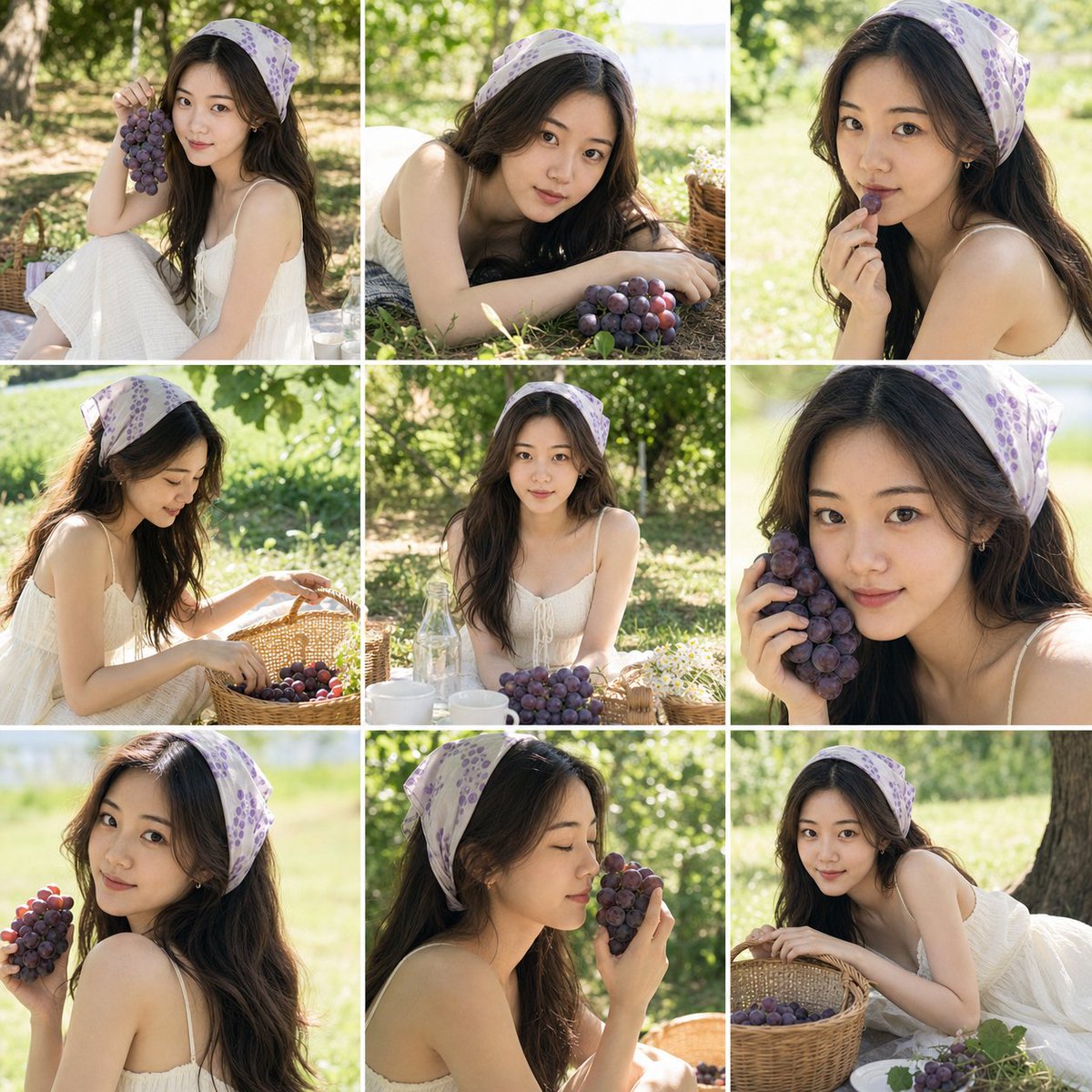
Profile / Avatar - Summer Grape Girl Photo Series
Based on 1-3 clear personal photos uploaded by the user, generate a 3x3 grid photo puzzle with the theme "{argument name="photo theme" default="Summer Grape Girl Photo Series"}".

Strictly preserve the subject's real identity characteristics, including face shape, facial proportions, eye/brow structure, nose, lips, skin tone, age, hairstyle features, and overall temperament. The person in all nine images must clearly look like the same real girl; she must not become a stranger, look Westernized, look like a generic influencer, be over-beautified, or have an AI-generated face.

The overall theme is a fresh and natural everyday girl's portrait. The character wears a {argument name="clothing description" default="creamy white or off-white soft dress / slip dress"} and a {argument name="accessory" default="purple vintage floral headscarf"}. The overall look is clean, natural, and daily, with a summer girl vibe. Accessories are simple, like small earrings, but not overly ornate.

Set the scene as a summer picnic portrait in an outdoor meadow, under tree shadows, or by a vineyard. Include elements like purple grapes, grape clusters, woven baskets, glass bottles, picnic blankets, and light-colored tableware to create a natural lifestyle feel. Sunlight filters through leaves, creating soft dappled shadows, with a naturally blurred background.

Design the final image as a 3x3 grid with white borders. All nine small photos must feature the same person, same outfit, and same scene, but each must be distinctly different: different expressions, different facial angles, different poses, different camera positions, and different compositions (wide vs. close-up). Do not just have nine slight variations of the same angle.

The nine photos can show: holding grapes and smiling, lying on the grass looking at the camera, holding a grape to the mouth, organizing the basket, sitting still facing forward, a close-up of a grape against the cheek, a candid turning shot, smelling the grapes with eyes closed, and lying on the grass holding the basket. Expressions should be varied, including quiet, playful, gentle, smiling with eyes closed, naturally daydreaming, and candid laughter.

The style is Fujifilm camera texture, Japanese film photography style, realistic shooting feel, soft natural light, shallow depth of field, slight film grain, and fresh natural tones. Purple grapes should be the visual focus. The image is clean, durable, and has a sense of life and youth.

Avoid: Western faces, influencer faces, over-beautification, plastic skin, fake faces, repetitive expressions, repetitive angles, hand deformities, distorted props, messy backgrounds, studio style, illustration style, or CG feel.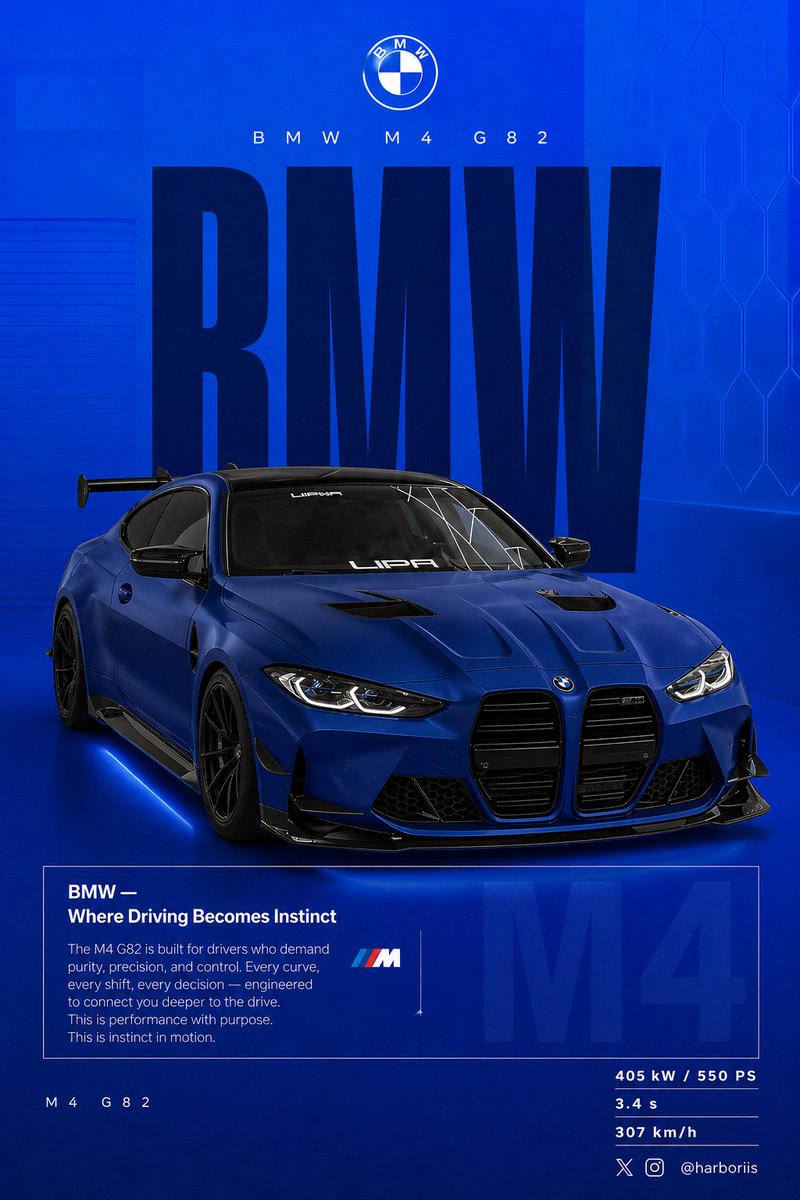
BMW Performance Social Poster
Create a 4:5 vertical social poster in ultra high resolution, 8K print quality sharpness. Use the {argument name="car model" default="BMW car"} from the reference image as the main subject and use the background structure/composition from the reference image, but transform it into a BMW themed design. Replace all black tones with a flat {argument name="background color" default="high-saturation BMW blue"} background. Keep the same layout, spacing, visual balance, and poster composition from the reference image. Background should use a smooth gradient from slightly lighter electric blue at the top to deep navy blue at the bottom. Add subtle grain texture (2 to 3%) and faint rectangular overlays (2 to 4% opacity). Keep it clean, graphic, premium, and non-realistic. Add a soft contact shadow under the car. Use the same BMW from the reference image, changing only the {argument name="paint finish" default="matte frozen blue"} or deep metallic navy. Keep the original body shape, wheels, stance, and design details from the reference image. Show the car in a rear 3/4 perspective matching the reference image angle exactly. Use a slightly elevated camera angle. Position the car slightly right of center. Include visible carbon roof, aggressive rear diffuser, sharp controlled reflections, and subtle brake details. Keep composition identical to the reference image: Top: branding Middle: giant type Center: car overlapping text Bottom: editorial block and specs Typography: Primary text: “BMW” Ultra condensed bold sans serif, tall vertical scaling like the reference poster. Color deep navy or near black. Static text with no distortion. Acts as structural backdrop. Secondary header: “BMW M4 G82” Thin font with wide tracking. Logo area: BMW roundel centered above. Editorial block: Headline: “BMW — Where Driving Becomes Instinct” Body copy focused on: driver connection control performance precision Use the same boxed editorial layout as the reference image. Background faded text: “M4” large scale with 3 to 5% opacity behind the box. Bottom left: “ M4 G82” Bottom right specs: 405 kW / 550 PS 3.4 s 307 km/h Lighting should be clean studio lighting with sharp but controlled highlights. Color grading should use deep blues, high contrast, clean blacks. Camera lens: 50mm, slightly elevated rear 3/4 angle. Mood: Performance. Precision. Driver focus. Add Bottom-right watermark: harboriis , with small x and Instagram logo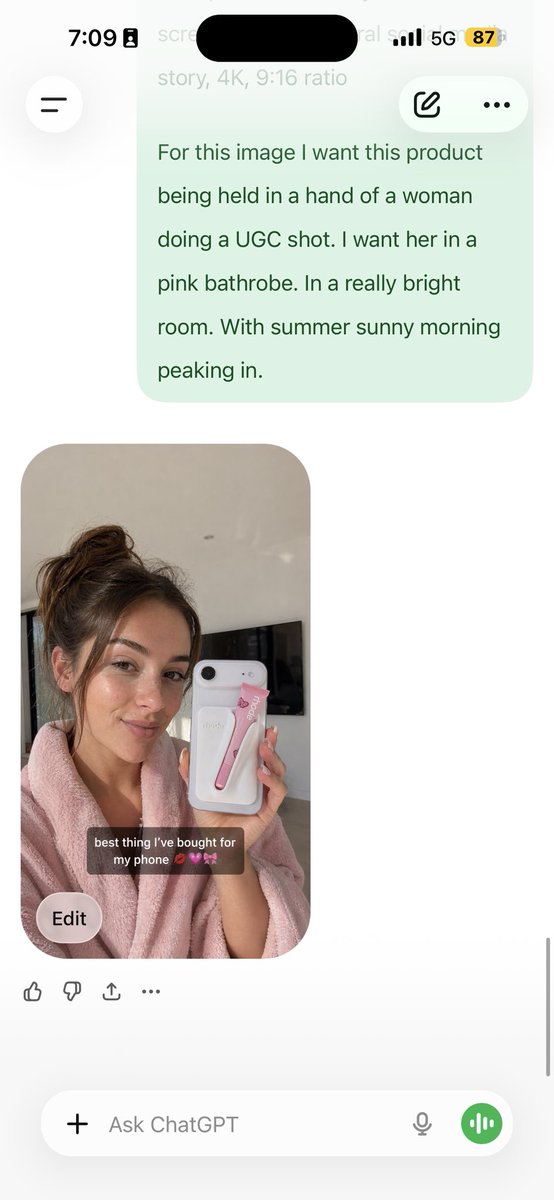
analyze this photo and give me a detailed JSON prompt that recreates it. brea...
analyze this photo and give me a detailed JSON prompt that recreates it. break down the color grading and every exact color in the photo

(use Opus, not Sonnet. Opus has stronger visual analysis and writes more detailed JSON)

paste that JSON into ChatGPT
upload your product image and prompt:
using this JSON as reference, generate a person holding my product
save that generated photo as your character reference

attach it to every future generation for facial consistency

you now have a consistent UGC model that works across any product

the JSON controls the lighting and color grading. GPT image-2 handles the character. you control the product placement.

the #1 tell on AI photos is flat colors and a grainy look. this method removes both.
5 minutes to set up. unlimited variations after.
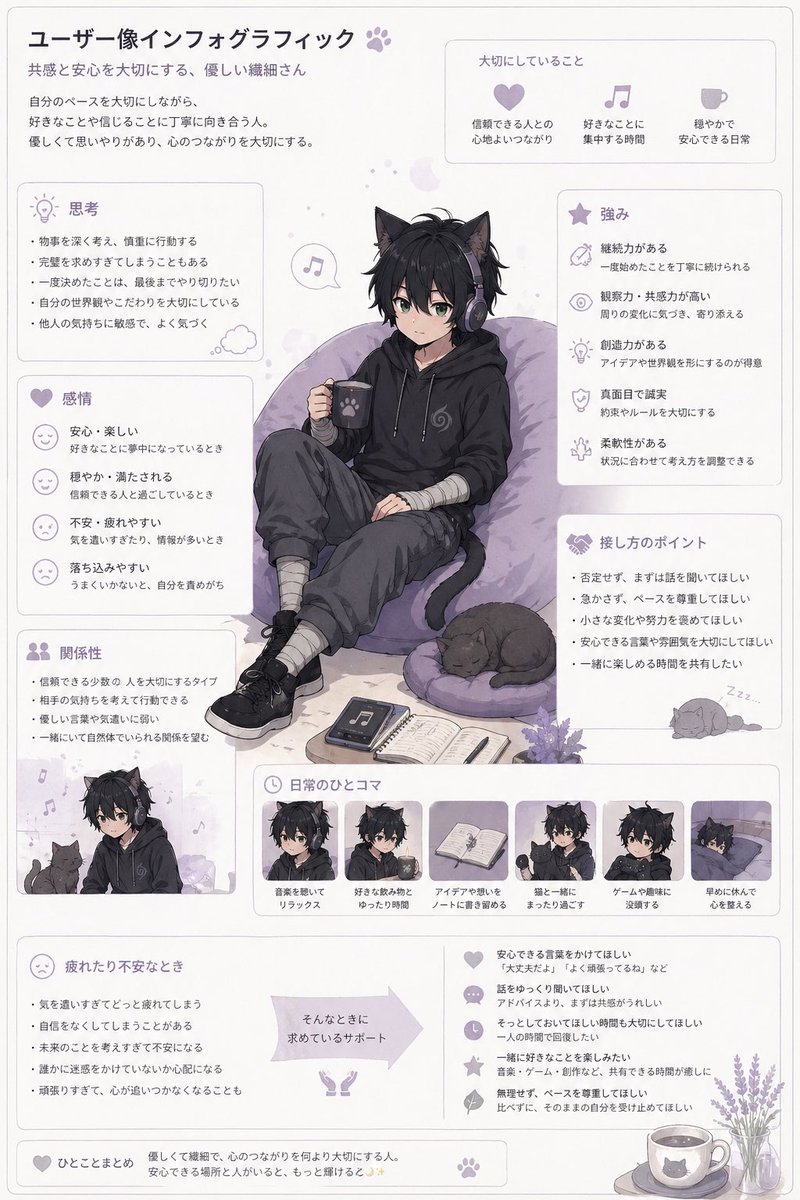
Infographic / Edu Visual - Pastel Anime User Persona Infographic
{"type":"pastel anime personality infographic poster","topic":"ユーザー像インフォグラフィック","theme":"a gentle, introverted, thoughtful person represented as a cozy black-haired cat-eared anime boy in a lavender room","style":{"aesthetic":"soft pastel lavender and gray, clean Japanese infographic design, delicate line icons, rounded white panels, airy spacing, subtle paw-print motifs","rendering":"high-quality anime illustration with soft shading, cozy slice-of-life atmosphere","background":"off-white with faint lavender watercolor circles and tiny decorative dots"},"subject":{"character":{"presentation":"androgynous anime boy avatar","hair":{"color":"{argument name=\"hair color\" default=\"black\"}","style":"messy short layered hair with long bangs"},"accessories":["black cat ears on the head","large over-ear headphones around the ears"],"outfit":["black oversized hoodie with a subtle spiral emblem on the chest","dark gray jogger pants","black sneakers","white bandage wraps on forearms and lower legs"],"pose":"sitting relaxed in a large lavender beanbag chair, one knee raised, holding a dark mug with a paw-print mark","expression":"calm, shy, gentle"},"companion":{"count":1,"description":"sleeping gray cat curled on a small round lavender cushion at the character's feet"},"props":{"count":6,"items":["dark paw-print mug in hand","smartphone on the floor with a music note on screen","open notebook on the floor","pen beside the notebook","small bunch of lavender flowers near the floor","tea cup and lavender in a vase at the bottom right corner"]}},"layout":{"format":"vertical poster","sections":[{"title":"ユーザー像インフォグラフィック","position":"top-left header","count":1,"labels":["共感と安心を大切にする、優しい繊細さん"]},{"title":"大切にしていること","position":"top-right","count":3,"labels":["信頼できる人との心地よいつながり","好きなことに集中する時間","穏やかで安心できる日常"]},{"title":"思考","position":"upper-left","count":4,"labels":["物事を深く考え、慎重に行動する","完璧を求めすぎてしまうこともある","一度決めたことは、最後までやり切りたい","自分の世界観やこだわりを大切にしている","他人の気持ちに敏感で、よく気づく"]},{"title":"強み","position":"upper-right","count":5,"labels":["継続力がある","観察力・共感力が高い","創造力がある","真面目で誠実","柔軟性がある"]},{"title":"感情","position":"mid-left","count":4,"labels":["安心・楽しい","穏やか・満たされる","不安・疲れやすい","落ち込みやすい"]},{"title":"接し方のポイント","position":"mid-right","count":5,"labels":["否定せず、まずは話を聞いてほしい","急かさず、ペースを尊重してほしい","小さな変化や努力を褒めてほしい","安心できる言葉や雰囲気を大切にしてほしい","一緒に楽しめる時間も共有したい"]},{"title":"関係性","position":"lower-left upper box","count":4,"labels":["信頼できる少数の人を大切にするタイプ","相手の気持ちを考えて行動できる","優しい言葉や気遣いに弱い","一緒にいて自然体でいられる関係を望む"]},{"title":"日常のひとコマ","position":"lower-middle strip","count":5,"labels":["音楽を聴いてリラックス","好きな飲み物とゆったり時間","アイデアや想いをノートに書き留める","猫と一緒にまったり過ごす","ゲームや趣味に没頭する","早めに休んで心を整える"]},{"title":"疲れたり不安なとき","position":"bottom-left","count":5,"labels":["気を遣いすぎてどっと疲れてしまう","自信をなくしてしまうことがある","未来のことを考えすぎて不安になる","誰かに迷惑をかけていないか心配になる","頑張りすぎて、心が追いつかなくなることも"]},{"title":"そんなときに求めているサポート","position":"bottom-center arrow","count":1,"labels":["そんなときに求めているサポート"]},{"title":"support list","position":"bottom-right","count":5,"labels":["安心できる言葉をかけてほしい","話をゆっくり聞いてほしい","そっとしておいてほしい時間も大切にしてほしい","一緒に好きなことを楽しみたい","無理せず、ペースを尊重してほしい"]},{"title":"ひとことまとめ","position":"bottom full-width footer","count":1,"labels":["優しくて繊細で、心のつながりを何より大切にする人。安心できる場所と人がいると、もっと輝ける。"]}],"centerpiece":"large seated full-body anime character in the center, overlapping multiple text panels","decorative_elements":{"count":8,"items":["paw-print icon near title","musical note speech bubble near character","small cloud doodle on left","tiny sleeping cat doodle with Zzz near right panel","lavender watercolor blobs","small floating dots","rounded rectangle panels with gray outlines","tiny monochrome icons beside section titles and bullets"]}},"text_language":"Japanese","customization":{"headline":"{argument name=\"headline text\" default=\"ユーザー像インフォグラフィック\"}","subtitle":"{argument name=\"subtitle text\" default=\"共感と安心を大切にする、優しい繊細さん\"}","character archetype":"{argument name=\"character type\" default=\"gentle sensitive person\"}","accent color":"{argument name=\"accent color\" default=\"soft lavender\"}"}}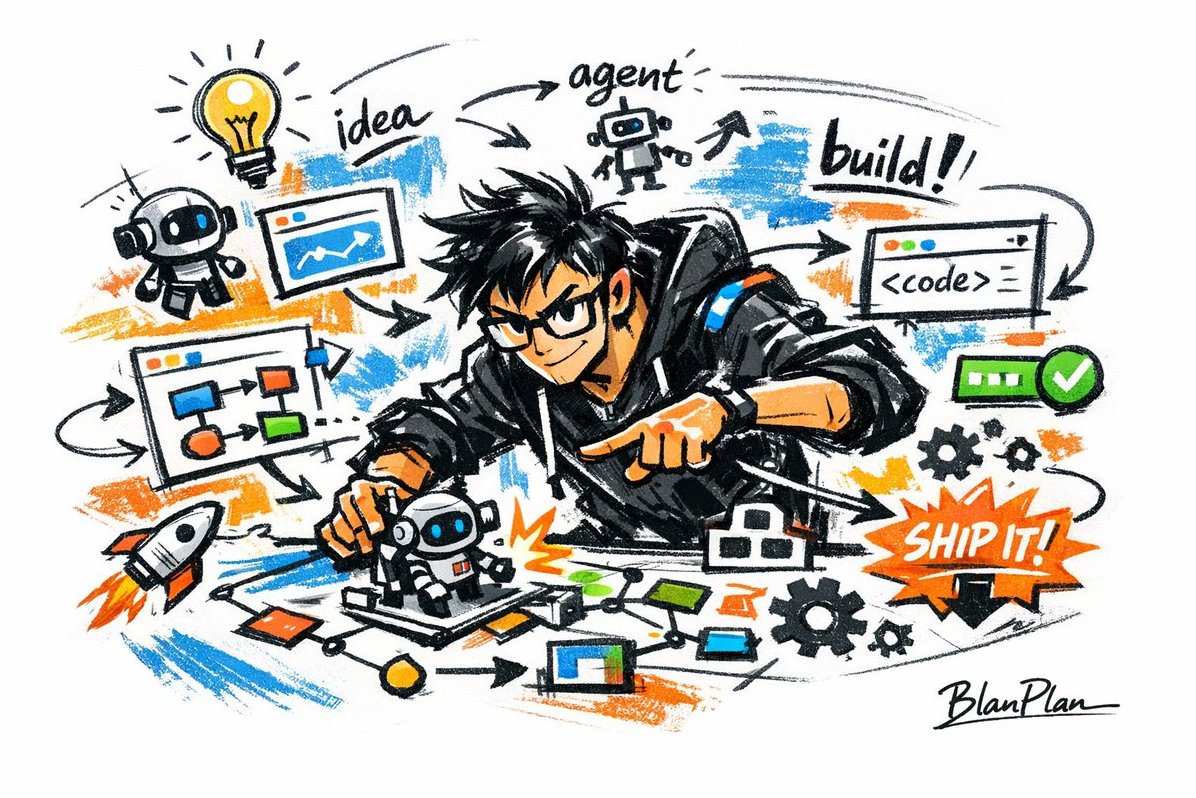
Realistic photography style image
Express [{argument name="subject" default="a powerful AI builder"}] in a graffiti sketch style, presenting an overall visual effect of rapid sketching, free transformation, improvised hand-drawing, and draft-like qualities. Lines are casual, exaggerated, varied in thickness, slightly messy but rhythmic and expressive, emphasizing generalization, exaggeration, fun, and spontaneity rather than rigorous realism or fine detail. Colors use rough, dry-brush block expressions, retaining uneven smears, brush marks, flying whites, and overlapping feelings. Colors automatically adapt to the [theme/subject], but the overall expression remains graffiti-like, sketch-like, and generalized. No transparent watercolor smudging, no delicate watercolor transitions, no paper textures, no soft atomization, and no dreamlike quality. The background is mainly white space, remaining simple, relaxed, unfinished, and design-oriented. A small amount of auxiliary symbols, arrows, marks, circles, repeated lines, handwritten text, or other graffiti elements can be added to enhance the sketchbook or essay-like visual language, but should not be too crowded or destroy the subject and atmosphere of the white space. The image content does not need to be written in advance; the [{argument name="subject" default="a powerful AI builder"}] will automatically deduce and generate the most suitable main image, actions, related elements, symbols, or simplified scenes. The whole maintains a unified graffiti sketch style and exaggerated generalized expression, avoiding complex realistic backgrounds and over-elaboration. Naturally add a unique signature "{argument name="signature" default="BlanPlan"}" as part of the image, placed discreetly but clearly in the lower-left, lower-right, or near the title. The style should be unified with the overall layout, like an artist's signature or design inscription; the signature font should be refined, restrained, and high-end, not too large, not destructive to the main composition, and not appearing abrupt or cheap.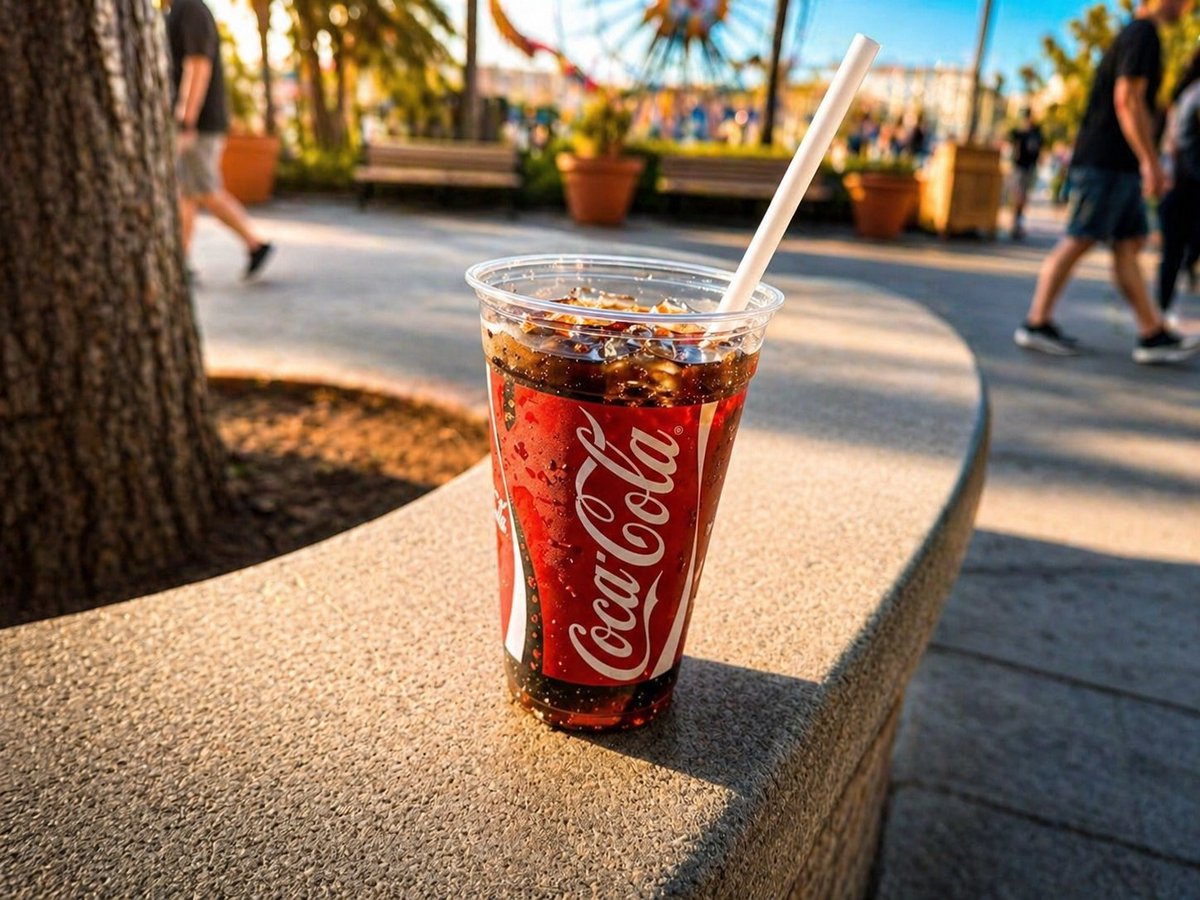
E-commerce Main Image - Professional Drink Photo Enhancement
Using the provided reference image, turn this casual phone snapshot of the drink into a polished professional beverage photo while keeping the same cup, soda, straw, outdoor theme-park setting, and general composition. Reframe and clean it up so the drink is the clear hero subject, make the cup sharper and more detailed with crisp condensation and sparkling ice, and enhance the Coca-Cola red tones and overall contrast. Apply warm golden-hour commercial lighting with richer highlights and a more cinematic color grade. Increase background blur for a shallow depth-of-field look, simplify visual distractions, and make the people in the background feel more incidental and softly out of focus while preserving the tree, benches, planters, and ferris wheel context. Keep it realistic, like a high-end advertisement shot taken by a professional product photographer.
Related prompt guides and libraries
FAQ about ComfyUI
How do I use ComfyUI prompts from gptimages.dev?
Start with the examples that match your visual job, then copy the prompt structure rather than copying every adjective. Replace the subject, scene, channel, aspect ratio, and constraints with your own details. If the first result is close, keep the successful parts fixed and change one variable at a time. This makes the page useful as a prompt library, not just a keyword page.
What is the best prompt format for ComfyUI?
A dependable format is brief first, details second, checks last: describe the image goal, then the subject, scene, composition, style, reference rules, and output constraints. For models such as GPT-IMAGE-2, Nano Banana 2, Stable Diffusion, Midjourney, or Jimeng AI, keep the core prompt portable and add tool-specific settings only when the interface supports them.
Can I reuse these prompts across different AI image models?
Yes, but reuse the structure more than the exact syntax. A prompt that works in one generator may need different wording, reference strength, aspect ratio settings, or negative prompts in another. The safest workflow is to preserve the creative brief, then adapt only the model-specific layer after you inspect the first output.
How should I collect the best AI image prompts?
Save prompts with the final image, model or tool name, aspect ratio, reference images, and a short note explaining why the result worked. Group them by use case such as product photography, character consistency, UI mockups, posters, logos, or text-in-image prompts. That collection becomes much more useful than a flat list of attractive phrases.
Why do ComfyUI prompts fail?
Common causes include unclear subject hierarchy, too many styles in one prompt, vague quality words, unsupported text requirements, missing reference rules, and uncontrolled iteration. Fix the prompt by naming the production goal, protecting the details that cannot change, and testing one adjustment per generation instead of rewriting the whole prompt every time.
Are these prompt examples enough for commercial work?
They are a starting point, not legal or brand clearance. For commercial work, check the terms of the model or generator, review rights for reference images, verify text and logos manually, and keep a record of the prompt, source assets, and final edits. The page helps with prompt quality, while usage rights still depend on your workflow and provider terms.